
The Hidden Bias Threatening Public Health Research Integrity
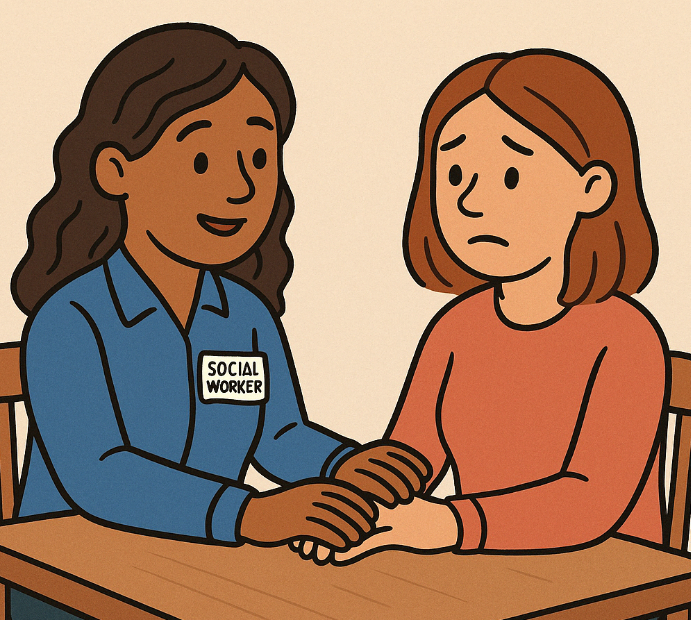
Last year, a community health worker in Krakow sat across from researchers at a medical college. She had decades of lived experience working with immigrant families. Yet, when she shared stories about barriers to accessing care, the conversation stalled. Her input was noted, but not acted upon. This scene reflects a wider problem: public involvement in research is often encouraged, but rarely institutionalized in ways that ensure equity and justice.
A new article in Frontiers in Public Health makes a compelling case: for public and patient involvement and engagement (PPIE) to be truly meaningful, research institutions themselves must change—not just individual projects.
Why This Matters Now
Public involvement in research has grown in importance over the past two decades. Funders often require it, and community organizations demand it. But too often, involvement is tokenistic. Institutions still tend to privilege “scientific” expertise while overlooking lived experience, especially from marginalized communities.
The stakes are high. Without real involvement, research risks being disconnected from community needs, reinforcing inequities, and wasting public resources.
The Core Problem: Epistemic Injustice
The authors highlight a concept called epistemic injustice—wrongs related to whose knowledge counts and whose does not. In practice, this means:
- Patients’ firsthand experiences dismissed as “anecdotal.”
- Minority perspectives overlooked because they don’t fit dominant scientific frameworks.
- Communities excluded because of historic mistrust toward institutions.
These injustices undermine both ethics and science. Without addressing them, PPIE becomes little more than window dressing.
A Framework for Change: Three Orders
The paper uses the order of change model to show how institutions can evolve:
- First-Order Change (Practical Fixes):
Small adjustments like offering interpreters, writing plain-language summaries, or recruiting more diverse participants. These are important but insufficient. - Second-Order Change (Cultural Shifts):
Reshaping how institutions think about research. For example, inviting patients as co-researchers or redesigning consent processes with community input. These efforts begin to fill gaps in understanding. - Third-Order Change (Transformative Awareness):
The deepest shift—acknowledging that multiple forms of knowledge exist and should hold equal weight. Here, institutions recognize their own biases and learn to move across different ways of knowing.
The authors argue that third-order change is essential for building sustainable knowledge spaces—environments where researchers and community members collaborate as equalsfpubh-13-1655189.
What This Means for Practice
For health departments, nonprofits, and universities, the findings translate into clear action steps:
- Redesign Training: Teach students and researchers how to engage meaningfully with communities, not just as “subjects” but as co-creators of knowledge.
- Invest in Relationships: Allocate time and funding for long-term partnerships with communities, not just project-based engagement.
- Embed Equity in Policy: Write PPIE commitments into institutional missions, hiring practices, and promotion criteria.
- Value Diverse Knowledge: Ensure experiential knowledge—like what it means to live with chronic illness or navigate care as a Deaf patient—is treated as valid evidence.
Barriers Ahead
Changing institutions is not easy. Barriers include:
- Entrenched hierarchies that privilege professional expertise.
- Resource constraints—meaningful involvement requires time, training, and funding.
- Resistance from senior staff or funders who see PPIE as slowing research.
Still, the paper shows that incremental changes can build momentum. Grassroots projects, faculty champions, and supportive policies can align over time to shift institutional culture.
What’s Next
The article calls for case studies to test how these institutional changes work in practice. It also pushes for interdisciplinary collaboration—bringing together bioethicists, community psychologists, sociologists, and public health leaders to design change strategies.
If taken seriously, these recommendations could reshape how research serves communities. Instead of producing knowledge about people, institutions could co-create knowledge with them—building trust, improving health outcomes, and advancing equity.
Join the Conversation
- How could your agency embed meaningful public involvement into its everyday practices?
- What barriers—financial, cultural, political—do you see to making deeper institutional changes?
- Does this research challenge how you currently think about who gets to be considered a “knower” in public health?