The Bristol Stool Scale: What Your Poop Says About Health
Your bathroom habits might reveal more about your health than you realize.
Let’s be honest: most of us don’t spend much time looking at our poop. Flush, wash your hands, and move on.
But what if taking just a few seconds to notice what ended up in the toilet could help you catch dehydration, digestive problems, infections, or even early signs of serious disease?
That’s exactly why doctors around the world use the Bristol Stool Scale—a surprisingly simple chart that turns something everyone does into a useful measure of health.
It may not be dinner-table conversation, but your stool is one of your body’s most accessible health reports. Learning how to read it could help you understand what your digestive system is trying to tell you.
What Is the Bristol Stool Scale?
Developed by researchers at the University of Bristol in England in the 1990s, the Bristol Stool Scale classifies bowel movements into seven categories based on their shape and consistency.
Rather than focusing on how often you go, the scale helps evaluate how well your digestive system is functioning.
Doctors, nurses, gastroenterologists, dietitians, and researchers all use it because stool consistency reflects how quickly food moves through your intestines. If things move too slowly, too much water is absorbed, producing hard stools. If they move too quickly, there isn’t enough time for water absorption, resulting in loose or watery stools.
For most healthy adults, the goal is Type 3 or Type 4.
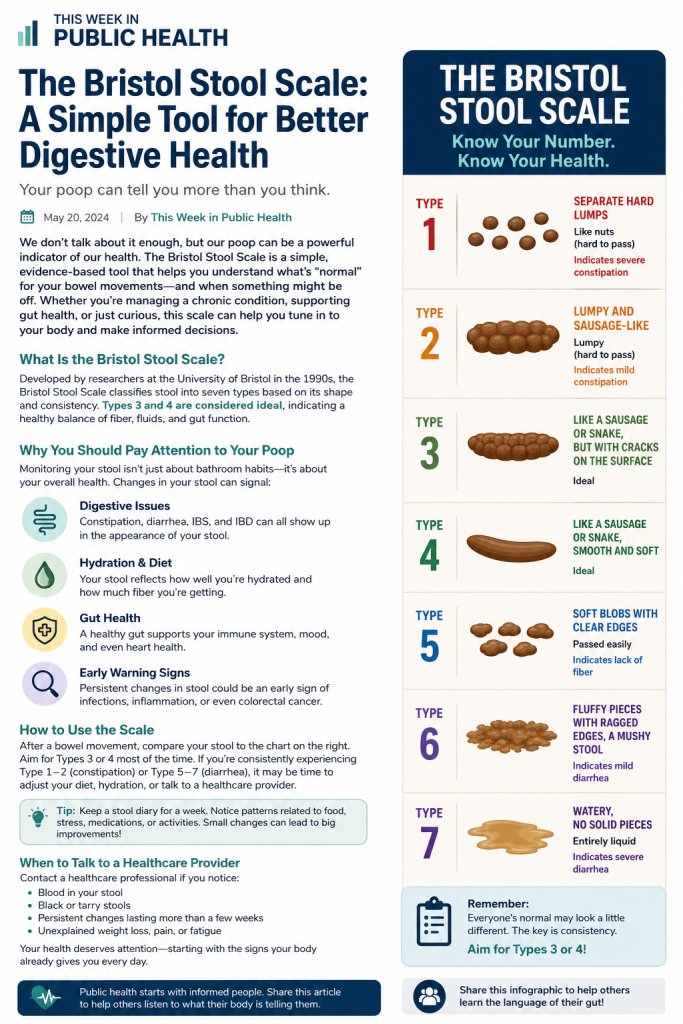
This infographic illustrates all seven stool types, explains what each one typically indicates, and highlights when it may be time to seek medical advice.
The Seven Types of Stool
Type 1: Separate Hard Lumps
Think rabbit pellets. These are difficult to pass and usually indicate significant constipation. They often occur when stool remains in the colon too long, allowing excessive water to be absorbed.
Type 2: Lumpy Sausage
Still considered constipated, but slightly less severe than Type 1. Increasing water intake, dietary fiber, and physical activity often helps improve stool consistency.
Type 3: Sausage with Cracks
This is considered healthy. Although it isn’t perfectly smooth, it generally reflects good intestinal function and adequate hydration.
Type 4: Smooth, Soft Sausage or Snake
This is the “gold standard.” It passes comfortably and usually reflects a healthy balance of hydration, fiber intake, and intestinal movement.
Type 5: Soft Blobs with Clear Edges
Often easy to pass, but it may indicate that stool is moving through the colon a little too quickly. Occasional Type 5 stools are usually not concerning, but frequent occurrences could suggest you need more dietary fiber.
Type 6: Mushy Stool
These stools have ragged edges and little solid structure. Type 6 often accompanies mild diarrhea and may occur after certain foods, medications, infections, or digestive disorders.
Type 7: Entirely Liquid
Completely watery stools represent diarrhea. Because diarrhea can rapidly lead to dehydration, prolonged Type 7 stools should not be ignored—particularly in children, older adults, or anyone with chronic illness.
Why Monitoring Your Poop Actually Matters
Most people only think about their digestive health when something feels wrong. The reality is that stool changes often occur before other symptoms develop. Keeping an eye on your bowel movements can provide valuable clues about what’s happening throughout your body.
Your Hydration Status
Hard stools frequently suggest you’re not drinking enough fluids. Loose stools, meanwhile, can quickly cause dehydration, especially during illness or periods of extreme heat.
Your Diet
Fiber plays a major role in stool consistency. Diets rich in fruits, vegetables, legumes, and whole grains generally produce healthier stools than diets dominated by ultra-processed foods.
Sudden dietary changes—including high-fat meals, artificial sweeteners, or alcohol—can also temporarily alter stool consistency.
Your Gut Microbiome
Your trillions of intestinal bacteria help digest food, produce vitamins, and regulate inflammation. Changes in your microbiome—after antibiotics, illness, or dietary shifts—can often show up first in your stool.
Medication Side Effects
Many common medications affect bowel habits. Examples include:
- Antibiotics
- Opioid pain medications
- Iron supplements
- Magnesium-containing antacids
- Diabetes medications
- GLP-1 medications used for diabetes and weight loss
Monitoring stool changes can help determine whether side effects are becoming significant enough to discuss with your healthcare provider.
Digestive Disorders
Persistent changes may signal conditions such as:
- Irritable bowel syndrome (IBS)
- Inflammatory bowel disease (Crohn’s disease or ulcerative colitis)
- Celiac disease
- Food intolerances
- Chronic constipation
- Chronic diarrhea
While the Bristol Stool Scale cannot diagnose these conditions, it often helps clinicians understand what’s happening.
When Stool Changes Could Be a Warning Sign
Most changes are temporary. A stressful week, travel, dietary indulgences, or a stomach virus can all alter stool appearance for a few days. However, some changes deserve prompt medical attention. Contact your healthcare provider if you notice:
- Blood in the stool
- Black, tar-like stools
- Pale or clay-colored stools
- Persistent diarrhea lasting several days
- Constipation lasting several weeks despite treatment
- Severe abdominal pain
- Fever accompanying diarrhea
- Unintentional weight loss
- Stool changes that persist for several weeks without an obvious explanation
These symptoms can sometimes indicate infections, inflammatory conditions, gastrointestinal bleeding, or colorectal cancer.
Should You Track Your Stool?
It may sound strange, but many gastroenterologists recommend paying attention. You don’t necessarily need a journal—although some people with digestive conditions find one helpful. Instead, simply notice:
- Which Bristol type you most commonly have
- How frequently you have bowel movements
- Whether changes correspond with foods, medications, stress, or illness
Patterns are often more informative than isolated events.
A Surprisingly Powerful Public Health Tool
The Bristol Stool Scale has become far more than a chart hanging in doctors’ offices.
Researchers use it in studies of digestive diseases, nutrition, infectious disease, aging, microbiome research, and even public health surveillance. Because it’s simple, standardized, and easy for patients to understand, it allows clinicians and researchers to communicate about bowel health using a common language.
That’s an important reminder that public health isn’t just about vaccines, clean water, or disease outbreaks. Sometimes it’s about helping people recognize the everyday signals their bodies are already providing.
The Bottom Line
Nobody enjoys talking about poop.
But paying attention to it may be one of the easiest ways to monitor your digestive health.
The Bristol Stool Scale offers a quick, evidence-based way to recognize what’s normal, identify changes early, and know when it’s time to seek medical advice. While no chart can replace a healthcare professional, understanding your usual pattern can make you a more informed partner in your own health.
So the next time you flush, take one extra second.
Your gut may be trying to tell you something.