Urban Density and Health in Doha: Rethinking the Built Environment
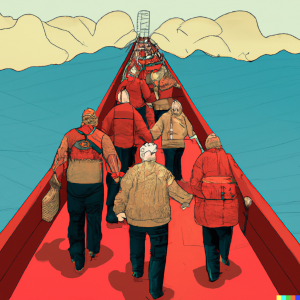
Amidst the bustling streets of Doha, Qatar’s capital, a place where we spent a wonderful time last December, a unique scene unfolds. Residents hurry along shaded walks, braving the scorching heat as they navigate the complex dance of urban life. These are images of necessity-driven walking—motivated less by choice than by the constraints of Doha’s evolving urban landscape.
But what implications do these daily journeys have for public health? This question lies at the heart of a recent study examining the intricate relationship between urban density, built environment quality, and health outcomes in this rapidly developing city.
The Public Health Dilemma
In many Western urban centers, higher residential density has long been linked to improved health outcomes through increased physical activity and access to services. However, these benefits may not hold universally. Doha, with its hot-arid climate and deeply ingrained car culture, offers a compelling case against the conventional density-health paradigm. Here, climate and mobility challenges reshape expectations, requiring a nuanced examination of what density truly offers.
The Study’s Quest
The research conducted by Janahi and colleagues sought to uncover how residential density, combined with environmental quality, affects physical and mental health in Doha. Their aim: to evaluate whether compact, walkable environments translate into better health outcomes amidst the unique climatic and infrastructural conditions of an Arab city.
Research Methods: An Inside Look
This cross-sectional study employed an extensive mixed-methods approach, incorporating self-reported health data from SF-36 surveys, clinical records of non-communicable diseases from health centers, and geospatial analyses of urban infrastructure across residential zones.
The study triangulated these diverse data sources to ensure a comprehensive perspective on how density and environmental factors interact to shape public health across Doha’s dense, medium, and low-density zones.
Key Findings: The Real Story
Contrary to expectations, higher-density zones reported improved mental health and functional well-being but paradoxically exhibited increased non-communicable diseases and obesity rates. This seeming contradiction indicates that density alone is insufficient for promoting health, especially when factors such as inadequate pedestrian infrastructure and exposure to extreme heat come into play.
The study reveals that environmental quality and climate-responsive infrastructure are more critical to health outcomes than density alone. Compact urban spaces in Doha may support social interactions but fail when environmental discomforts and infrastructural inadequacies dominate.
Implications for Public Health Practice
What This Means in Practice
- Urban Planning Policies: Shift focus from densification to climate-responsive design that emphasizes shaded walkability and safe pedestrian infrastructure.
- Health Impact Assessments: Integrate these into urban development projects to ensure that health is at the forefront of planning and can address both climatic and infrastructural needs.
- Community Engagement: Encourage participatory design processes that reflect the lived experiences of residents facing environmental stresses, thus creating more inclusive and adaptive public spaces.
The Hard Part: Turning Evidence Into Action
The study’s comprehensive findings add depth to our understanding but also present challenges. Implementation requires overcoming funding constraints, political inertia, and competing priorities, especially in regions experiencing rapid urbanization. Furthermore, there’s a scientific limitation: the cross-sectional nature of the data precludes causal inferences, leaving some questions unanswered.
One critical aspect is ensuring infrastructural equity, meaning that urban design enhancements need to cater to the least privileged, who walk out of necessity. Policy alignment and community trust remain pivotal as public health leaders aim to translate research insights into actionable urban designs that sufficiently address the diverse needs of Doha’s residents.
Conclusion: A Call for Action
The vibrant daily scenery in Doha paints a picture of both progress and paradox. Higher density fosters closeness and potential well-being, but is hindered by environmental disadvantages such as heat and infrastructure gaps. For the city to advance toward a healthier future, the call to diversify urban planning is clear: prioritize environmental quality and infrastructure that truly serve residents’ health and comfort. Progress may not lie in the density alone but in the quality of the spaces we create together.
Conversation-Starting Questions
- How might our urban infrastructure projects change if health outcomes were prioritized over purely increasing density?
- Which populations stand to benefit most from more climate-responsive, pedestrian-friendly design in urban planning?
- How can public health leaders leverage these findings to advocate for policy changes that prioritize environmental and social determinants of health?