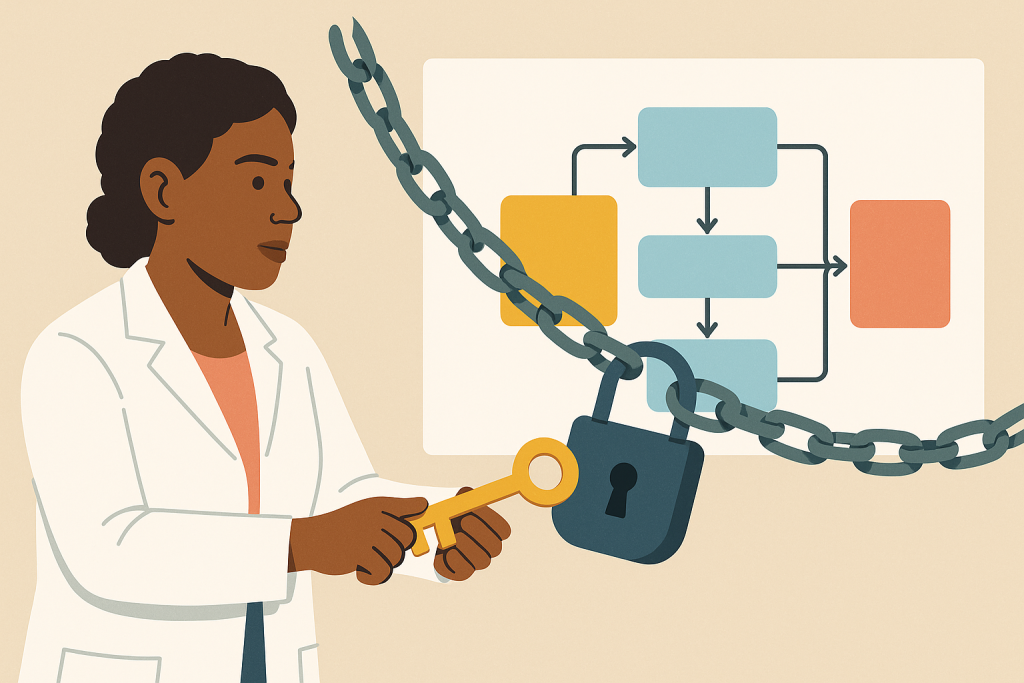
The Power of the Implementation Research Logic Model
In a bustling community health center, Miriam, a program director, considers how to best implement a new evidence-based practice. The team is excited about the potential for this innovation to improve health outcomes, but uncertainties loom large. How can they ensure the new practice thrives beyond the initial rollout phase? This challenge highlights a vital tool for bridging research and real-world application: the Implementation Research Logic Model (IRLM).
Public health practitioners often grapple with the complexities of turning research into action. Since its introduction in 2020, the IRLM has emerged as a pivotal guide in this endeavor. Yet, its adoption across various phases of implementation remains uneven, with significant potential still untapped.
Unveiling the Public Health Challenge
The IRLM was designed to laser-focus on key implementation factors: contextual determinants, strategies, mechanisms, and outcomes. It aids practitioners in systematically planning, executing, and evaluating health interventions. Despite its success in the planning stages—where it’s used predominantly—there’s a concerning gap in its broader application. Many practitioners aren’t fully leveraging the IRLM’s capacity to track and report on ongoing implementation efforts.
A Thorough Examination of IRLM Use
Recently, a comprehensive scoping review sought to explore the IRLM’s reach and influential use across disciplines. By analyzing 331 citations and an additional 124 non-using studies, researchers found that while the model is widely cited, its application remains limited. In particular, the model’s conceptual elements, such as mechanisms and outcome linkage, are often underdeveloped in practice.
Key Findings
The study highlighted:
- Over 68% of implementations employed the IRLM during the planning phase.
- Only 14% showcased comprehensive logic linking within the model.
- Although spread across diverse global contexts, most applications stayed confined to single-phase planning.
- Community engagement was documented in merely 61% of projects using the IRLM.
Why This Matters for Public Health
Understanding and enhancing the use of the IRLM is more than a call for academic rigor; it’s a direct appeal to elevate implementation outcomes. Underutilized features like CoSMOs linking—Context, Strategies, Mechanisms, and Outcomes—hold extraordinary promise for boosting transparency, reproducibility, and partnership in actualizing health interventions.
What This Means in Practice
- Broaden Use Beyond Planning: Encourage practitioners to integrate the IRLM for executing, reporting, and synthesizing phases, not just planning. This can involve documenting ongoing processes and refining interventions actively using IRLM.
- Enhance Community Participation: Strengthen partnerships with communities by involving them in every stage of IRLM application, ensuring pragmatic and sustainable outcomes.
- Develop Practical Guidance: Offer clear, accessible instructions to help practitioners effectively link strategies to outcomes, while acknowledging potential issues specific to the local context.
The Hard Part: Turning Evidence Into Action
Implementing evidence-based practices is not without barriers. These include limited funding, resistance to change, and challenges in cross-sector collaborations. Moreover, the study’s findings on the IRLM underscore the need for bolstered guidance on constructing causal links and mechanisms in real-world settings.
Furthermore, the absence of comprehensive data sources and clear linkage methods within the IRLM suggests that users need more demonstrative resources and training to enhance model utility. As more practitioners embrace its comprehensive utility, the model can transform public health interventions, ensuring they not only launch successfully but sustain meaningful change.
A Familiar Challenge: Another Toothbrush in the Bathroom?
The findings of this review also raise a broader question for implementation science. The IRLM was created, in part, to help bring greater structure and coherence to implementation research by explicitly linking determinants, strategies, mechanisms, and outcomes. Yet the review suggests that many users adopt only portions of the model, modify it to suit local needs, or use it primarily for planning. This pattern may reflect a challenge that extends beyond the IRLM itself: implementation science continues to generate new frameworks, models, and tools faster than the field can fully integrate existing ones.
Researchers have long joked that “frameworks are like toothbrushes—everyone has one, but nobody wants to use someone else’s.” The IRLM was developed as a response to this fragmentation, offering a common structure that could connect multiple implementation theories and approaches. Ironically, the review’s findings suggest that even a framework designed to promote integration may be experiencing the same forces that created the problem in the first place.
The question is not whether the IRLM is useful—it clearly is—but whether the field can collectively move from creating frameworks to consistently using, refining, and accumulating knowledge through shared frameworks. If implementation science hopes to mature as a discipline, the next breakthrough may not be another model. It may be learning how to build upon the ones we already have.
Questions for Reflection
- How can your organization expand its use of the IRLM beyond initial planning phases?
- What steps might be necessary to integrate community perspectives more fully into your implementation efforts?
- How can public health policies evolve to better support multi-phase application of models like the IRLM?