
Why Public Health Can’t Ignore the Psychology of Repetition and Negativity
Public health has never had a shortage of good evidence.
What it often struggles with is getting people to believe it.
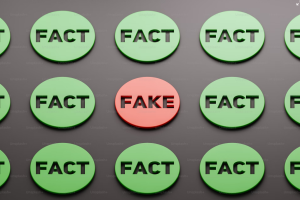
From vaccines and tobacco to nutrition, climate, and infectious diseases, one of the greatest challenges facing public health today isn’t generating evidence—it’s competing against misinformation that spreads faster, sticks longer, and often feels more believable than the truth.
Two decades of psychological and neuroscience research help explain why.
The first is the illusory truth effect: simply hearing a statement repeatedly makes it feel more true, regardless of whether it is actually accurate. The second is the negativity bias: our brains naturally devote more attention and emotional weight to negative information than positive information because, evolutionarily, missing a threat carried greater consequences than missing an opportunity.
Together, these two cognitive tendencies create an environment where misinformation doesn’t merely spread—it becomes increasingly believable.
For public health professionals, understanding these effects is no longer optional.
Repetition Makes Information Feel True
The illusory truth effect has been demonstrated repeatedly across psychology research.
Researchers found that participants rated statements as more truthful simply because they had encountered them before—even when those statements were objectively false or contradicted prior knowledge. More importantly, the effect grows with repeated exposure, although each additional repetition has a slightly smaller impact than the previous one. The biggest jump in perceived truth occurs after the second exposure.
This finding has enormous implications for public health. Consider how many times people encountered messages like:
- “Vaccines cause autism.”
- “COVID was caused by 5G towers.”
- “Natural immunity is always better than vaccination.”
Most people didn’t become convinced because of a single persuasive argument.
They became convinced because they saw the claim repeatedly—shared by friends, repeated in headlines, echoed on social media, or discussed in community conversations. Familiarity gradually became mistaken for evidence.
Bad News Travels Faster—Because Our Brains Make It Important
Repetition alone doesn’t explain why misinformation spreads so effectively. Negative information has another advantage. Our brains are built to prioritize threats.
Research on the negativity bias shows that negative events influence attention, memory, decision-making, physiology, and behavior more strongly than equally positive events. From an evolutionary perspective, paying attention to danger was more important for survival than noticing opportunities.
That means stories about:
- hidden dangers,
- government cover-ups,
- contaminated food,
- dangerous vaccines,
- environmental disasters,
naturally command more attention than messages about prevention, resilience, or gradual improvements in health.
Social media algorithms often amplify exactly the kinds of emotionally charged content our brains are already predisposed to notice.
Why Facts Alone Often Fail
Public health communication has traditionally assumed a simple model:
Present accurate information → people update their beliefs.
Behavioral science tells us reality is more complicated.
People do not evaluate every new claim from scratch.
Instead, they rely on mental shortcuts.
Repeated information feels easier to process, and our brains often interpret that ease of processing as evidence that something is true. Psychologists refer to this as processing fluency. This explains why simply publishing another fact sheet rarely changes minds. If inaccurate information has already been encountered dozens of times, a single correction must compete against a powerful sense of familiarity.
Public Health Needs More Than Myth Busting
Many organizations still respond to misinformation by issuing corrections after false claims begin circulating.
Unfortunately, this approach has limits. If repetition strengthens belief, then public health agencies cannot rely solely on reacting. Instead, they should focus on building familiarity with accurate information before misinformation gains traction. Communication researchers increasingly describe this as “prebunking” or “psychological inoculation.”
Rather than waiting for falsehoods to spread, trusted organizations repeatedly expose communities to accurate explanations using simple, memorable language delivered across multiple channels.
Consistency matters.
Repetition matters.
Trust matters.
What This Means for Public Health Practice
These findings suggest several practical changes for public health professionals.
1. Repeat accurate information intentionally.
Many health agencies worry about “overcommunicating.” Behavioral science suggests the opposite.
One press release or social media post is rarely enough to establish familiarity. Accurate messages should appear repeatedly across websites, newsletters, community organizations, clinicians, schools, and local media.
2. Keep messages consistent.
If different agencies describe the same recommendation using different language, familiarity becomes fragmented. Shared messaging across trusted organizations strengthens recognition.
3. Lead with clear statements—not myths.
Instead of opening with: “Vaccines do NOT cause autism.”
Lead with: “Vaccines are safe, effective, and extensively tested.”
This ensures the repeated message people remember is the accurate one.
4. Expect negative stories to outperform positive ones.
Public health communicators should recognize that alarming headlines naturally receive more attention.
The answer isn’t to sensationalize evidence—it is to craft messages that are emotionally engaging without sacrificing scientific accuracy.
5. Build trust before crises occur.
The most effective communication begins long before an outbreak, environmental emergency, or policy debate.
Communities that repeatedly hear accurate information from trusted local sources are less vulnerable when misinformation eventually appears.
The Future of Public Health Communication
Public health increasingly depends on understanding not only biology and epidemiology, but also psychology.
Evidence does not persuade people simply because it is correct.
It must also compete against familiarity, emotion, attention, and cognitive shortcuts.
The encouraging news is that the same psychological mechanisms that allow misinformation to spread can also strengthen accurate health communication.
Repeated exposure to trustworthy, accessible, evidence-based messages can build confidence over time.
In other words, repetition is not the enemy.
It is a tool.
The challenge for public health is ensuring that what gets repeated is the truth.