

Closing Urban-Rural Gaps, Tackling Stigma, and Planning for Health: New Public Health Insights from Asia and Beyond
As public health systems navigate the complexities of modern societies, diverse research emerging across the globe highlights persistent challenges and opportunities in health equity, policy, and community engagement. Recent studies from South Korea, China, the UK, Zimbabwe, Ethiopia, Japan, and the US illuminate how spatial dynamics, communication, social determinants, and institutional contexts shape outcomes and demand nuanced responses. Here’s why these findings matter to policymakers, advocates, and health systems striving for equitable population health.
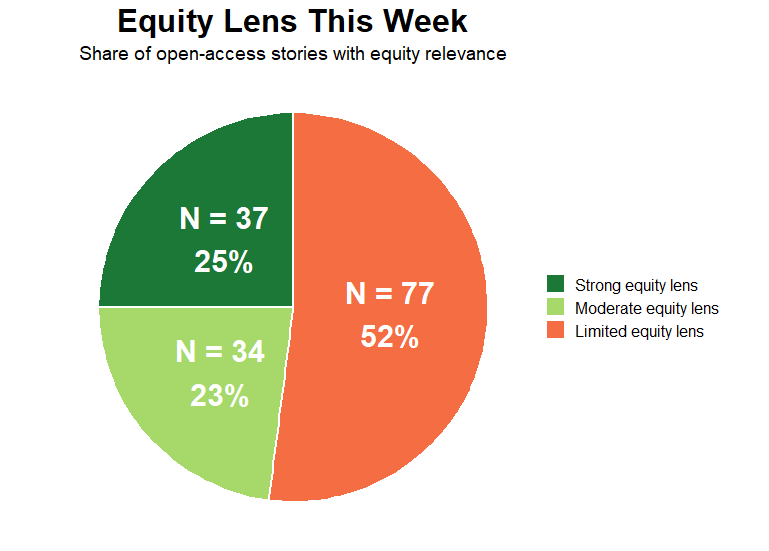
Weekly Equity Index
Rural Penalties in South Korea Signal Broader Lessons for Cardiometabolic Health Equity
South Korea’s Universal Health Coverage (UHC) achievement is globally admired, yet new evidence shows that persistent rural disparities persist, particularly in hypertension and diabetes mellitus. A comprehensive 2008–2023 analysis in Gyeonggi Province, employing the UN Degree of Urbanization framework, reveals that rural residents consistently experience a higher prevalence of these cardiometabolic diseases, even after adjustment for age, education, and lifestyle factors. This nuanced spatial classification also shows that ‘urbanized’ areas — the zones between urban cores and rural peripheries—exhibit health profiles similar to those of inner cities, underscoring that rural-urban binaries still capture key inequities. Importantly, temporal trends reveal that rural-urban gaps are widening, despite Korea’s robust health coverage.
From a public health systems perspective, this study reaffirms that universal access alone does not erase place-based health disparities. Structural factors, such as health service availability, socio-economic conditions, and social determinants, must be addressed alongside clinical care. Equitable resource allocation, tailored rural health programs, and ongoing surveillance using sensitive spatial measures are crucial for narrowing these gaps, which have substantial implications for morbidity, mortality, and health system burden over time.
Unequal Health Integration in China’s Territorial Spatial Planning Underscores Need for Policy Equity
The role of territorial spatial planning (TSP) as a driver of healthy urban environments gains increasing recognition globally. China’s ambitious Healthy City initiatives have led 36 major cities to embed health-related elements in their 2035 plans, focusing on domains such as green spaces, climate resilience, healthcare access, and health equity. However, analysis of these statutory plans exposes stark disparities across cities—higher-tier cities articulate more comprehensive and diverse health strategies, while lower-tier cities often neglect equity-sensitive dimensions. This uneven integration signals missed opportunities in harnessing spatial planning to reduce health inequities, particularly in under-resourced urban areas where populations face disproportionate risks.
These findings emphasize that health promotion must move beyond environmental improvements toward more holistic, people-centered approaches that address mental health, social inclusion, and the needs of vulnerable populations. Strengthening legislative support for healthy planning, enhancing transparency, and tailoring policy assistance to city capacity could foster a more equitable and impactful spatial health framework aligned with China’s population health ambitions.
Media’s Role in Shaping Stigma and Public Health Responses During Outbreaks: Lessons from UK Mpox Coverage
The 2022 mpox outbreak uniquely affected gay, bisexual, and other men who have sex with men (GBMSM), underscoring the intersection of infectious disease and social stigma in public health communication. A qualitative analysis of UK print and online newspapers reveals that while early coverage successfully disseminated epidemiological information and prevention guidance, often framing mpox in comparison to more familiar infections, the media’s focus on GBMSM risk groups sometimes relied on stereotypes and stigmatizing language. Moreover, despite rising case numbers mid-outbreak, media attention waned quickly, and crucial voices of those with lived experience were notably absent. This gap represents a missed chance to foster inclusive, destigmatizing messages that could have better supported affected communities and mitigated social marginalization
These insights highlight the critical need to engage affected communities in co-creating outbreak messaging and promoting nuanced narratives that balance awareness with respect and solidarity. Equitable communication strategies can improve health-protective behaviors and trust, which are essential for controlling emerging infections.
Barriers and Solutions to Childhood Immunization in Rural Zimbabwe and Ethiopia: A Tale of Access and Timeliness
Sub-Saharan Africa continues to face formidable challenges in achieving global vaccination targets critical to child survival. Research from a Zimbabwean rural clinic and an Ethiopian longitudinal cohort identifies common barriers, including geographic distance, intermittent vaccine shortages, and religious or cultural hesitancy. Both studies also find that even when vaccinations occur, timeliness often lags behind recommended schedules, potentially undermining vaccine effectiveness. Caregivers and health workers alike identified outreach programs, enhanced health education, and door-to-door vaccination as top strategies to overcome these obstacles.
For global health policymakers and program designers, these findings advocate for sustained investment in community health workers, reliable vaccine supply chains, and culturally sensitive engagement approaches. Improving vaccination timeliness is as critical as coverage numbers for reducing childhood morbidity from preventable diseases.
Suicide Prevention in Japan’s Older Adults Shows the Importance of Social Determinants and Gender-Sensitive Approaches
Japan faces a pressing public health challenge with high suicide rates among older adults, accounting for 40% of suicides in 2020. An ecological study examining social, lifestyle, and healthcare resource factors across administrative areas reveals gender-specific risk and protective elements. For men, higher suicide risk correlates with hypertension, smoking, alcohol consumption, and social isolation such as living alone. For women, greater availability of psychiatrists and higher income levels appear protective. These findings urge a shift from sole clinical focus on depression to comprehensive strategies integrating socioeconomic support, mental health resource expansion, and community connection efforts tailored to gender-specific needs. Localized, multi-sectoral suicide prevention programs could leverage these insights to address social determinants shaping mental health outcomes more effectively.
Toward Integrated, Equity-Focused Public Health Systems
This global collection of research reinforces a central tenet for policymakers, advocates, and public health systems worldwide: achieving health equity demands more than universal health coverage or disease-specific interventions. It requires deep attention to place-based disparities, robust and equitable urban and rural planning, inclusive and stigma-reductive communication, and culturally competent community engagement. From chronic disease in Korea’s rural areas to spatial equity planning in China, outbreak messaging in the UK, immunization strategies in Africa, and suicide prevention in Japan, the theme is clear: health systems must act across sectors and scales, centering community voices and social determinants to improve everyday life and population health equity.
Stay Informed and Empowered: For more evidence-forward public health insights and commentary on emerging research shaping policy and practice globally, subscribe to This Week in Public Health. Join our community on Facebook and X for timely updates that help you advocate for healthier, more equitable systems everywhere.