
Rethinking Scarcity: A Study Questions Long-Held Beliefs
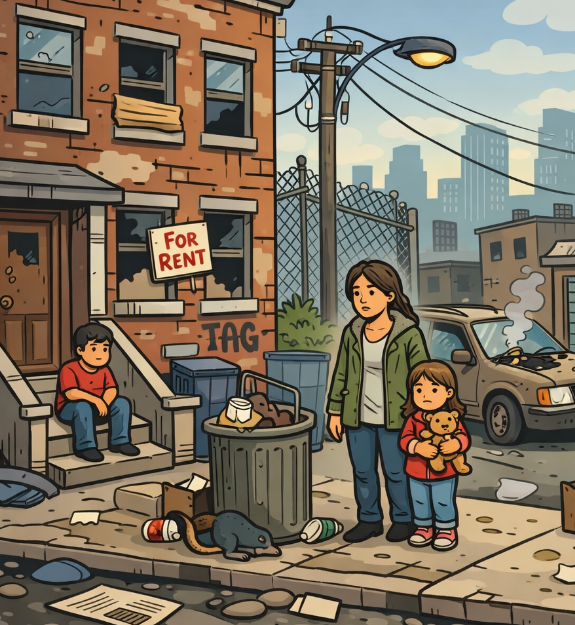
Picture a crowded community meeting where families share concerns about their financial struggles. A local organizer nods understandingly, aware that these stories reflect a larger, complex issue. How do patterns of scarcity shape behavior, not just for individuals, but for entire communities? This is not just a matter of individual choice—it’s a systemic issue that affects many aspects of public life, including health, education, and economic opportunities.
In recent years, the concept of the ‘attentional tunneling’ effect arising from financial scarcity has gained prominence. This idea suggests that scarcity focuses people’s attention on immediate issues, leading them to miss other important information that could improve their situation. But is this theory grounded in sound science?
Build Your Public Health Issue
Tell us a little about your work, and we’ll build a personalized issue with five things worth knowing.
Challenging the Attentional Tunneling Hypothesis
A groundbreaking study published in Nature Communications questions the previously established views on how scarcity influences attention and decision-making. The study re-evaluates data from a landmark 2012 study that profoundly shaped how policymakers view resource management and poverty.
In the original study, participants played a game that simulated resource scarcity. Researchers concluded that scarcity led to focused attention, which improved task performance but also encouraged risky, short-term decisions like over-borrowing without considering future costs.
Revisiting and Reinterpreting the Findings
The new analysis by reveals that the behavioral differences observed in participants who were labeled as ‘rich’ or ‘poor’ weren’t definitively caused by scarcity-induced attentional shifts. Instead, these differences may be more logically attributed to the game’s structure. The researchers argue that the observed behaviors were not about mental lapses or intensified focus, but about how the game framed tasks and decisions.
This re-evaluation points out that the ‘poor’ participants’ longer focus time on tasks did not translate into better performance, debunking the idea that attention improved efficiency. Furthermore, the tendency for ‘poor’ participants to borrow at high interest rates was attributed to how often they faced these decisions, not to inattentiveness to future consequences.
Why This Matters
This study critically reevaluates how scarcity affects decision-making, urging policymakers and public health leaders to reconsider the assumptions that underpin their policies. Decisions should be informed by a nuanced understanding of structural barriers rather than assumptions about scarcity-induced cognitive patterns. Policies need to address systemic inequalities and consider how environmental structures shape options for marginalized communities.
What This Means in Practice
- For Public Health Leaders: Reframe outreach strategies to reflect the realities of systemic barriers rather than focusing strictly on perceived cognitive deficits among under-resourced populations.
- For Community Organizations: Design programs that recognize the structural constraints communities face, such as lack of access to affordable credit or education.
- For Policymakers: Develop and implement policies sensitive to the living conditions and real-world pressures under-resourced communities experience.
The Challenges Ahead
Moving from evidence to action remains challenging. Funding shortages, political resistance, and the complexity of effectively measuring and addressing structural inequalities complicate progress. Nevertheless, understanding how structural issues affect behavior can drive better policy and program design.
The study’s findings challenge assumptions about decision-making under scarcity and highlight the importance of addressing larger systemic issues. This calls for improving conditions that perpetuate poverty, not just changing perceptions.