The Long History of Peer Support: What Mutual Aid Can Teach Public Health
When people face a serious problem, who should they turn to for help?
A doctor? A therapist? A social worker? A public health agency?
Sometimes. But there is another answer that predates nearly all of those professions:
Someone who has been through it too.
Today, peer support and lived experience are increasingly recognized across behavioral health, substance use treatment, community health, and public health. Peer recovery specialists work alongside clinicians. Community health workers connect people with services. Mutual aid organizations provide support outside formal healthcare systems. People with lived experience are increasingly included in the design of programs and policies.
But the underlying idea is not new.
Long before we had the term peer support, people facing common problems were pooling resources, sharing knowledge, caring for one another, and helping others survive circumstances they themselves had survived.
The history of peer support therefore isn’t really the story of someone inventing a new intervention.
It is the story of something much older becoming organized.
And that history raises a question that remains surprisingly relevant to public health today:
Who gets to be considered an expert?
Build Your Public Health Issue
Tell us a little about your work, and we’ll build a personalized issue with five things worth knowing.
Mutual Aid Came Before Peer Support
Mutual aid begins with a relatively simple proposition: our well-being is interconnected.
Imagine a neighborhood loses electricity for five days during a summer heat wave. One neighbor has a generator. Another knows how to repair equipment. Someone else has a freezer full of food. Another checks on older residents. Someone watches children while parents go to work.
Who is the professional in this situation?
Who is the client?
Those categories don’t work particularly well.
Instead, people possess different resources, knowledge, relationships, and abilities that can contribute to the well-being of the group.
That distinguishes mutual aid from charity.
Charity generally maintains a distinction between the person providing help and the person receiving it. I possess something you need, so I give it to you.
Mutual aid is more reciprocal. I may have something you need today, while you may have something I need tomorrow. The relationship itself becomes part of the resource.
That principle is ancient. What changes over time is how mutual support is organized, what kinds of knowledge society considers legitimate, and which institutions are given authority to respond to particular problems.
The history of addiction provides an unusually clear example.
How We Define a Problem Determines Who Gets to Solve It
Alcohol and other substance use has been interpreted in radically different ways throughout American history.
It has been considered a sin, a moral failing, a bad habit, a disease, a crime, a psychological disorder, a social problem, and a public health problem.
Those definitions matter because every definition creates a different expert.
If excessive drinking is primarily a sin, religious authorities have expertise.
If it is a crime, authority shifts toward police, courts, and corrections.
If addiction is a disease, physicians and healthcare systems become central.
If it is a psychological disorder, psychologists, counselors, and other behavioral health professionals gain authority.
If it is a public health problem, we begin thinking about populations, prevention, environments, harm reduction, and policy.
And if part of addiction can only be fully understood by experiencing it?
Then lived experience itself becomes a source of expertise.
The important point is that these models have rarely replaced one another cleanly. They accumulate, overlap, and compete. We can see that happening even now in debates over opioids and fentanyl.
From Punishing Drunkenness to Treating Addiction
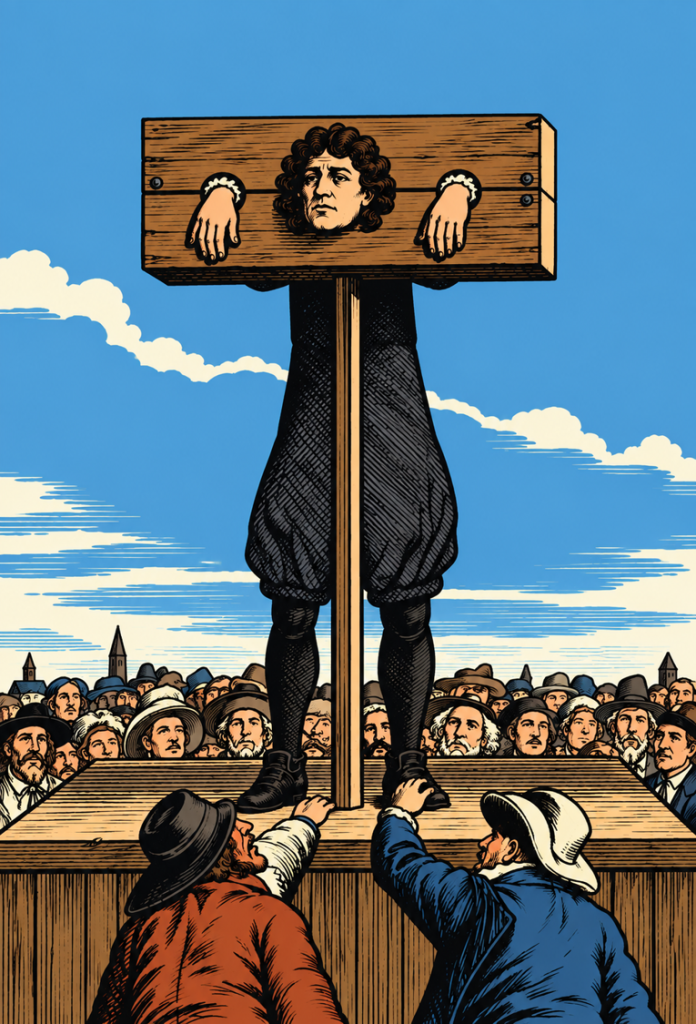
In colonial America, alcohol itself was not necessarily considered the problem. Drinking was common and socially accepted.
Drunkenness was different.
Excessive drinking could be understood as a failure of self-control, a source of disorder, neglect of responsibility, or a violation of religious expectations. The logical response was therefore not treatment but social control.
Fines, public humiliation, ostracism, regulation of taverns and alcohol sales, and other punishments attempted to control unacceptable behavior.
By the late eighteenth and early nineteenth centuries, however, another possibility was emerging.
Observers began asking whether persistent drunkenness might be more than a bad person repeatedly making bad choices. Perhaps something about repeated alcohol use changed a person’s ability to stop.
Benjamin Rush, one of the most influential physicians of the early United States, described chronic drunkenness using the language of disease and even proposed specialized places where people experiencing it could receive care.
That represented a profound shift.
If persistent alcohol use was a disease rather than simply misconduct, punishment alone made less sense.
Care became possible.
Medicine Solved Some Problems—and Created New Ones
The nineteenth century brought extraordinary changes in medicine, but many effective treatments still did not exist. Physicians therefore relied heavily on substances that could relieve suffering even when they could not cure its underlying cause.
Opium and morphine became important medicines for pain. Other substances that we now recognize as carrying substantial addiction risks were sold through physicians, pharmacies, and the booming patent medicine industry.
Technology changed the equation further.
The development of the hypodermic syringe made it possible to deliver drugs more rapidly and precisely. Some initially believed that greater precision might actually reduce the risk of addiction.
History had other plans.
This illustrates a recurring problem in public health: technologies don’t simply solve problems. They change the systems in which problems occur.
A treatment can relieve suffering while introducing new risks. A medical innovation can simultaneously improve care and create new pathways for harm.
We are still wrestling with that tension today.
Fentanyl Shows That the Historical Debate Never Ended
Consider the modern opioid crisis.
Fentanyl can be framed as a medical problem requiring treatment. It can be framed as a criminal problem requiring interdiction and enforcement. It can be framed as a public health problem requiring prevention and harm reduction. Or it can be framed as a community problem requiring outreach, connection, and peer support.
Each framing produces different interventions because each assigns expertise differently.
The debate that existed around alcohol two hundred years ago therefore never really disappeared.
We are still asking the same basic questions:
What exactly is the problem?
What caused it?
And who knows enough to help?
Something important happened historically while physicians, religious leaders, governments, and eventually psychologists were developing their answers.
People experiencing alcohol problems started developing their own.
Recovery Communities Created Another Kind of Expertise
Alcoholics Anonymous did not invent mutual aid for addiction.
Long before AA, Indigenous American communities developed recovery traditions, temperance and recovery societies emerged, and people experiencing alcohol problems organized to support one another.
One especially interesting example was the Washingtonian movement, founded in 1840.
Its members embraced an idea that feels remarkably modern: people who had experienced serious alcohol problems might be uniquely capable of helping other people experiencing the same thing.
The ingredients of modern peer support were already visible.
People shared stories. They developed relationships around common experiences. They helped newcomers. They created a sense of belonging. They offered knowledge that came not from formal training but from having encountered the problem themselves.
There was no sophisticated theory of addiction required.
The basic insight was much simpler:
I’ve been somewhere like where you are. Maybe we can figure out how to move forward together.
That is experiential knowledge.
But these early organizations also encountered another problem that should sound familiar to anyone working in public health.
Sustainability.
Good Ideas Are Not Necessarily Durable Ideas
Public health has no shortage of promising programs that flourish briefly and then disappear.
Early recovery movements experienced the same problem.
Starting a community is one challenge. Creating something capable of surviving its founders is another.
For mutual aid to persist, a community needs ways of reproducing itself. New members have to become part of it. Norms have to be transmitted. Leadership has to emerge. Stories, rituals, practices, and identities have to survive from one generation of participants to the next.
Many early recovery organizations failed that test.
Alcoholics Anonymous did not.
That may ultimately be one of AA’s most important contributions to the history of peer support.
AA did not discover that people could help one another.
It figured out how to make that help durable.
Alcoholics Anonymous and the Power of Shared Vulnerability
The traditional history of AA begins with a chain of relationships involving Rowland Hazard, the psychologist Carl Jung, the Oxford Group, Ebby Thacher, Bill Wilson, and eventually Dr. Bob Smith.
The important point is less the collection of famous names than what happened to the helping relationship.
Bill Wilson and Dr. Bob were not positioned as expert and patient.
Both were struggling.
Both were vulnerable.
And they discovered that helping another person stay sober seemed to strengthen their own sobriety.
That reverses many assumptions about how help works.
In a traditional professional relationship, expertise tends to move in one direction. A physician possesses medical knowledge that a patient does not. A therapist has specialized training and ethical responsibilities toward a client.
Peer support creates a different relationship.
The person giving help can simultaneously be receiving it.
Giving support can create purpose, identity, accountability, meaning, and connection. Painful experiences can acquire a new significance when they become useful to another person.
That is one of the most powerful ideas underlying mutual aid: your experience doesn’t merely qualify you to receive help.
It may give you something valuable to contribute.
From Dependence to Interdependence
One story from early AA captures this particularly well.
Facing the possibility that he might drink, Bill Wilson reportedly reached for a telephone and contacted another person rather than reaching for alcohol.
The action seems almost trivial.
It isn’t.
The telephone represented a different response to distress: instead of depending on a substance, Wilson depended on a relationship.
That is the shift from dependence to interdependence.
From a public health perspective, that is worth paying attention to.
We often approach health problems by asking how we can change individuals. How do we increase motivation? Improve knowledge? Change behavior? Increase adherence?
Mutual aid asks another question:
What relationships make healthier behavior possible?
That moves us from seeing health entirely as an individual characteristic toward seeing it as something produced partly through relationships and communities.
Peer Support Is Not the Same Thing as Treatment
None of this means professional expertise is unnecessary.
Peer support and professional treatment do different things.
A clinician has training, credentials, defined responsibilities, ethical obligations, and specialized skills. A professional helping relationship also contains an unavoidable power difference. The professional possesses authority and responsibilities that the person seeking treatment does not.
Mutual aid is organized differently.
Participation is voluntary. Relationships are reciprocal. Expertise comes substantially from common experience. Members can remain involved indefinitely. Someone with decades of recovery experience is not simply “better” than the person who walked through the door yesterday.
The newcomer has something to contribute too.
That distinction matters because attempts to turn every useful form of support into a professional service can change the very thing that made it useful.
What Happens When Lived Experience Becomes a Profession?
Remarkably, AA confronted this question almost immediately.
In its earliest years, Bill Wilson was offered the opportunity to earn money providing alcoholism counseling. The possibility made intuitive sense. Why shouldn’t someone with valuable experience be compensated for helping others?
Other members objected.
Their concern raised questions that remain unresolved nearly a century later.
If one person is paid to provide mutual aid, does that create a hierarchy? Does lived experience become a credential? Does helping become a commodity? Does the fellowship still belong equally to everyone?
AA ultimately maintained a largely nonprofessional model.
But behavioral health has since moved in another direction.
Today, peer support specialists can be trained, certified, employed, supervised, integrated into healthcare organizations, and reimbursed for their work.
There are good reasons for this evolution. Lived experience has value, and people should not necessarily be expected to provide valuable labor for free.
Yet professionalization creates a genuine tension.
Can we compensate lived experience without turning it into another form of institutional expertise?
That question matters far beyond addiction recovery.
Why Alcoholics Anonymous Survived
AA ultimately developed an organizational model capable of spreading without requiring centralized professional control.
Membership depended primarily on an individual’s identification with the problem rather than approval from an expert. Local groups could operate independently. Leadership was distributed. Service to others became part of participation. Meetings developed reproducible rituals, stories, language, and practices.
Most importantly, the model did not require its founders to remain in charge.
A group could reproduce itself.
Then another could do the same thing.
And another.
Ninety years later, that basic architecture has spread across countries, cultures, and generations.
Whether someone agrees with every aspect of AA is almost beside the point. As a social organization, it represents an extraordinary experiment in the scalability of mutual aid.
What Public Health Can Learn From Mutual Aid
Public health frequently talks about reaching communities, engaging communities, educating communities, or delivering interventions to communities.
Notice the direction implied by those words.
Professionals possess something, and communities receive it.
Mutual aid complicates that model.
Communities already contain knowledge. People experiencing a problem are not simply recipients of intervention. They can be producers of knowledge, sources of support, organizers, leaders, and experts in the conditions of their own lives.
That does not mean lived experience should replace scientific evidence or professional expertise.
Someone who has survived a heart attack does not automatically become a cardiologist. Someone in long-term recovery does not acquire a physician’s knowledge of pharmacology.
But the reverse is equally important.
A medical degree does not automatically tell someone what it feels like to experience addiction, attempt recovery, navigate stigma, rebuild relationships, walk into a recovery meeting for the first time, or try to maintain sobriety when the structures of everyday life are working against it.
These are different kinds of knowledge.
The challenge for public health is not deciding which one should win.
It is figuring out how they fit together.
The Bigger Lesson: Expertise Is Plural
The history of peer support ultimately tells us something larger about public health.
We often assume expertise resides inside people who have received sufficient education, credentials, or institutional authority.
Sometimes it does.
But expertise can also reside in communities, relationships, and experience.
People have been caring for one another far longer than there have been hospitals, public health departments, psychological clinics, or professional credentials. The modern peer-support movement didn’t create that capacity.
It gave it new organizational forms.
The challenge now is to preserve what makes those relationships powerful while connecting them to systems capable of providing resources, evidence, protection, and specialized care when those things are needed.
Because perhaps the most important lesson from the long history of mutual aid is also the simplest:
People experiencing a problem are not merely people to be helped.
They may also be part of the solution.