
When the Health System Works Differently Depending on Who You Are
In this week’s deep dive into public health research, a slate of new studies underscores persistent inequities affecting diverse populations across the U.S. and globally. From disparities in diagnostic evaluation in cancer care to the unequal burden of social needs screening and surgical outcomes by geography, these findings offer much-needed evidence to inform systemic reforms. Meanwhile, emergent policy evaluations hint at both advances and remaining challenges in protecting vulnerable women and positioning a diverse healthcare workforce. Understanding these complex intersections between policy, equity, and everyday health experiences guides us toward actionable, equitable health systems.
Unequal Diagnostic Experiences in Endometrial Cancer Risk Among Black Women
One striking study published in JAMA Network Open (August 2026) focused on the use of transvaginal ultrasound to detect endometrial neoplasia, a precursor to endometrial cancer, in a diverse cohort of over 1800 women. Despite sonography’s important role, Black women were found to have a significantly lower completion rate of this ultrasound test (76%) compared to White women (89%), primarily due to fibroids limiting endometrial visibility. However, once scans were completed, diagnostic accuracy remained high across racial groups.
Black women face double the mortality rate of White women from endometrial cancer, and this study highlights a specific structural obstacle: fibroids contribute to disparities in diagnostic completeness. While the ultrasound remains a powerful tool, this gap in completion rates points to the need for alternative or adjunctive diagnostic approaches for Black women, as well as culturally competent care that acknowledges and addresses conditions like fibroids. These findings push health systems to prioritize tailored diagnostic strategies, improve clinician awareness, and adjust protocols to reduce inequities in early cancer detection and outcomes.
Rural Surgery Outcomes Signal Critical Access and Quality Challenges
A large national Medicare study examined over 2.3 million surgeries to compare postoperative outcomes between rural and nonrural residents. The data revealed stark disparities: rural patients faced higher 30-day mortality (6.8% vs. 5.8%), increased complications, longer travel times for surgery, and lower likelihood of discharge to home. Despite controlling for relevant factors, rural residence was independently associated with worse surgical outcomes. This evidence shines a spotlight on the growing disparities faced by rural populations, emphasizing that rural health inequities are not only about access but also outcomes after common, potentially lifesaving procedures like appendectomy and colectomy. The findings invite targeted policy efforts to strengthen rural surgical capacity, enhance care coordination, and invest in rural hospital resources and workforce. Addressing these disparities requires systemic commitments beyond urban-centric health planning to ensure geography does not dictate surgical survival odds.
Extreme Risk Protection Orders: Partial Gains and Persistent Racial Equity Gaps
Addressing fatal violence against women, a quasi-experimental analysis examined the impact of state Extreme Risk Protection Order (ERPO) laws designed to remove firearms from individuals deemed dangerous. While the overall effect of ERPO policies on reducing intimate partner homicides was not statistically significant nationally, the study found that increased ERPO petitions correlated with a significant decrease in firearm homicides among white women.
However, no reductions were observed among Black or Indigenous women, groups disproportionately affected by intimate partner violence.
This nuanced finding calls for a sober acknowledgment of policy limitations when equity is not central. Effective protection demands culturally responsive and intersectional approaches that consider systemic racism and structural violence impacting Black and Indigenous women. Policymakers and advocates should pursue complementary interventions alongside ERPOs and champion equitable enforcement and outreach to communities most burdened by intimate partner violence.
Health-Related Social Needs Screening Reveals High Need but Unequal Reach
In efforts to integrate social determinants of health into clinical care, a multi-state health system study assessed nearly 1.9 million adults screened for health-related social needs (HRSNs) like food insecurity and housing instability. Positive screens were common (about 30%), especially among Black, American Indian, and Medicaid-insured patients. Notably, Black patients and Medicaid beneficiaries had lower odds of being screened in outpatient settings but higher odds of positive results and requests for assistance. This research points to both progress and gaps in addressing social determinants through healthcare systems. Screening can uncover critical unmet needs that drive poor health outcomes, but disparities in screening uptake risk under-identifying high-need populations. Hospitals and clinics must bolster equitable screening protocols, particularly ensuring inpatient settings support comprehensive identification. Integrating social needs screening with robust referral systems and policy supports can help alleviate health inequities rooted in social adversity.
The Geographic Preferences of Sexual and Gender Minority Medical Students Reflect Policy Climate
Finally, a cross-sectional study analyzing over 34,000 U.S. medical students’ practice location preferences revealed that sexual and gender minority (SGM) students are more likely to prefer practicing in states with laws supportive of SGM health and rights. Conversely, those with a rural practice interest tended to favor states with less supportive policy environments. These findings underline how state policy climates shape the healthcare workforce’s distribution and diversity, influencing patient access, especially for marginalized groups. As health systems seek to build inclusive, culturally competent care environments, policies affirming SGM rights can be leveraged to attract and retain diverse clinicians. Equally, targeted incentives are needed to place clinicians, including SGM clinicians, in rural and underserved areas to reduce workforce shortages and promote equity.
Charting a Path Forward
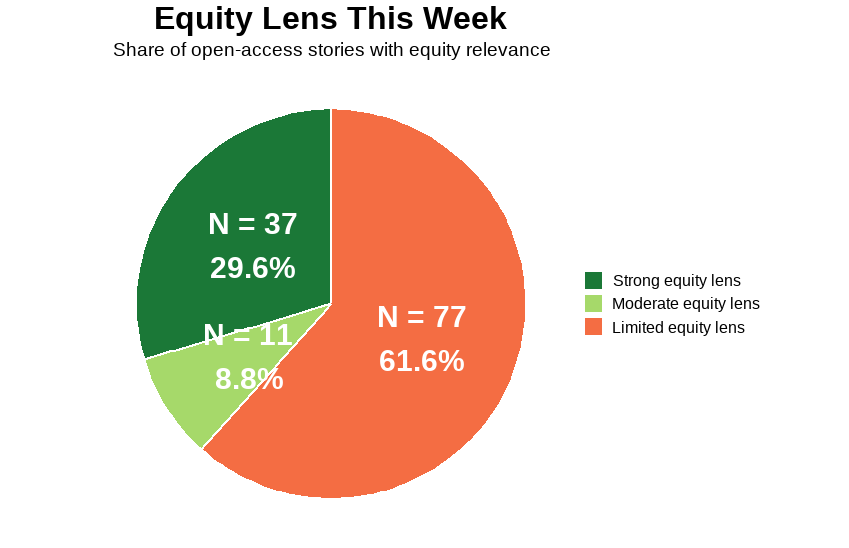
These studies collectively highlight how structural factors—from geography and policy to diagnostic tools and social needs screening—profoundly affect health equity. They emphasize the need for coordinated, culturally aware, and system-level interventions to improve diagnostic equity, surgical care quality, gender-based violence prevention, social determinants integration, and workforce diversity. Public health systems and policymakers must harness this evidence to dismantle barriers and optimize equitable access to care, tailored prevention, and supportive health environments. More than statistics, these findings reveal lived realities and opportunities to uplift health among those systematically marginalized.