RFK Jr. Says HHS Is Looking at Chemtrails. What Does the Science Say?
“Chemtrails” are back in the headlines. U.S. Health and Human Services Secretary Robert F. Kennedy Jr. recently told an audience that the federal government is “looking at chemtrails and the impact of emissions from aircraft, and those potential impacts on health.”
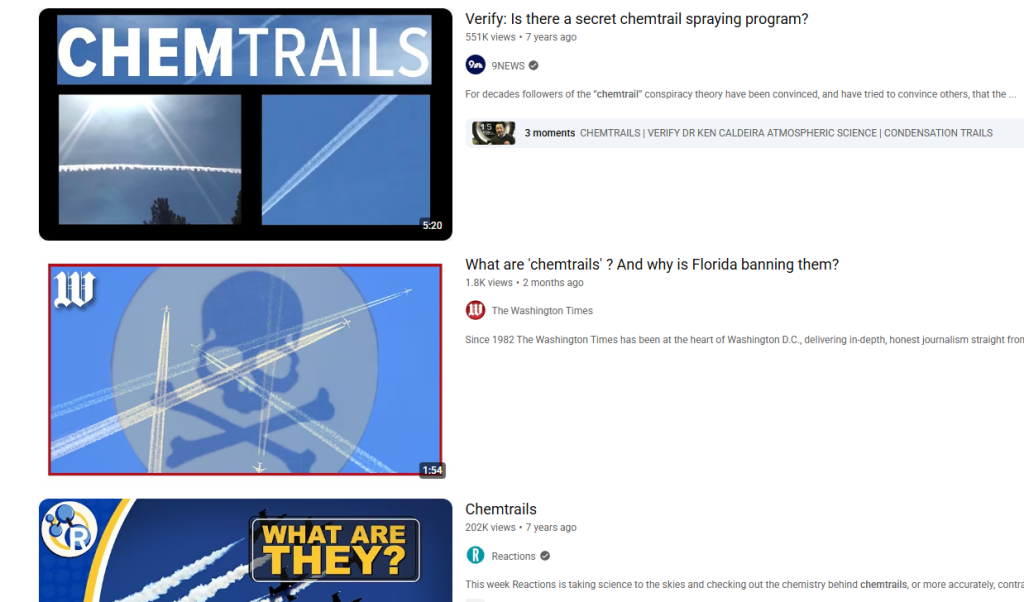
Aircraft emissions are real, and scientists study their effects on air quality, climate, and human health. But that is very different from the popular “chemtrail” theory, which holds that the white trails behind aircraft are evidence of a secret program intentionally releasing chemicals into the atmosphere.
The familiar white lines behind high-flying jets are generally contrails, short for condensation trails. They form when hot, moist aircraft exhaust encounters very cold air at high altitude. Water vapor condenses and freezes around tiny particles, producing clouds of ice crystals.
Depending on atmospheric conditions, a contrail might disappear quickly or remain visible and spread across the sky.
Scientists have investigated claims that these trails are evidence of a secret large-scale spraying program. One frequently cited 2016 survey asked 77 atmospheric scientists about the supposed evidence for such a program. Seventy-six said they had encountered no evidence supporting it.
Why are chemtrails such a durable idea?
People have always looked toward the sky and tried to explain strange or unfamiliar things they see there. What changes is the explanation. Angels, celestial signs, mysterious airships, flying saucers, extraterrestrials, secret government aircraft, and chemtrails all emerged within particular cultural and technological moments.
In other words, the stories we tell about mysterious things in the sky can reveal almost as much about us as they do about what is actually overhead.
We recently examined that bigger question in depth on This Week in Science, tracing how humans have interpreted mysterious visitors and phenomena in the sky across centuries, from angels and fairies to Venusians and the modern “Greys.”
Read our long-form exploration:
And learn more about Public Health Science for yourself!
Build Your Public Health Issue
Tell us a little about your work, and we’ll build a personalized issue with five things worth knowing.