
Bridging Gaps in Public Health Systems: From Falls to Financing, Communication to Climate
As the global health landscape rapidly evolves, recent research offers critical insights into persistent challenges and promising strategies for equitable, effective public health systems. This week, we delve into diverse studies—from injury care in low-resource settings to climate-disease registries and the politics of hospital governance—that together illuminate how evidence, governance, communication, and equity intersect to shape health outcomes worldwide. Here’s why these stories matter for policy, equity, and everyday life.
Fall Prevention in the Middle East & North Africa: Addressing a Silent Epidemic
Unintentional falls among older adults are a leading cause of injury and death globally, posing a growing threat in the rapidly aging Middle East and North Africa (MENA). A comprehensive evidence gap map published in *BMJ Global Health* reveals stark disparities in research investment and data availability across MENA countries. While high-income nations provide national-level registries, low-income and conflict-affected countries like Sudan, Yemen, and Syria remain severely underrepresented.
Why does this matter?
Without solid data on fall risks, fear of falling, and post-fall consequences—especially in rural and marginalized communities—policymakers lack the evidence needed to design targeted prevention and resource allocation strategies. Strengthened surveillance with culturally adapted tools and integrated national survey indicators could drive more equitable fall prevention efforts, ultimately reducing premature disability and costly hospitalizations. This study calls on governments and international partners to fill this data void and safeguard the health of vulnerable older adults in a volatile region.
The Hospital-Centered Governance Trap: Lessons from China for Global Health Equity
China’s century-spanning reliance on hospital-centered operational governance reveals a cautionary tale for health system reform worldwide. Historical analysis shows how administrative control, service expansion, and managerial standardization entrenched hospitals as focal points of finance, expertise, and policy implementation—often at the expense of primary healthcare. This concentration exacerbates inequities by limiting local flexibility and marginalizing frontline health services that are crucial to universal health coverage (UHC).
The study underscores that achieving equitable health requires reforms that redistribute power, funding, and workforce stature in tandem with technical changes. For countries pursuing UHC under resource constraints, steering finance and governance away from hospital dominance towards integrated systems is key. China’s pathway illuminates the risks of path dependence and the necessity of decisive governance shifts to empower primary care as the backbone of equitable access to health care.
Risk Communication in Emergencies: Bridging Theory and Practice for Equity
The COVID-19 pandemic exposed long-standing gaps between risk communication theory and public health emergency practice. A scoping review, coupled with an analysis of Italian regional pandemic plans, highlights a widespread reliance on mass media for top-down communication, with insufficient emphasis on inclusive, participatory approaches that are crucial for equity. While principles like timeliness and transparency are recognized, meaningful citizen engagement, infodemic management, and measurable monitoring remain inconsistent or absent across regions.
This misalignment undermines trust and hampers compliance among marginalized groups who face informational barriers. Strengthening emergency preparedness must therefore embed standardized, equity-centered communication frameworks supported by dedicated workforce training and infrastructure. Effective risk communication is not an afterthought but a public health imperative that protects vulnerable populations and fosters systemic resilience
Climate and Health in Lebanon: Building Integrated Surveillance for Vulnerable Populations
Lebanon’s extreme climate variability and environmental degradation pose mounting health threats, yet no centralized system links environmental data with health outcomes. New research proposes an evidence-based roadmap for a national climate-related disease registry, identifying major barriers—technical, governance, and legislative—to integrated surveillance. By aligning diverse stakeholders around a phased framework that leverages existing digital infrastructure, Lebanon can pioneer monitoring that includes traditionally excluded domains such as non-communicable diseases and mental health.
This integrated approach is essential for developing context-specific adaptation strategies that address the disproportionate impact of climate on marginalized communities. Lebanon’s model offers a blueprint for other climate-vulnerable regions aiming to transform fragmented data into coordinated action to protect public health equity amid escalating environmental crises. –
Mental Healthcare for Minority Cancer Survivors: Tackling Discrimination’s Complex Role
Among racial and ethnic minority cancer survivors in the U.S., everyday discrimination is intricately linked to mental healthcare utilization—but not always in ways public health might expect. Contrary to assumptions that discrimination deters formal care, findings from the All of Us Research Program suggest that experiencing everyday discrimination correlates with *higher* mental healthcare use among Black and Hispanic survivors.
Meanwhile, discrimination within healthcare settings does not increase mental health service engagement, signaling persistent barriers to effective supportive care contacts. This nuanced picture suggests that while survivors facing discrimination may seek mental health help, systemic healthcare discrimination possibly undermines quality or trust, impeding ongoing engagement. Addressing discrimination must thus be a structural priority, with organizational anti-discrimination initiatives that include clear benchmarks to improve equitable access to mental health care within oncology and beyond.
What These Stories Teach Us About Public Health Systems
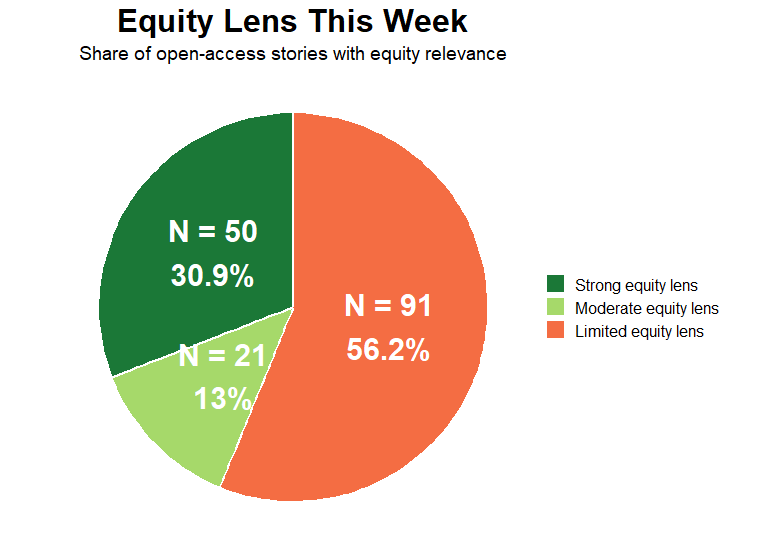
Each of these studies invites a systems-thinking perspective: fragmented data, entrenched governance models, communication disconnects, and structural discrimination collectively shape health outcomes. Public health systems seeking equity and resilience must:
- Invest in contextually nuanced data collection and surveillance to illuminate and address hidden burdens.
- Reassess governance and financing to empower primary care and equitable resource distribution.
- Embed inclusive, transparent communication practices that build trust and engage diverse communities.
- Integrate climate and environmental health surveillance to anticipate emerging health risks.
- Confront discrimination explicitly within health services to improve utilization and quality of care.
Together, these insights offer critical guideposts for policymakers, advocates, and practitioners dedicated to health equity and universal coverage amid 21st-century challenges.
Stay Informed with This Week in Public Health
For sharp, equity-aware analysis of the newest global health research and policy trends, subscribe to This Week in Public Health. Join a community committed to transforming evidence into equitable health for all—one insight at a time.