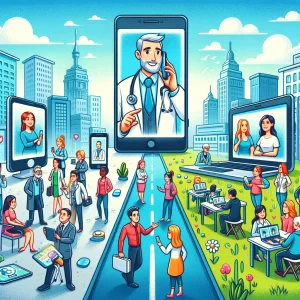

The Future of Telehealth and Public Health
Telehealth, once seen as a niche offering primarily for hard-to-reach areas, has swiftly become a cornerstone of modern healthcare. Propelled by technological advancements and the global push for more accessible health services, telemedicine has revolutionized how healthcare is delivered. It’s more than just video consultations; it’s a broader ecosystem encompassing remote monitoring, mobile health apps, and even virtual reality.
The Rise of Telehealth: A Historical Context
The first inklings of telehealth began with telephone advice lines, but the true transformation began with advancements in video technology and broadband internet. During the COVID-19 pandemic, the need for remote consultations skyrocketed. According to BBC News, the pandemic was an inflection point that led to an unprecedented surge in telehealth adoption. It was out of necessity, but it opened doors to reimagining patient care.
The Role of Policy and Regulations
Government initiatives globally have begun to put necessary frameworks in place to ensure the safe delivery of telehealth services. The New York Times highlights how regulatory bodies are addressing privacy concerns and working towards integrated healthcare systems that can support the expansion of telehealth.
Technological Innovations Driving Telehealth
- AI and Machine Learning: These technologies are increasingly used for diagnostic support, predicting patient deterioration, and personalizing patient care.
- Wearable Technology: Devices like fitness trackers are evolving to collect vital health data that can be shared instantly with healthcare providers, as discussed in New Scientist.
- Blockchain: For secure records management, blockchain offers an immutable ledger of health transactions ensuring privacy and security.
Telehealth’s Impact on Public Health
Telehealth promises vast improvements in public health outcomes by increasing access to care and enabling continuous monitoring of chronic conditions. According to Science Daily, integrating telehealth into the management of diseases such as diabetes and hypertension has led to significant improvements in patient compliance and outcomes.
Challenges Facing Telehealth
Digital Divide
The expectation that everyone has the necessary technology and internet access isn’t always realistic. As The Scientist explores, there’s a pressing need for policies to address the digital divide and ensure equitable access to these services.
Integration with Traditional Healthcare Systems
Many healthcare systems grapple with integrating telehealth solutions into their existing operations. There’s also a need for seamless data sharing across platforms to ensure continuity of care.
Future Prospects: A New Era in Healthcare?
The future of telehealth looks promising, with projects underway that could redefine how we perceive healthcare delivery. Imagine a world where virtual reality enables doctors to ‘attend’ patients globally or artificial intelligence predicts potential health crises before they occur.
While challenges remain, the transformation of telehealth is already invigorating global public health strategies. As United Nations reports suggest, as more resources are directed to interoperable technologies and infrastructure, telehealth may soon become not just an option, but a standard in healthcare and a lifeline for public health systems worldwide.