Volunteering and Blood Pressure: New Insights for Adults Without Insurance
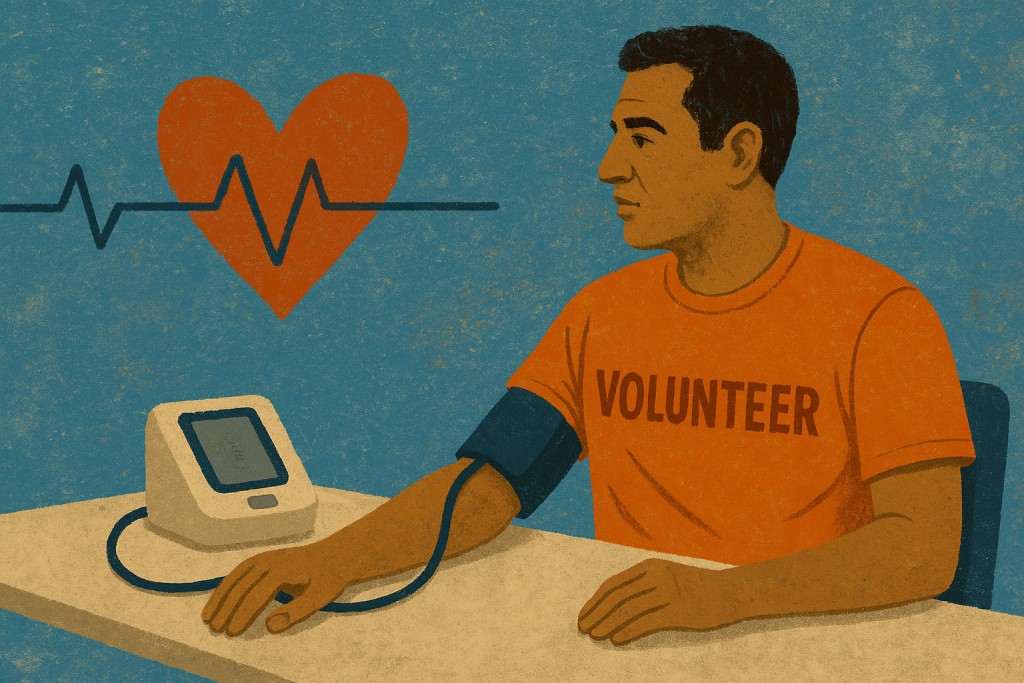
High blood pressure (HBP) is a significant predictor of cardiovascular disease, a leading cause of death in the U.S. While it’s well-known that medication can help manage HBP, new research suggests that another, less conventional approach might also pay dividends: volunteering.
Build Your Public Health Issue
Tell us a little about your work, and we’ll build a personalized issue with five things worth knowing.
Exploring Volunteering’s Impact on Blood Pressure
Researchers conducted a prospective cohort study to examine if volunteering influences HBP among U.S. adults in late midlife (ages 50-64). Using data from the Health and Retirement Study (HRS) collected between 2012 and 2018, they analyzed a sample of 4,169 individuals. The study examined whether volunteering could reduce HBP prevalence and whether health insurance status influenced this relationship.
Key Findings: Volunteering and Health Insurance
The study found that volunteering was associated with a lower HBP prevalence (PR=0.86). When broken down by insurance status, volunteering correlated more strongly with reduced HBP among uninsured participants (PR=0.64) than among insured participants (PR=0.90). This suggests that uninsured adults may benefit more from volunteering than their insured counterparts.
For uninsured individuals, the absence of regular healthcare services may mean that volunteering provides vital health benefits through increased social engagement and physical activity. While insured volunteers also experience health benefits, they are likely less pronounced because they have easier access to medical services and preventive care.
Mechanisms Behind Volunteering’s Benefits
Volunteering can improve cardiovascular health through several pathways: increased physical activity and stronger social connections. Volunteers often engage in active tasks or walk to their volunteering sites, thus reducing sedentary behavior. Moreover, interacting with diverse social groups can provide emotional support and relieve stress.
This study also reaffirms earlier evidence that volunteering benefits accrue more to those with lower socioeconomic resources, hinting at its potential as an equalizer in health outcomes.
What This Means in Practice
For Public Health Departments
Consider promoting volunteer programs as part of non-pharmacological strategies to manage HBP, especially targeting areas with high numbers of uninsured individuals. Facilities could partner with local organizations to create volunteer roles that increase activity and social engagement.
For Community Organizations
Community groups should partner with public health agencies to create or expand volunteer programs that offer stipends or transportation reimbursements, making volunteering accessible to more people.
For Policy Makers
Policymakers might consider supporting initiatives that incentivize midlife volunteer participation, particularly programs accessible to uninsured adults. Implementing policies that reduce barriers to volunteering could amplify these health benefits.
Limitations and Unanswered Questions
While the study highlights significant associations between volunteering and reduced HBP, its observational design limits causal inference. Unmeasured factors, such as family history of cardiovascular conditions or local health resources, might also play a role. Additionally, volunteering was measured as a binary variable, which doesn’t capture nuances in the type or intensity of activities. Future research could explore these variables further and clarify whether specific types of volunteering offer more substantial health benefits.
Conclusion
This research underscores volunteering’s potential as a community-based intervention for cardiovascular health in adults approaching retirement age. While volunteering is not a replacement for insurance, it is a valuable supplement, particularly for those without adequate health coverage. Expanding volunteer opportunities cannot only enhance individual well-being but also strengthen community bonds and improve broader social health outcomes.