
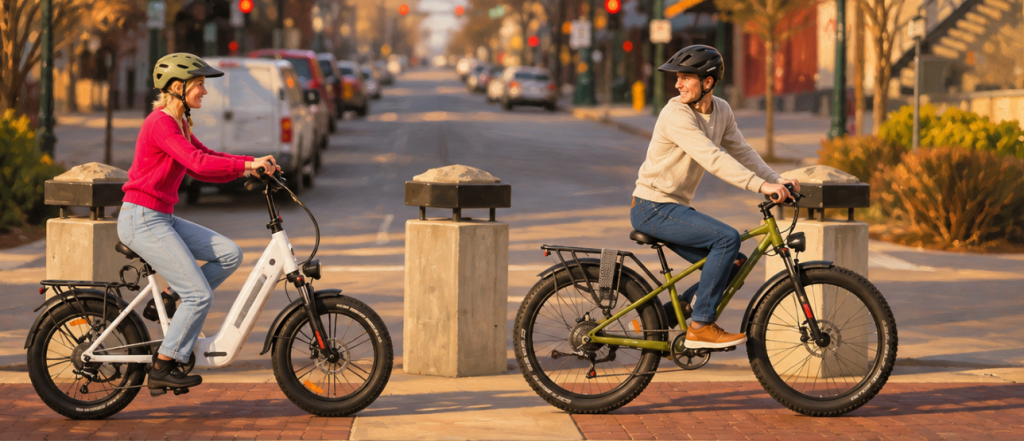
Kids Are Getting Hurt on E-Bikes. Are Communities Ready?
Imagine a 10-year-old riding an electric scooter through a neighborhood.
Maybe they’re heading to a friend’s house. Maybe they’re riding in a park. Maybe they’re using a device that was purchased for an older sibling.
For the child, it’s freedom.
For a parent, it might seem like an ordinary afternoon.
But for emergency departments, electric bicycles and scooters are becoming an increasingly visible source of childhood injuries.
A new study published in JAMA on November 2, 2026, raises important questions about how communities are managing the rapid growth of electric transportation—and whether safety protections are keeping up.
The study found that pediatric injuries involving electric bicycles and scooters increased substantially between 2023 and early 2026. More concerning, these injuries were more likely to be severe than those associated with traditional bicycles and scooters.
The findings should prompt a public health conversation that goes beyond simply telling children to be careful.
A Growing Childhood Injury Prevention Problem
Researchers examined 13,307 injury encounters across six major pediatric health systems.
Of those, 642 involved electric bicycles and 1,396 involved electric scooters.
After adjusting for seasonal patterns, the rate of electric bicycle injury encounters increased by an estimated 33% per quarter. Electric scooter injury encounters increased by 15% per quarter.
The rates for traditional bicycles and scooters rose much more slowly.
These estimates describe changes among children treated in the participating health systems, not changes in the risk faced by every child who rides.
Still, the trend suggests a growing demand for pediatric injury prevention efforts.
And the seriousness of some injuries makes the findings particularly important.
The Injuries Aren’t Just Scrapes and Bruises
Children fall off traditional bicycles and scooters all the time. Most injuries do not require intensive medical treatment.
But electric devices may introduce additional concerns because of their potential speeds and the environments in which children ride them.
In the new study, 8% of electric bicycle injury encounters involved high-severity injuries, compared with 4% for traditional bicycles.
For electric scooters, 5% were high-severity, compared with 2% for nonmotorized scooters.
Brain injuries were recorded in 10% of electric bicycle encounters and 9% of electric scooter encounters.
These figures are especially concerning because serious injuries can have consequences beyond the immediate medical emergency.
A severe injury can affect a child’s education, mobility, family routines, and emotional well-being. Families may also face transportation costs, time away from work, and ongoing care needs.
Those broader consequences were not measured in the study, but they are important considerations for public health planning.
Nearly Half of Injured E-Scooter Riders Were Under 12
One of the study’s most important findings involves age.
Approximately 44% of electric scooter injuries and 24% of electric bicycle injuries occurred in children younger than 12.
That means this isn’t exclusively a teenage transportation issue.
It is also a childhood safety issue.
Young children are still developing the cognitive and physical skills required to judge speed, anticipate hazards, recognize traffic patterns, and respond to unexpected situations.
They may be riding devices that accelerate faster than the bicycles and scooters they’re used to.
They may also share space with cars, pedestrians, cyclists, and other riders.
We need to ask whether our safety expectations have caught up with the technology.
Do parents understand the differences between electric and nonmotorized devices? Are children receiving adequate instruction before using them? Are communities providing appropriate places to ride?
These are practical questions that schools, families, youth organizations, and local governments can address.
Why Helmet Safety Matters—but Isn’t Enough
Helmet use is an obvious starting point for injury prevention.
Given the percentage of encounters involving brain injuries, properly fitted helmets appropriate to the activity should be part of any serious prevention conversation.
But helmets are only one layer of protection.
They cannot prevent every type of injury, and they do not eliminate dangers from excessive speed, motor vehicle collisions, poor visibility, or unsafe road design.
A comprehensive approach should consider how the rider, the device, and the environment interact.
For families, that might mean choosing age-appropriate equipment, understanding how fast a device can travel, practicing in controlled environments, and establishing clear expectations about where children may ride.
For communities, it might mean improving separation between children and fast-moving vehicles, reviewing intersections where conflicts occur, and making safe routes accessible.
These are reasonable prevention strategies, although the new JAMA study did not evaluate their effectiveness.
The broader public health principle is familiar: Safety improves when environments and systems help prevent injuries, rather than placing all responsibility on individual behavior.
Should Communities Restrict Electric Bikes and Scooters for Children?
As electric devices become more common, policymakers face difficult decisions.
Should communities establish minimum riding ages? Should certain devices face speed restrictions? Should schools adopt policies for students arriving on electric bicycles? Should more investment go toward protected cycling infrastructure?
These decisions involve trade-offs.
Electric bicycles and scooters can provide transportation options and independence, particularly for adolescents who cannot drive.
Overly restrictive policies could limit mobility without necessarily addressing the circumstances that produce the most serious injuries.
On the other hand, allowing unrestricted use without adequate safety education or suitable infrastructure could expose children to avoidable harm.
The research does not establish which regulations would most reduce injuries.
However, it provides a rationale for examining age-appropriate use, device capabilities, safety education, and the environments where children ride.
Rather than starting with a simple choice between banning and allowing devices, communities could begin by asking a more useful question:
What combination of protections would reduce serious injuries while preserving safe transportation opportunities?
A Public Health Approach to E-Bike and E-Scooter Safety
The findings create an opportunity for coordinated local prevention.
Schools, public health departments, pediatric health systems, transportation planners, and families have different roles to play.
1. Make safety education part of routine childhood injury prevention.
Pediatric clinicians, schools, and youth programs can help families understand the differences between electric and nonmotorized devices, including acceleration, handling, visibility, and protective equipment.
2. Examine local injury patterns.
Health departments and hospital systems can explore whether their own data show increases in electric bicycle or scooter injuries. Where feasible, information about injury circumstances could help identify preventable patterns.
3. Evaluate where children are riding.
Transportation planners can examine whether children have access to suitable routes and whether dangerous interactions with motor vehicles can be reduced.
4. Review age and device policies.
Schools and local governments can assess whether existing rules reflect actual device capabilities, developmental considerations, and applicable state laws.
5. Measure whether prevention efforts work.
Communities should evaluate whether safety programs, infrastructure improvements, and policy changes reduce injuries rather than assuming that a well-intentioned intervention is effective.
No single strategy is likely to address every circumstance in which a child is injured.
The goal should be a coordinated approach that combines education, environmental improvements, appropriate policies, and ongoing evaluation.
What the Research Doesn’t Tell Us
One critical limitation deserves attention.
The researchers did not measure how frequently children used electric bicycles or scooters.
That means the study cannot tell us whether an individual electric bicycle ride is more dangerous than a traditional bicycle ride.
The increase in injuries may partly reflect rapid growth in the number of children using these devices.
Changes in medical coding may also have contributed to observed increases.
However, the finding that electric-device injury encounters more often involved high-severity injuries remains concerning.
Public health leaders should interpret the results carefully while recognizing that unanswered questions do not eliminate the need for thoughtful prevention.
The Hidden Value of Better Injury Surveillance
The study also highlights something public health systems should pay attention to: the importance of timely information.
Researchers used electronic health records from the PEDSnet network to identify injury patterns across several pediatric health systems.
Recently introduced medical codes allowed them to distinguish electric bicycle and scooter injuries from traditional device injuries.
New technologies and behaviors can spread more quickly than conventional public health surveillance systems can respond.
If communities have to wait years for comprehensive injury data, important prevention opportunities may be missed.
More timely injury surveillance could help health departments identify emerging trends, target prevention programs, and assess whether interventions are making a difference.
The same principle applies to other emerging risks, from new recreational technologies to changing patterns of substance use and injury.
Public health needs information systems that can adapt as quickly as the environments they are designed to monitor.
Making Freedom Safer for Children
Electric bicycles and scooters are not disappearing.
For many families, they are becoming part of everyday transportation and recreation.
The question is whether communities can adapt before preventable injuries become an accepted part of that transition.
This study does not prove that electric devices are inherently unsafe. Nor does it establish that banning them would improve health.
But it does identify a warning sign: serious pediatric injuries associated with electric bicycles and scooters are appearing more frequently in the health systems studied, and the proportion of severe injuries is higher than for comparable nonmotorized devices.
Public health has an opportunity to respond with better data, smarter infrastructure, clearer guidance, and thoughtful policies.
Children deserve opportunities to explore their communities, build independence, and enjoy being outdoors.
Our responsibility is to make those opportunities as safe as possible—not wait until more children are seriously injured to begin asking how.
Build Your Public Health Issue
Tell us a little about your work, and we’ll build a personalized issue with five things worth knowing.


