
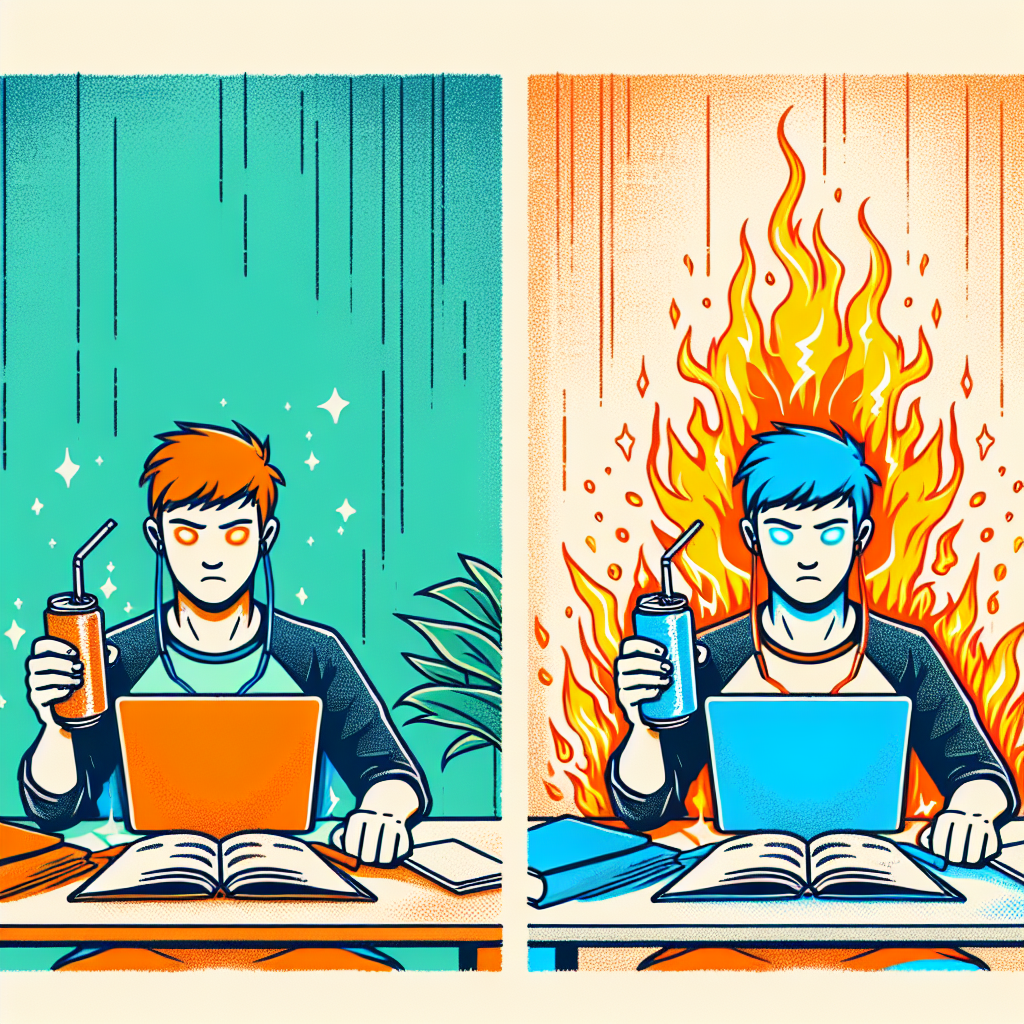
Energy Drinks, Student Health, & Performance
Picture this: a university library buzzing with activity during exam week. Amidst the whispering pages and focused faces, the unmistakable hiss of a can being opened signals a student’s reliance on energy drinks for that extra push.
Energy drinks are a common feature of the study routines of many higher-education students, promising improved concentration and increased stamina. However, what are the real implications of this consumption on mental health and academic performance?
Understanding the Increasing Popularity of Energy Drinks
Energy drinks, packed with caffeine, taurine, and high sugar content, have been touted as boosting academic performance. Globally, 54.7% of people have tried them at least once, with 32.3% consuming them in the last month. For students, the allure is clear—they are often used to stay awake to study, stay alert during lessons, and meet assignment deadlines.
The Core of the Protocol Study
The referenced research protocol from Oliveira Batista et al., published in PLOS ONE, outlines a systematic review and meta-analysis planned to evaluate the effects of energy drinks on the mental health and academic performance of university students. This effort will synthesize available data to provide robust evidence on the short-, medium-, and long-term effects of these beverages.
Current Evidence – A Mixed Picture
Research indicates varying results; some studies suggest energy drinks can improve cognitive performance, while others highlight a correlation with increased stress, anxiety, and depression levels. This study aims to address gaps by examining inconsistencies in the current literature and focusing specifically on higher education students.
Key Findings for Practical Application
The systematic review’s anticipated findings aim to guide public health policies to promote student well-being:
- Establish educational measures on the effects of energy drink consumption.
- Integrate evidence into university health and counseling services.
- Develop targeted interventions to manage stress among students.
What Health Departments & NGOs Can Do
- Local Campaigns: Launch awareness programs highlighting the risks associated with excessive energy drink consumption.
- Policy Development: Establish guidelines for labeling and marketing of these drinks, especially towards younger demographics.
- Support Systems: Strengthen student health services focusing on mental well-being and study habits independent of stimulants.
Barriers and Future Research
Challenges in Implementation
The road to integrating these findings into policy is fraught with obstacles, including financial constraints, political hurdles, and skepticism about the efficacy of these measures. Furthermore, there is a need for customizable interventions that account for cultural differences in consumption patterns and perceptions of energy drinks.
Open Questions for Continued Exploration
The systematic review points to several areas needing further research:
- How might energy drinks influence students differently based on gender or academic discipline?
- What role do social and cultural factors play in energy drink consumption?
- Can alternative strategies for enhancing academic performance be effectively promoted?
Join the Conversation
As the implications of energy drink consumption continue to unfold, public health professionals, educators, and policymakers must ask themselves:
- How might current regulations or lack thereof affect student choices on caffeine and energy drinks?
- What community-specific barriers exist to implementing effective educational campaigns?
- Are our assumptions about the benefits of energy drinks for students challenged by emerging evidence?
This study sheds light on the potential trade-offs between the perceived academic benefits and possible health consequences of energy drinks among students. It’s a call to action towards informed consumption and policy changes that could positively impact our communities.