Climate Change Health: The Four Ways a Warming Planet Is Reshaping Public Health
Right now, 3.6 billion people live in areas highly vulnerable to climate impacts. Not in 2050. Not in projections. Now. Climate change health is one of those topics that still gets treated as a future problem, something for the next generation of public health professionals to sort out. That framing is wrong, and the evidence has been telling us so for years. The WHO has officially declared climate change a health crisis. The IPCC’s Sixth Assessment Report concluded that climate risks are appearing faster and becoming more severe sooner than previously expected.
In 2026, the question is no longer whether climate change is a public health issue. It clearly is. The question is whether public health systems, practitioners, and policymakers are responding at the pace and scale the evidence demands. This post breaks down the four core pathways through which climate change is reshaping human health, what the peer-reviewed evidence says about each, and what public health professionals need to understand to respond effectively.
How Does Climate Change Affect Health?
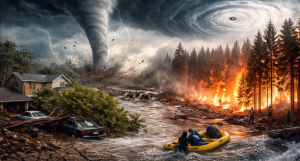
Climate change affects health both directly and indirectly, and across every system that health depends on. Direct impacts include extreme heat, floods, storms, and wildfires. Indirect impacts include shifts in where infectious diseases occur, disruptions to food and water systems, and the psychological toll of living through compounding climate disasters.
The WHO projects an additional 250,000 deaths per year between 2030 and 2050 attributable to climate change across just a handful of well-understood health indicators. That figure deliberately undercounts total climate change health mortality. It does not include the full range of climate-sensitive diseases, mental health impacts, or the compounding effects of multiple hazards occurring simultaneously.
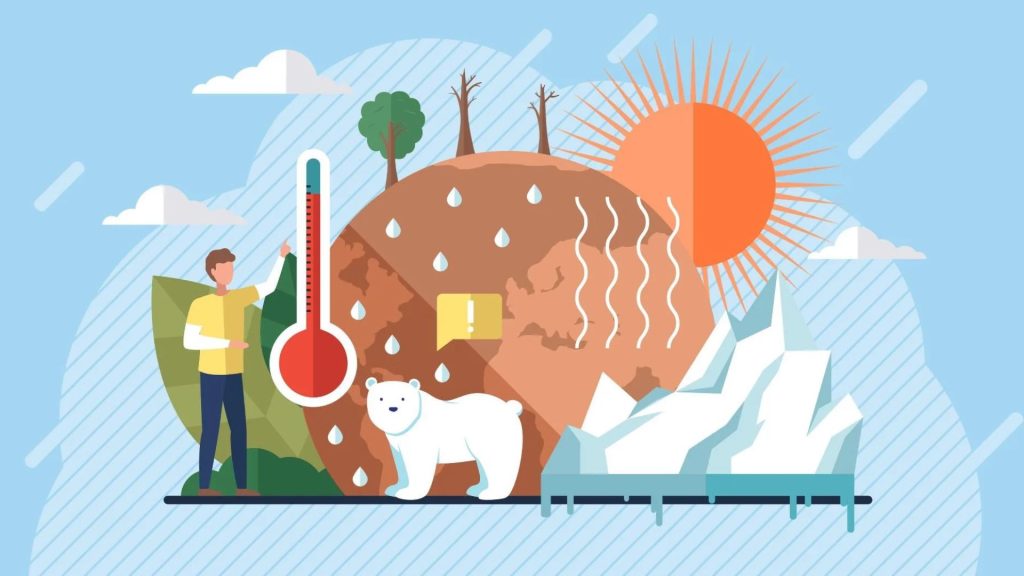
Four pathways demand the most urgent attention from public health professionals: extreme heat, vector-borne and infectious diseases, food and water security, and mental health. Each is already generating real harm. Each will get worse without coordinated action.
Extreme Heat Is Already Killing People
Extreme heat is the most direct and well-documented climate change health risk. It kills through cardiovascular strain, heat stroke, respiratory failure, and by worsening chronic conditions that become unmanageable in high temperatures. This is not a future risk, current one, reshaping emergency department volumes, workforce productivity, and mortality statistics in countries at every income level.
Who Bears the Heaviest Burden
Research published in Nature Climate Change found that women and the elderly accounted for 60% and 90% of attributable heat-related deaths, respectively, with older women experiencing mortality at nearly double the rate of the general population. Children face elevated risks too, with immature immune systems, higher metabolic demands, and smaller airways making them physiologically more susceptible to heat and air quality changes.
Outdoor workers, people experiencing homelessness, and communities in urban heat islands with limited green space or air conditioning face compounding exposure. The populations with the least capacity to adapt are consistently those bearing the highest burden. This pattern mirrors what research on health inequities and disproportionate climate burden has shown across other infectious disease contexts — structural disadvantage amplifies every health risk, including climate-driven ones.
What the Data Shows About Heat Mortality
PMC research on climate crisis health impacts found that heat wave days are associated with a 27% increased risk of hospital admissions and visits, and with significantly elevated mortality from cardiovascular and mental health conditions. The summer of 2024 was recorded as the hottest in history. Without intervention, temperatures are on track to increase by an additional 7 degrees Fahrenheit by 2100. The trajectory is not ambiguous.
Understanding how extreme weather events reshape rural health access is essential context here. Heat emergencies in rural and remote communities expose infrastructure gaps, workforce shortages, and healthcare access barriers that urban-centered public health planning consistently misses.
Vector-Borne and Infectious Diseases Are Expanding Into New Territories
Climate change health impacts extend far beyond heat. Warming temperatures and shifting rainfall patterns are changing where mosquitoes, ticks, and other vectors can survive and breed. The result is that infectious diseases once confined to tropical regions are expanding into new geographies, reaching populations with no prior exposure and limited immunity.
Malaria, Dengue, and Lyme Disease on the Move
WHO data shows that vector-borne diseases currently kill over 700,000 people annually, and that number is projected to rise without preventive action. Malaria cases are increasing at higher altitudes in Eastern Africa, Nepal, and Colombia as warming temperatures make previously unsuitable highland regions hospitable to Anopheles mosquitoes. Dengue is now established in parts of Europe and the Americas where it was not previously endemic. West Nile virus, historically confined to Africa and the Middle East, is now documented across North America and parts of Europe.
Tick-borne diseases, including Lyme disease and tick-borne encephalitis, are expanding their range in response to warmer winters and longer transmission seasons. Climate change shortens mosquito breeding cycles and viral incubation periods, amplifying transmission efficiency even within existing endemic zones.
What This Means for Surveillance and Preparedness
The geographic expansion of vector-borne diseases requires public health surveillance systems to adapt in real time. Disease maps built on historical data are becoming unreliable guides to where outbreaks will next occur. Climate-informed surveillance, which integrates weather and temperature forecasting into disease risk modeling, is no longer a technical aspiration. It is an operational necessity for effective climate change health response.
Food, Water, and Nutrition Security Are Under Direct Threat
Climate change health impacts reach into food and water systems in ways that compound every other health risk. Malnutrition weakens immune systems. Waterborne disease follows floods and drought. Food insecurity drives inequities that structural health systems are poorly equipped to address.
2 Billion People Already Lack Safe Drinking Water
WHO data shows that 2 billion people currently lack access to safe drinking water, and 600 million suffer foodborne illnesses annually, with children under five bearing 30% of foodborne fatalities. Climate stressors directly heighten these risks. Floods contaminate water sources. Droughts reduce agricultural output. Extreme temperatures compromise food storage and distribution systems.
How Climate Change Drives Malnutrition
In 2020, 770 million people faced hunger, predominantly in Africa and Asia. Climate change affects food availability, quality, and diversity across all three dimensions simultaneously. Crop failures reduce caloric supply. Higher atmospheric carbon dioxide concentrations reduce the nutritional density of staple crops. Disrupted growing seasons increase price volatility in food markets that low-income households have no buffer against.
The World Bank estimates that by 2030, climate change health effects alone could push 44 million people into extreme poverty, with food and nutrition insecurity as a primary driver of that figure. These are not background statistics. They are public health outcomes.
The Mental Health Impacts of Climate Change Are Underestimated
The mental health dimension of climate change health is consistently the most underrepresented in policy and practice conversations. It is also among the fastest-growing areas of concern in the peer-reviewed literature.
Acute and Chronic Psychological Effects
Research published in PMC on climate change and mental health identifies two distinct categories of psychological impact. Acute effects include anxiety, post-traumatic stress disorder, and grief following extreme weather events such as floods, wildfires, and hurricanes. Chronic effects include the slower-building psychological toll of displacement, disrupted social cohesion, loss of livelihood, and sustained uncertainty about the future.
Communities that experience repeated climate disasters show compounding psychological harm that standard post-disaster mental health responses are not designed to address. Displacement in particular, when communities lose homes, land, or entire ways of life to sea level rise or desertification, creates a form of grief that has no clear clinical framework yet.
Eco-Anxiety and the Burden on Young People
Eco-anxiety, the chronic fear of environmental catastrophe driven by awareness of climate change, is increasingly documented in young people globally. It is not a clinical disorder, but it is a real psychological burden that affects wellbeing, daily functioning, and public engagement with climate action. Public health communication on climate change health that relies on fear-based messaging without accompanying solution-oriented framing risks deepening eco-anxiety without producing behavior change.
Who Is Most Vulnerable to Climate Change Health Impacts?
The evidence is consistent across every pathway. The most vulnerable populations are women, children, older adults, people with chronic illnesses, low-income communities, communities of color, migrants, and displaced persons. These groups face higher exposure to climate hazards, lower capacity to adapt, and less access to the healthcare and social infrastructure that could buffer climate change health harms.
This is not accidental. It reflects the same structural inequities that drive health disparities across every other domain of public health. Climate change does not create new vulnerabilities. It amplifies existing ones. Any effective climate change health response must center equity explicitly, not as an add-on, but as a design requirement.
What Can Public Health Professionals Do About Climate Change Health Risks?
The evidence base is clear enough to act on. A few priorities stand out.
Build climate into routine health assessment. Temperature, air quality, vector exposure, and food security are all climate-sensitive health determinants. Integrating them into community health assessments and surveillance systems is a direct public health function.
Advocate for climate-resilient health infrastructure. The questions facing federal public health infrastructure are inseparable from climate preparedness. Health facilities that cannot withstand extreme weather events, and communities that lack cooling centers, clean water backup systems, and emergency food access, are not prepared for the climate change health challenges already arriving.
Public health institutions that advocate for climate action while failing to address their own carbon footprint face a credibility gap. Decarbonizing health systems is both a mitigation strategy and a leadership signal.
Use clear, solution-focused communication. Climate change health messaging that leads with fear without pathways to action increases anxiety without building resilience. The evidence supports framing that is honest about risk, specific about impacts, and grounded in what communities and practitioners can actually do.
The Bottom Line
Climate change health is one of the defining public health challenges of this century. The evidence across heat, infectious disease, food and water security, and mental health is clear. The impacts are unequal, accelerating, and already being felt by billions of people.
Public health professionals are not bystanders in this. They are among the most credible voices for translating climate evidence into policy action, community preparedness, and systems-level change. The work is urgent, the evidence is solid, and the time to act is now.
Stay ahead of the evidence. Explore the latest peer-reviewed public health research at This Week in Public Health, updated weekly.