
How to Conduct an Environmental Scan: A Guide for Public Health Practitioners
Last updated: March 2026. This has been one of our most popular posts, so I decided to revisit it and improve it (again). — Jon
In public health, staying ahead of emerging trends is not optional. It is foundational to good strategy. But there is often confusion about what an environmental scan actually is — and how it differs from research synthesis. In this updated guide, I will walk you through:
- What an environmental scan really is (and what it is not)
- How it differs from systematic reviews and other evidence syntheses
- How to conduct a rigorous, transparent environmental scan
- How to avoid common methodological mistakes
- How to communicate findings responsibly
By the end, you will know how to conduct an environmental scan that is useful, credible, and strategically powerful.
What is an Environmental Scan?
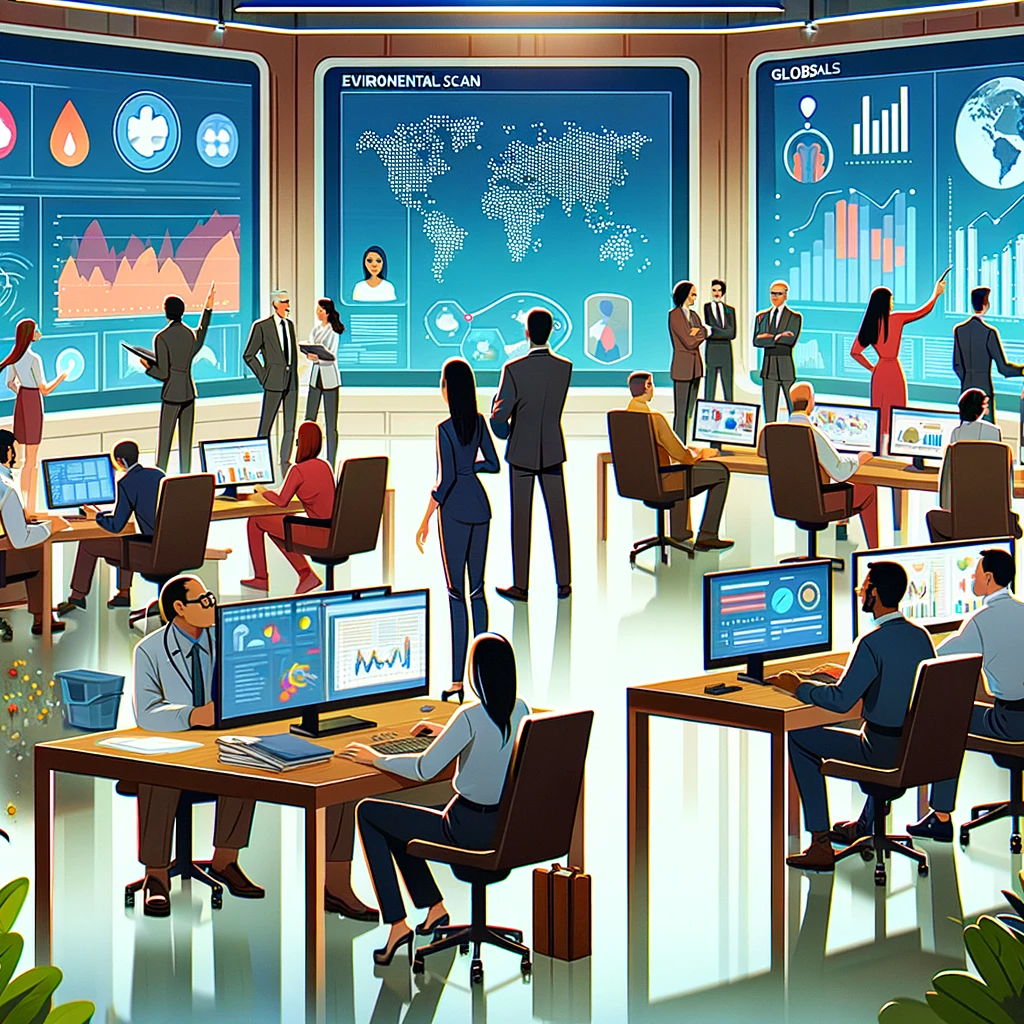
An environmental scan is a structured process for mapping what is happening now in a specific field, community, or policy space. It gathers and analyzes information about external and internal factors that shape an issue area. This might include policies, programs, epidemiologic trends, funding flows, media narratives, organizational activity, or community concerns.
At its core, an environmental scan builds a high-resolution picture of the present moment. It answers questions such as: What exists? Who is doing what? Where are the gaps? What signals are emerging? What pressures or opportunities are shaping this issue?
Environmental scans are forward-looking. They help practitioners anticipate what might happen next by carefully examining what is unfolding now. However, they are not automatically designed to determine whether specific interventions are effective. That distinction is critical.
Key Components of an Environmental Scan
- Data Collection: This involves gathering information from various sources, including demographic data, health trends, policy changes, and socio-economic factors.
- Analysis: Data are analyzed to understand the implications for public health, considering factors such as disease prevalence, health disparities, and resource allocation.
- Interpretation: Finally, the data and analysis are interpreted to provide actionable insights for public health strategies.
By examining a range of data sources, environmental scans offer a holistic view of the factors shaping public health at any given moment.
Environmental Scan vs. Research Synthesis: Understanding the Difference
Environmental scans are often confused with systematic reviews or other forms of research synthesis. The two approaches are related but serve different purposes.
An environmental scan maps the terrain. It describes trends, identifies stakeholders, surfaces innovations, and highlights gaps. It may draw from peer-reviewed studies, policy reports, media coverage, and grey literature. It often prioritizes breadth and timeliness over formal quality appraisal.
A research synthesis, such as a systematic review or umbrella review, is more tightly focused. It addresses specific research questions using explicit inclusion criteria, assesses study quality, evaluates consistency across findings, and sometimes grades confidence in conclusions. It is designed to answer questions about what the evidence shows, not simply what exists.
Understanding this distinction strengthens your credibility. When you conduct an environmental scan, you are mapping the landscape. When you conduct a research synthesis, you are evaluating the strength of evidence. Public health needs both, but they are not interchangeable..
Steps to Conduct an Effective Environmental Scan
Conducting a successful environmental scan involves several steps. Here’s how you can do it:
Step 1. Define the Scope
A strong environmental scan begins with a clearly defined purpose. Are you preparing for strategic planning? Informing a grant proposal? Assessing program saturation? Identifying emerging threats? Clarifying the purpose shapes every subsequent decision.
You should also define the population, geographic boundaries, time frame, and types of sources that will be included. Even though environmental scans are more flexible than systematic reviews, they still require boundaries. Without them, the scan can drift into an unfocused collection of interesting but disconnected information.
Step 2. Develop Transparent Inclusion Criteria
While environmental scans do not always require formal quality appraisal, they still benefit from explicit inclusion criteria. Decide in advance what types of sources will be included and what will be excluded. For example, you might include peer-reviewed research, government reports, foundation briefs, and recent policy documents published within the past five years. You might exclude purely opinion-based commentary without supporting data.
Transparency about how sources were selected builds credibility. If a stakeholder asks why certain materials were included or omitted, you should be able to explain your rationale clearly.
Step 3: Gather Data Across Multiple Domains
Environmental scans are strongest when they draw on multiple information ecosystems. Epidemiologic data from agencies such as the CDC can provide insight into disease prevalence and disparities. Policy tracking can reveal pending legislative shifts. Peer-reviewed research offers theoretical and empirical grounding. Grey literature from foundations and nonprofit organizations often captures practice-based innovation. Funding data can illuminate where capital is flowing. Media coverage and community listening sessions can surface emerging concerns that formal datasets have not yet captured.
When incorporating grey literature, it is important to label it clearly. Reports from respected organizations can be highly informative, but they should not be presented as equivalent to peer-reviewed evidence without signaling their source type. Here are some key sources to consider:
- Government Reports and Public Health Data
Agencies like the CDC and WHO provide essential data on disease prevalence, vaccination rates, and healthcare access. - Legislative and Policy Documents
Keep up with health-related policies and regulations. Legislative changes can signal future public health challenges. - Health Surveys and Epidemiological Studies
Data from surveys such as the BRFSS or NHANES provide insight into health behaviors and trends across different populations. - Peer-Reviewed Research
Academic journals are a rich source of up-to-date findings and reviews relevant to public health. - Media and Public Opinion
Stay informed on emerging health issues by monitoring news outlets and analyzing public sentiment through opinion polls. - Social Media and Online Trends
Platforms like Twitter and Facebook provide real-time information on public health discussions and concerns. - Collaborative Networks
Engaging with other health professionals and non-governmental organizations (NGOs) can provide unique data and insights.
By pulling data from diverse sources, you ensure your environmental scan is comprehensive and captures both broad trends and niche issues.
Step 4. Analyze Trends
Once you’ve gathered the data, it’s time to analyze it. Look for:
- Patterns: What are the recurring themes across your data sources?
- Correlations: Are there relationships between different variables, such as health disparities and healthcare access?
- Unexpected Results: Identify any surprises that could signal emerging issues.
Your analysis might involve statistical methods or qualitative approaches, depending on the type of data collected. The goal is to pinpoint the factors that will most affect public health moving forward.
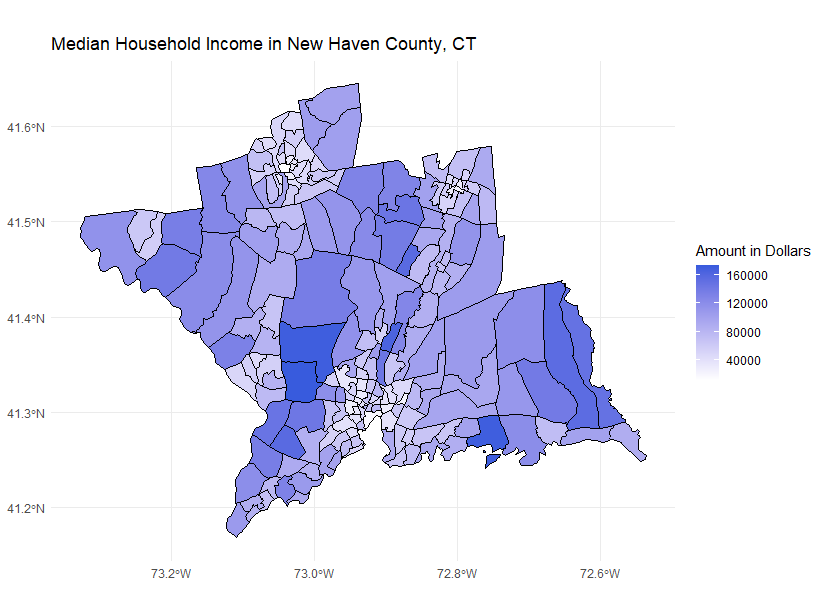
One useful lesson from research synthesis is the value of structured summary tables. Rather than relying only on narrative description, consider organizing findings into a clear format that identifies the domain, key finding, source type, geography, and potential implications.
Even if you are not conducting a formal quality assessment, you can still indicate whether a finding is supported by multiple independent sources or whether it reflects a single emerging report. This helps prevent overstatement and makes your scan more decision-ready.
Step 5. Watch for Overlap and Double Counting
If your environmental scan incorporates systematic reviews or large reports, pay attention to potential overlap in the underlying evidence. Multiple reviews may rely on the same set of primary studies. Treating each review as independent confirmation can exaggerate certainty.
If overlap cannot be determined, note that limitation explicitly. A brief statement acknowledging possible overlap signals methodological awareness and strengthens trust.
Step 6: Distinguish Signals from Conclusions
Environmental scans often detect early warning signs or emerging innovations. It is important to describe these as signals rather than definitive conclusions. For example, if several reports describe rapid growth in a particular intervention, that indicates momentum. It does not automatically establish effectiveness.
Careful language protects your credibility. Instead of stating that an intervention is effective, you might say that it is widely implemented and that formal effectiveness evidence varies. Precision in wording reflects respect for the complexity of public health evidence.
Step 7: Incorporate Qualitative Insight Thoughtfully
Environmental scans often include interviews, practitioner insights, or community feedback. These qualitative sources add depth and context, but they should be anchored in specific examples. When possible, connect broader claims to concrete observations or illustrative quotes.
Avoid abstract generalizations unsupported by clear examples. Grounded qualitative insight is powerful. Unanchored generalization is not.
Next, interpret your findings in the context of public health. What do these trends mean for health outcomes? What opportunities or threats do they present?
For example, if your scan reveals that healthcare access is declining in a certain area, it may be time to advocate for policy changes or resource allocation to address the disparity. The ultimate aim is to turn data into actionable insights that inform public health strategy.
Step 8: Identify Gaps Explicitly
A strong environmental scan does more than describe what exists. It also identifies what is missing. This may include populations that are underrepresented in research, geographic regions with limited data, policy areas lacking evaluation, or domains dominated by grey literature rather than peer-reviewed studies.
Explicitly identifying gaps can shape future funding priorities, research agendas, and advocacy strategies
Step 9: Communicate (including about uncertainty)
Finally, communicate your findings to stakeholders in a clear and actionable way. Whether through presentations, reports, or executive summaries, effective communication ensures your environmental scan informs decision-making at all levels.
Make sure your report includes recommendations based on the data and presents the information in a way that is easy to understand for both public health experts and non-experts.
Perhaps the most important lesson from evidence synthesis is the need to communicate uncertainty. Not all findings carry equal weight. Some trends are supported by multiple peer-reviewed studies across settings. Others are preliminary signals based on a small number of reports.
You do not need a formal grading system to acknowledge this. A simple statement indicating whether confidence is high, moderate, or emerging can meaningfully improve decision-making. Public health leaders benefit from knowing not only what is happening, but also how certain we are about it.
Conclusion: The Power of Environmental Scans in Public Health
Public health operates in a rapidly shifting environment shaped by policy volatility, funding realignments, technological change, demographic transitions, and evolving public trust. Environmental scanning provides a disciplined way to detect shifts before they escalate into crises.
However, speed should not come at the expense of clarity. As the field becomes more data-rich, practitioners must pair agility with transparency and humility. An environmental scan is a powerful instrument when it clearly maps the terrain without overstating certainty.
Final Thoughts
Environmental scanning remains one of the most practical tools available to public health practitioners. When conducted with clear scope, transparent source selection, structured summaries, attention to overlap, and careful communication of uncertainty, it becomes both strategic and trustworthy.
Mapping the landscape is essential. Just remember that mapping is not the same as rendering a verdict.
If this guide was helpful, consider subscribing to This Week in Public Health for more methodologically grounded strategy tools and practical insights.