What 4 New Studies Say About Why Health Inequality Persists
This week, public health research offered two big—and very practical—messages. First, understanding illness patterns requires data systems that include everyone, because who gets counted shapes what we think we know. Second, inequality doesn’t just affect outcomes like life expectancy; it also shapes everyday realities such as the ability to work in good health and the supports people need during major life events. Below are three themes that connect these studies: better evidence on disease patterns, slowing progress in global health inequality, and real-world policy and program choices that can widen—or narrow—gaps.
Build Your Public Health Issue
Tell us a little about your work, and we’ll build a personalized issue with five things worth knowing.
Why representativeness matters: new disease-pattern insight from Our Future Health
A major Nature Medicine study looked at health data from more than 1.9 million people taking part in Our Future Health, a UK study that hopes to eventually include 5 million adults.
Overall, participants were fairly similar to the UK population in terms of health, lifestyle, and social characteristics. But important gaps remained. Nearly every minority ethnic group and people from the most economically disadvantaged communities were underrepresented.
That matters because public health officials use large studies to understand disease risks and decide where services and prevention efforts are needed. When some groups are missing, averages may hide communities with greater health needs.
The study also found higher reported rates of depression and anxiety than national estimates, while lung cancer rates were lower. These differences do not necessarily mean disease rates are changing. Instead, they show why researchers must pay attention to who is—and is not—included in health data. Better representation can lead to better public health decisions.
Inequality is narrowing in some places—then stalling (and widening again)
A study in the Journal of Epidemiology and Community Health tracked health inequalities around the world from 1990 to 2022. Researchers compared countries based on income and found both progress and warning signs.
The gap in life expectancy at birth between richer and poorer countries fell from about 29 years to 20 years. Infant mortality differences also became smaller. But progress in reducing these inequalities slowed after 2010, and some gaps began growing again after 2019.
Older adults are one area of particular concern. The life expectancy gap at age 60 grew from about 6 years to nearly 8 years.
The lesson for public health is that improving average health is not enough. A country—or the world as a whole—can become healthier while some groups continue to fall behind. Tracking who benefits from progress is just as important as tracking progress itself.
Healthy work is not just an individual goal—it’s built into societies
A PLOS Medicine study looked at how long people can expect to stay both healthy and employed after age 50. Researchers studied more than 175,000 adults across 28 countries. On average, people could expect about 11 years of healthy working life after age 50. Women had fewer healthy working years than men, and stroke had the largest impact, reducing healthy working life by about five and a half years.
But personal health was only part of the story. People tended to have longer healthy working lives in countries with stronger economies, greater health spending, more effective governments, and less inequality and political instability.
Workplace conditions mattered too. Flexible work and equal employment opportunities were linked with longer healthy working lives. The larger lesson is that staying healthy enough to work is not simply an individual responsibility. Workplaces, economic conditions, and public policies all play a role.
“Ekip Manman”: adapting prenatal care for Haitian immigrants in Boston
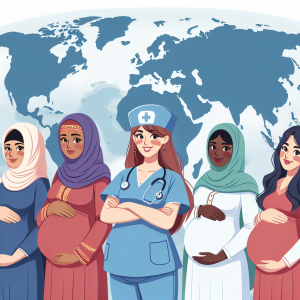
An article in Health Equity described Ekip Manman, a group prenatal care program designed for pregnant Haitian immigrants in Boston. The program was adapted because immigrant families often face barriers to care, including social challenges, cultural differences, immigration concerns, and isolation.
Working with healthcare providers and midwives, the program identified several ways to better meet families’ needs. These included providing more mental health support, adding immigration expertise, addressing differences between Haitian and American approaches to healthcare, connecting families with pediatric care earlier, and reducing social isolation. The team also developed educational materials in Haitian Creole.
Ekip Manman shows what health equity can look like in practice. Instead of expecting patients to adapt to the healthcare system, programs can adapt to better serve the communities they serve.
What public health leaders should take away
Across these studies, a consistent lesson stands out: equity depends on systems. Large datasets can reveal disease patterns—but only if participation is representative enough to avoid bias. Global progress can slow or reverse, especially for older age groups. “Healthy working life” is shaped by both health and policy environments. And prenatal care improvements can be more than clinical—they can be culturally and structurally matched to the communities they serve. Taken together, the evidence points toward the same direction: measure better, target gaps, and design services around real-world barriers—before inequities become harder to reverse.