
Loneliness and Isolation’s Impact on Pain Medication in Older Adults
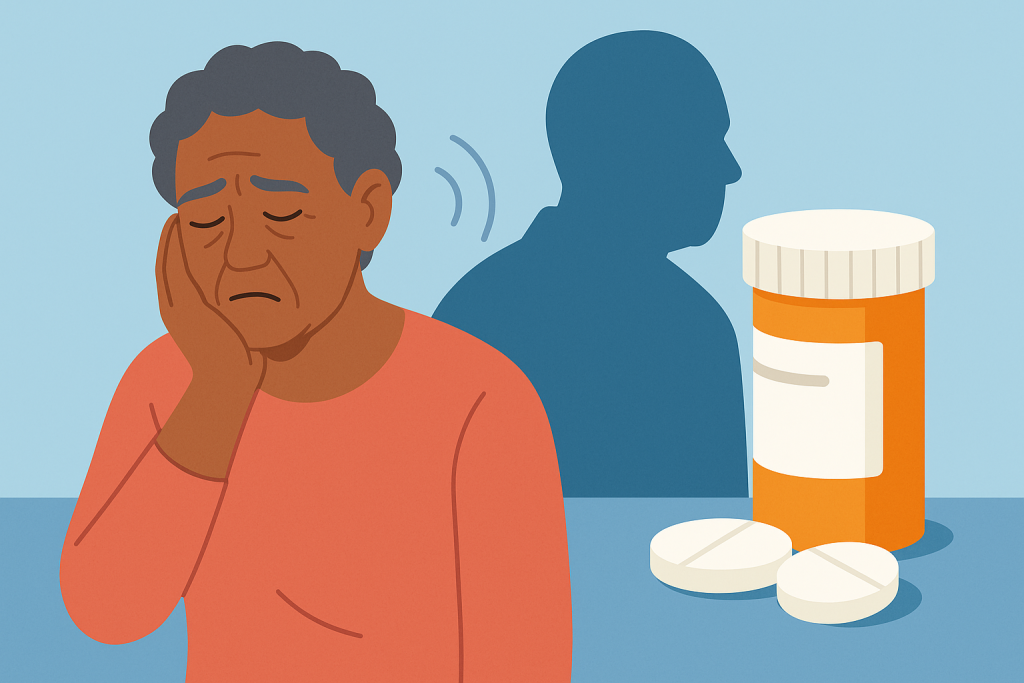
Imagine a community health worker visiting an older resident, Mrs. Henderson, who has been quietly struggling with arthritic pain for years. Despite a safety net of various community services, Mrs. Henderson feels the sharp edges of loneliness daily. Her adult children live states away, and friends she once knew have moved or passed on. Few visits, fewer conversations—her days are marked by a growing reliance on over-the-counter (OTC) pain relievers. This scene underscores a pressing question: How do social connections—or the lack thereof—influence medication use among older adults?
Build Your Public Health Issue
Tell us a little about your work, and we’ll build a personalized issue with five things worth knowing.
Addressing the Connection: A Public Health Challenge
The intersection of loneliness, social isolation, and medication use in older populations presents a critical public health challenge. Loneliness refers to the subjective pain of unmet social needs, while isolation is an objective measure, defined by limited interaction with friends, family, or community. This study aimed to understand how these social states predict changes in pain medication use among Americans aged 50 and older over eight years.
The Study’s Methodology
Using data from the Health and Retirement Study, researchers tracked 9,454 older adults from 2016 to 2022, examining how their levels of loneliness and social isolation corresponded with transitions in pain medication use—ranging from initiation to cessation of opioids and OTC medications. The study used continuous-time multi-state Markov models, allowing a dynamic view of how individuals moved between states of medication use and non-use while accounting for factors like age, ethnicity, education, income, and health complications.
Key Insights and Their Implications
The study suggests that loneliness is linked with a higher risk of beginning opioid and over-the-counter (OTC) medication use, potentially reflecting a compensatory response to social disconnection. One possible explanation is that opioids may temporarily ease social or psychosocial pain, consistent with the Brain Opioid Theory of Social Attachment, which proposes that opioid systems play a role in regulating feelings of social connection and distress. Social isolation, however, showed a different pattern: it was associated with less initiation of OTC medications, but medication use among socially isolated individuals was linked with increased mortality, highlighting the complex relationships among social connection, medication use, and health.
Interpreting Health Equity
The social dynamics in pain medication use underscore structured inequalities. With loneliness linked to higher medication uptake, public health approaches should involve both individual and systemic reforms. Ensuring that our aging population has access to community engagement activities and social services could serve as critical ingredients in reducing reliance on medications for social distress.
Moreover, addressing decreased OTC use among socially isolated individuals raises additional questions about accessibility. Could they lack not only the social cues to use these medications but also the means to acquire them effectively?
What This Means in Practice
- For Health Departments: Consider integrating social prescriptions—services offering companionship or community engagement—as stratagems into broader pain management programs.
- For Policy Makers: Develop national strategies that address loneliness as a public health issue, recognizing the impact on medication use and health outcomes.
- For Community Organizations: Facilitate more community-centered activities that naturally cultivate relationships among older adults to counter loneliness and isolation.
The Hard Part: Turning Evidence Into Action
While the study does not determine causality, it enriches our understanding of how social factors interplay with medication use. Challenges in translating these findings into action include funding limits for non-traditional interventions like social prescriptions, regulatory hurdles to scaling such programs, and the inherent difficulty of measuring social connections effectively.
Scientists must also improve methods to measure the context of medication use, including dosages and combinations, to paint a fuller picture beyond binary use status. Robust longitudinal studies that track these intricacies alongside health and social data remain essential.
We revisit Mrs. Henderson’s situation, urging public health practitioners to envision a shift in how we address pain management—one that begins with intimate social networks and extends to national health policy frameworks.
Discussion Starters
- How might community-based programs progress to integrate aspects of social prescribing?
- What existing structural barriers must be dismantled to improve access to community and health services for older adults?
- How can public health initiatives better capture data on social isolation and loneliness to inform program designs?