Rethinking Risk Estimates, Fixing Guideline Gaps, and Building Injury & Overdose Data Systems
Public health progress isn’t just about new treatments—it’s about better measurement, better systems, and smarter equity-focused implementation. This week’s research and policy-focused reviews highlight a common theme: when we improve how we estimate risk, collect data, and design quality frameworks, everyday care decisions become more accurate—and often more fair.
Build Your Public Health Issue
Tell us a little about your work, and we’ll build a personalized issue with five things worth knowing.
When “the denominator” changes the story: cardiovascular deaths among women with breast cancer
Researchers examined cardiovascular disease (CVD) deaths among U.S. women with breast cancer from 1999 to 2020. Earlier studies compared these deaths with the entire U.S. female population, which can make CVD risk among breast cancer survivors look lower than it actually is. The researchers instead calculated rates using the population of women living with breast cancer. With this more appropriate comparison, CVD death rates were substantially higher: 1,078 deaths per 100,000 women with breast cancer in 1999, falling to 733 per 100,000 in 2020.
How we calculate rates can change how we understand a public health problem. Underestimating cardiovascular risk among breast cancer survivors could mean less attention and fewer resources for CVD prevention and follow-up care. The study also offers a better approach for researchers using CDC mortality data to examine deaths among specific populations.
Overdose surveillance with more real-world detail—what ED tox data can add
A Public Health Reports study shows how emergency department toxicology data could give public health agencies a clearer picture of the overdose crisis.
Researchers studied 995 overdose patients at 17 U.S. medical centers between 2022 and 2024. Most were suspected opioid overdoses, and fentanyl was detected in 86% of those cases. Importantly, fentanyl was also found in 35% of suspected stimulant overdoses, highlighting how often multiple substances may be involved.
The surveillance program combined patient interviews, medical records, and blood testing for more than 1,200 substances. This provided much more detail than many traditional overdose surveillance systems.
Knowing that an overdose occurred is only part of the story. Understanding exactly which substances were involved can help public health agencies identify changing drug patterns, improve prevention strategies, and direct resources where they’re most needed.
Quality after injury: timeliness, safety, and equity across the entire pathway
A study in BMJ Global Health asked patients, healthcare providers, and policymakers in Ghana, Pakistan, Rwanda, and South Africa what matters most for high-quality injury care. Across the four countries, three priorities stood out: timely care, safe care, and effective care. But which mattered most depended on the healthcare system. In Ghana and Pakistan, where trauma systems have larger gaps, getting patients to appropriate care quickly was the biggest concern. In Rwanda and South Africa, where basic emergency care is more established, stakeholders placed greater emphasis on effective treatment and long-term recovery.
Equity affected everything. Cost and access influenced whether people could reach care quickly, continue treatment, and avoid serious financial hardship.
Good injury care isn’t just about what happens in the emergency room. Transportation, referrals, staffing, affordability, and follow-up all affect whether someone survives and recovers. The study suggests that efforts to improve trauma care should focus on the problems that patients and communities see as most urgent in their local healthcare systems.
HIV prevention guidelines: where screening rules and training still fall short
Even with highly effective prevention tools like PrEP and PEP, the United States still reports about 30,000 new HIV cases each year. A review in Public Health Reports examined CDC guidelines to understand why these tools may still be underused.
The researchers identified several barriers. PrEP guidance does not always clearly address newer medications and screening practices, while risk-based screening may miss people who could benefit. For PEP, patients often have to recognize a possible HIV exposure themselves and seek treatment within a short window.
The authors recommend simpler, more routine approaches, including annual HIV screening for all sexually active patients, clearer guidance on newer PrEP and PEP options, better training for healthcare professionals, and billing changes that make preventive care easier to provide.
Effective treatment isn’t enough if people don’t know they need it or healthcare systems make it hard to access. Making HIV prevention a more routine part of healthcare could help reach people who are currently being missed.
What to watch next
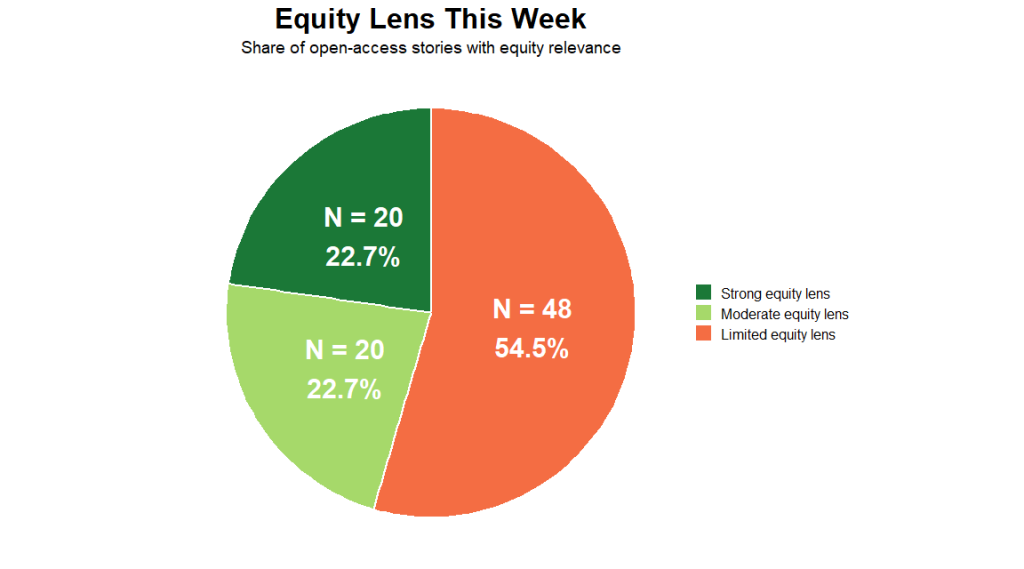
These studies reinforce a practical lesson for public health: measurement and implementation design matter. Better denominators can reveal real risk. Stakeholder-ranked quality domains can guide more realistic improvements in emergency care. More detailed overdose surveillance can improve understanding of changing drug patterns. Clearer HIV prevention guidance and training can reduce missed opportunities for prevention. As policymakers and advocates look ahead, the question is not just “What works?”—it’s also “How reliably can systems deliver what works, for whom, and under what conditions?”