Political Polarization Is Linked to Lower Vaccination Rates
The reemergence of vaccine-preventable diseases in the United States is no longer just a what-if scenario. Recent outbreaks and declining vaccination rates reveal a major challenge: childhood vaccination coverage varies widely across the nation. A cross-sectional study now suggests that partisanship could play a crucial role in this uneven distribution.
Study Uncovers Political Influence on Vaccination Rates
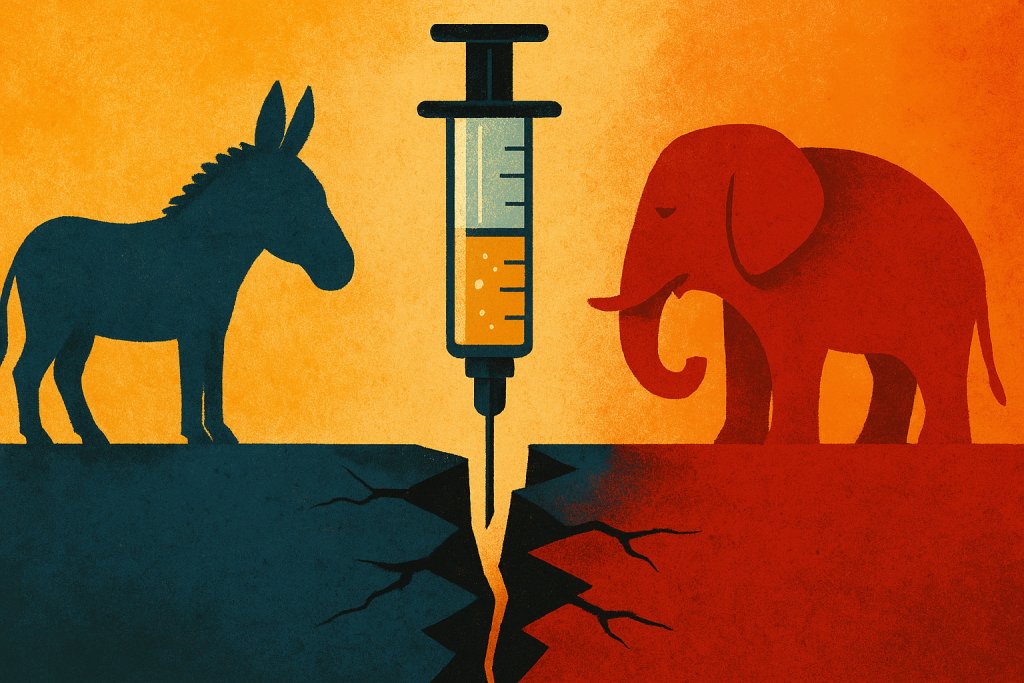
In a detailed analysis spanning 11 years, researchers investigated the relationship between state-level political polarization and childhood vaccination coverage in the United States. Using data from 2014 to 2024, the study examined measles-mumps-rubella (MMR) vaccination rates, among others, across 50 states and the District of Columbia. The findings revealed that states with higher Republican presidential vote shares tended to have lower MMR vaccination rates. Specifically, for every 10-percentage-point increase in Republican vote share, MMR coverage decreased by approximately 1.09 percentage points.
A Broader Political Context
Previous discussions on vaccination often focused on COVID-19. However, routine childhood vaccinations may also face political influence. The research highlights how political signals may affect public trust in health institutions, school vaccination mandates, and science-based guidance.
Political-Educational Strata and Coverage
The study found significant differences in vaccination coverage by political and educational grouping. States categorized as ‘blue’—those with less than 50% Republican vote share—showed higher mean MMR vaccination coverage (89.69%) compared to ‘red’ states (87.34%). Further analysis showed that political alignment and educational attainment together created discernible strata of vaccination coverage, with low-education, high-Republican states seeing the lowest coverage rates.
Implications for Public Health Practice
This study’s findings have significant implications for public health practice. Here’s what could change:
- Public health departments might consider crafting communication strategies that account for local political climates. A one-size-fits-all approach may not be effective across diverse political settings.
- Efforts to increase vaccination coverage can be better optimized by stratifying surveillance not just by socioeconomic status but also by political context. Targeted strategies could then be employed in areas identified as having lower coverage due to these contextual factors.
- Partnerships with local clinicians, schools, and community leaders are crucial. Trusted local figures can help bridge gaps and build trust, potentially increasing vaccination rates without reinforcing partisan identities.
Limitations and Further Research
The study acknowledged several limitations. As an ecological study, it cannot attribute causation to individual behaviors and is limited by missing data for 2022. Additionally, while political influence is evident at the state level, future analyses should not overlook individual- and community-level factors. The study reinforces that political context, while influential, is one of many factors affecting vaccination coverage.
Understanding the Complexities of Vaccination Coverage
By uncovering how political polarization affects vaccination coverage, this study adds another layer of understanding to public health challenges in the U.S. As health professionals continue to fight preventable diseases, insights into these systemic influences could shape future health interventions and policy-making, helping public health strategies better align with local socio-political realities.
Build Your Public Health Issue
Tell us a little about your work, and we’ll build a personalized issue with five things worth knowing.