
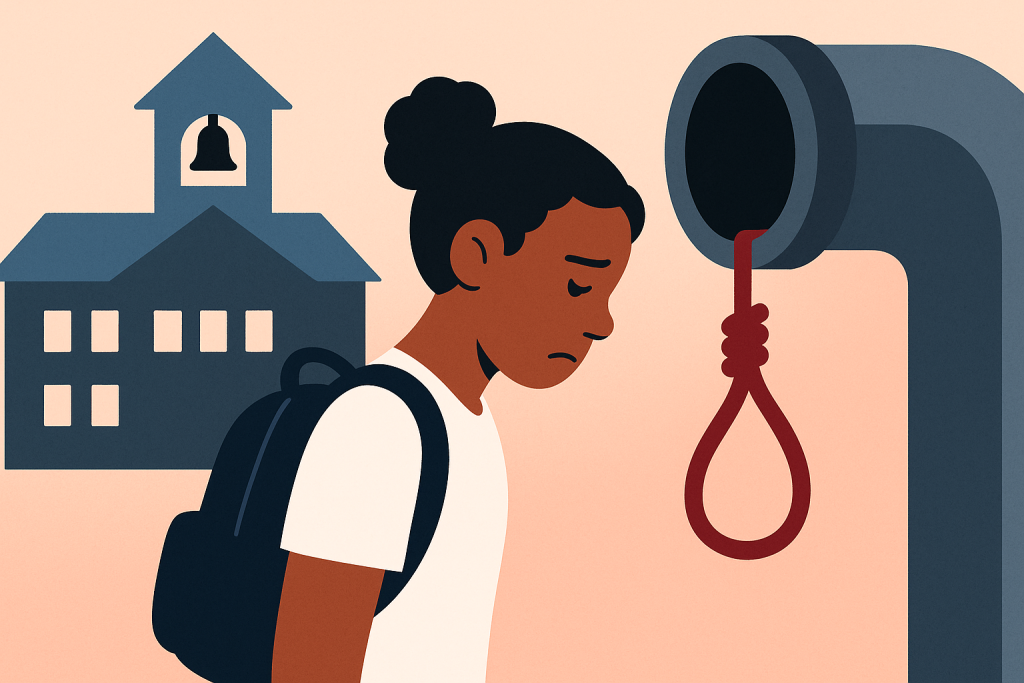
Addressing the School-to-Suicide Pipeline
In a bustling school district in the heart of the Midwest, a school psychologist sits at her desk, grappling with the alarming rise in suicides among her Black students. She looks over suspension records and recalls how many of these students were formally disciplined just days before they took their own lives. It’s an unsettling trend that she’s witnessed over the years, and each tragedy adds weight to the urgent need for systemic change.
The Weight of an Overlooked Crisis
The issue of youth suicide, particularly among Black students, looms large over our communities. Recent data underscores a troubling trend: suicide has increasingly claimed the lives of Black youth more than any other racial group within schools. A study published in BMC Public Health delves into this grave issue, examining the school-to-suicide pipeline, which mirrors the more widely discussed school-to-prison pipeline.
The researchers explored how disciplinary actions in schools may contribute to the suicidal behaviors of Black youth, revealing an urgent need to rethink the approaches used to handle behavioral issues in educational settings.
Examining the School Environment
To trace the factors contributing to this distressing trend, the researchers conducted a comprehensive study in an urban school district where 80% of students come from economically disadvantaged backgrounds. Through a combination of historical school data analysis and key informant interviews with school psychologists and social workers, the study aimed to understand the prevalence of mental health issues and assess available resources.
It became evident that exclusionary discipline, such as suspensions and expulsions, significantly affected the mental health of Black students. Notably, all students who died by suicide and had a known suspension or expulsion history were Black, highlighting systemic racial disparities.
Why This Matters
This research sheds light on the broader structural factors impacting Black students’ mental health. Racism, socioeconomic disadvantage, inadequate school resources, and trauma from community violence collectively exacerbate mental health challenges. The study also highlights the lack of trust in mental health services, compounded by stigma and previous negative experiences, as barriers to seeking help.
The school environment plays a pivotal role in either supporting or harming student mental health. For Black youth, who face systemic inequities, punitive measures often worsen feelings of alienation and distress. Addressing these factors through supportive and inclusive measures is crucial for preventing further loss of life.
What This Means in Practice
- Trauma-Informed Approaches: Schools should incorporate trauma-informed practices that recognize the impact of racism and poverty on mental health.
- Restorative Practices: Replace exclusionary discipline with practices that restore relationships and support behavioral growth.
- Equity in Mental Health Services: Ensure access to culturally competent mental health resources that build trust and meet the unique needs of Black students.
- Community Collaboration: Schools should partner with violence-prevention programs to address broader social determinants of health and improve community safety.
The Hard Part: Turning Evidence Into Action
Despite the compelling evidence, implementing these changes poses challenges. Limited funding, inadequate staffing, and entrenched discriminatory practices can hinder progress. Data gaps also make it difficult to fully understand the scope of the problem.
Moreover, political resistance and institutional inertia can delay the adoption of necessary reforms. The study calls for concerted efforts not just at the school level but also policy innovations to address the root causes of these inequities.
Nevertheless, the urgency of the issue leaves no room for inaction. Balancing systemic reforms with immediate support for students can create an environment where all youth, particularly Black students, can thrive.
Addressing the school-to-suicide pipeline requires community engagement, empathy, and a commitment to justice. By understanding and responding to the complex interplay of social factors influencing young lives, public health leaders can chart a compassionate path forward.
As the school psychologist returns to her desk, she reflects on the potential for change. It’s a challenging road ahead, but armed with new insights, there’s hope for a brighter future.
Thought-Provoking Questions
- How can local health departments better collaborate with schools to identify and support at-risk students?
- What role can community organizations play in bridging the gap in mental health resources for Black youth?
- How might policy changes address the systemic barriers contributing to the school-to-suicide pipeline?