Gas Station Drugs
Why Public Health Experts Are Worried About Tianeptine, Kratom, and Other Unregulated Substances
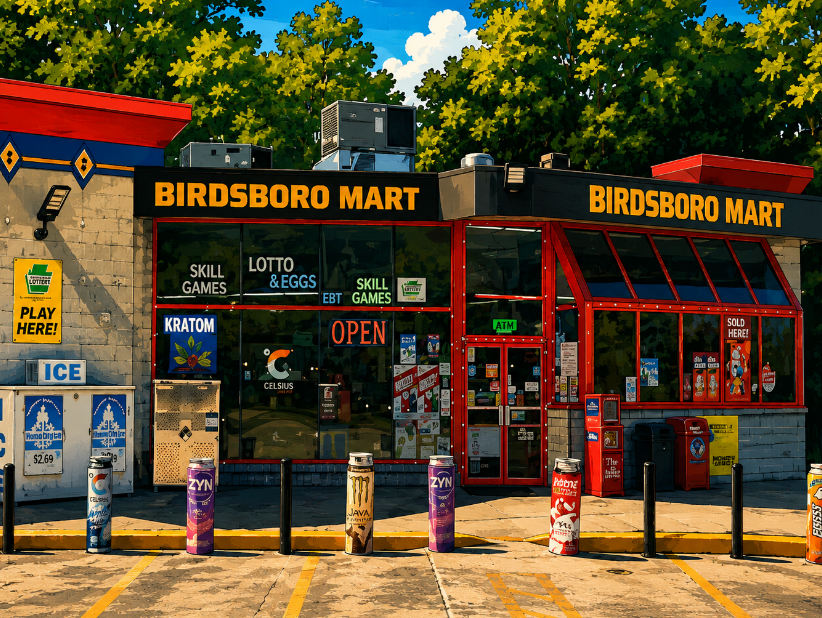
For decades, public health professionals have tracked the rise of illicit drugs, prescription opioid misuse, and emerging synthetic substances. Increasingly, however, some of the most concerning psychoactive products are being sold openly in gas stations, convenience stores, smoke shops, and online marketplaces.
Often marketed as dietary supplements, cognitive enhancers, mood boosters, or herbal remedies, these products occupy a regulatory gray zone. Many consumers assume that if a product is sold over the counter, it must be safe. Unfortunately, growing evidence suggests otherwise.
Researchers, clinicians, poison centers, and public health agencies are sounding the alarm about a category of substances often referred to as “gas station drugs”: a diverse collection of psychoactive compounds that includes tianeptine (“gas station heroin”), kratom, phenibut, synthetic cannabinoids, and a growing list of novel psychoactive substances.
The Rise of “Gas Station Heroin”
Perhaps the most notorious of these substances is tianeptine, a drug approved as an antidepressant in some countries but never approved by the U.S. Food and Drug Administration.
Despite lacking FDA approval, tianeptine has become widely available in convenience stores and gas stations under brand names such as ZaZa, Tianaa, and Neptune’s Fix. Because high doses can produce opioid-like effects and dependence, it has earned the nickname “gas station heroin.”
A recent systematic review found that North America accounted for nearly 77% of documented cases of tianeptine misuse. Researchers identified frequent reports of escalating doses, habitual use, withdrawal symptoms, overdose, and co-use with alcohol or benzodiazepines. Some users reported consuming extraordinarily high doses (up to 20 grams per day) far exceeding therapeutic levels. Withdrawal symptoms were common, and naloxone successfully reversed overdose symptoms in multiple cases.
The public health concern is compounded by accessibility. Unlike many controlled substances, tianeptine products can often be purchased without a prescription in jurisdictions where they remain legal.
What Makes These Products Risky?
One of the defining challenges of gas station drugs is that consumers often have little idea what they are actually taking.
A 2025 forensic analysis of products sold in gas stations and head shops found evidence of substantial labeling concerns. Researchers discovered products marketed as alternative Mitragyna species that actually contained mitragynine, the primary psychoactive compound in kratom. The study also identified products labeled as containing phenibut, another psychoactive substance associated with dependence and withdrawal. The authors concluded that mislabeling and uncontrolled distribution of psychoactive substances pose significant risks to consumers.
This problem is not unique to tianeptine or kratom. Public health officials have documented products marketed as mushroom supplements that contained unexpected psychoactive compounds, as well as synthetic cannabinoids and other novel substances sold under misleading labels.
The result is a marketplace where consumers may unknowingly ingest substances with unknown potency, purity, or pharmacological effects.
Why Addiction Treatment Providers Are Concerned
The impact of gas station drugs extends beyond emergency departments and poison centers. Addiction treatment providers increasingly report that these substances complicate treatment for people with substance use disorders.
In a national survey of nearly 400 clinicians providing buprenorphine treatment, researchers found widespread concern about emerging substances affecting treatment outcomes. While methamphetamine was most frequently identified as complicating treatment, clinicians also reported substantial challenges related to synthetic cannabinoids, xylazine (“tranq”), designer benzodiazepines, synthetic cathinones (“bath salts”), and tianeptine. More than one in ten clinicians specifically identified tianeptine as complicating treatment for opioid use disorder.
Editorial Sidebar: Bath salts were a big topic of conversation when I was a substance abuse treatment provider back in Philly, but never became a focus point in treatment, mainly because the prevalence of use never jumped to the numbers heroin and cocaine were doing.
These findings highlight an important reality: today’s substance use landscape is increasingly characterized by polysubstance use and rapidly evolving drug markets. Clinicians are often forced to respond to new substances before robust scientific evidence becomes available.
A Regulatory Challenge
Gas station drugs expose a longstanding challenge in public health regulation.
Many of these products are marketed as supplements rather than medications. Others exploit gaps between federal and state laws. A substance may be banned in one state, restricted in another, and widely available online nationwide.
This fragmented regulatory environment allows products to enter the marketplace faster than policymakers, researchers, and public health agencies can evaluate their safety.
As a result, surveillance often lags behind emerging trends. New compounds may first appear in media reports, poison center calls, or isolated clinical case reports before broader epidemiologic data become available. By the time health officials recognize a pattern, substantial harm may already have occurred.
What Public Health Can Do
Addressing gas station drugs will require a multifaceted response:
- Strengthen surveillance systems to identify emerging psychoactive substances in near real time.
- Improve laboratory testing and toxicology screening for novel compounds.
- Expand public education about the risks associated with unregulated psychoactive products.
- Support addiction treatment providers who are increasingly encountering patients using multiple substances simultaneously.
- Develop evidence-informed regulatory approaches that balance consumer protection with scientific evaluation.
Perhaps most importantly, public health professionals must recognize that substance use trends no longer emerge exclusively from traditional illicit drug markets. Increasingly, they are appearing on convenience store shelves, marketed as wellness products, supplements, or legal alternatives.
The Bottom Line
The term “gas station drugs” may sound informal, but the public health implications are serious. Tianeptine, kratom, phenibut, synthetic cannabinoids, and other novel psychoactive substances are creating new challenges for clinicians, researchers, regulators, and communities.
As the overdose crisis continues to evolve, these products represent a reminder that harmful substances do not always arrive through illegal channels. Sometimes they are sold openly, packaged professionally, and marketed as harmless supplements.
For public health practitioners, the lesson is clear: the next emerging drug threat may already be sitting on a convenience store shelf.