
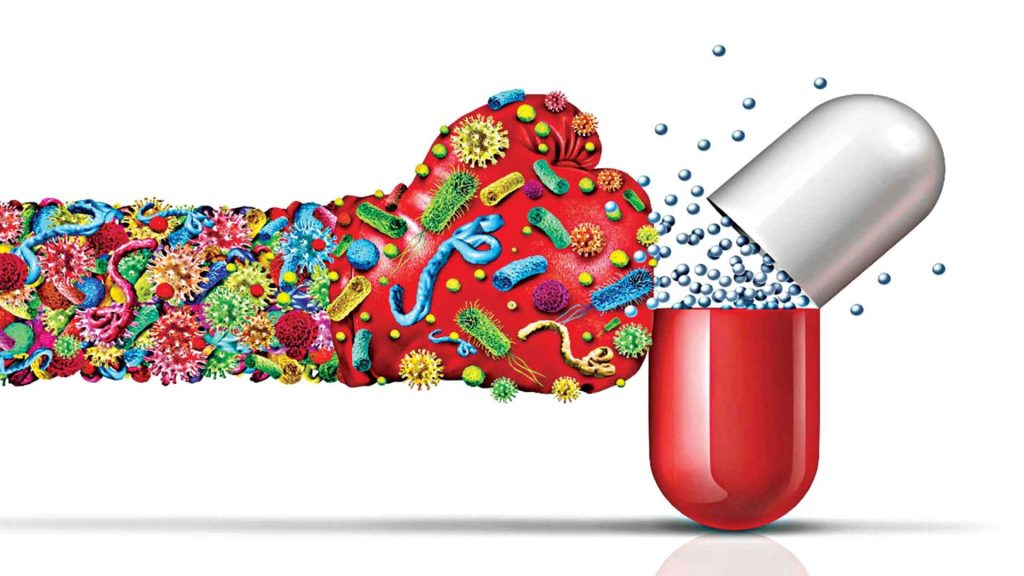
Antimicrobial Resistance Is Accelerating: Here’s What Public Health Needs to Do Now
Here’s a number that should stop you in your tracks. By 2050, antimicrobial resistance is projected to kill more people than cancer. That’s not a fringe estimate from a sensationalist headline. That’s what leading scientists said in Davos in January 2026, in front of the world’s most powerful decision-makers.
In 2026, the evidence is clear that we are losing ground. According to the WHO, bacterial antimicrobial resistance was directly responsible for 1.27 million deaths globally in 2019 and contributed to nearly 5 million more. Those figures are only going to climb. A 2026 review published in Nature Medicine evaluating AMR governance across 193 countries found that while global governance scores improved, implementation and monitoring continue to lag, particularly in the animal and environmental sectors.
What Is Antimicrobial Resistance and Why Is It Getting Worse?
Antimicrobial resistance occurs when bacteria, viruses, fungi, and parasites evolve to resist the medicines designed to kill them. The result is infections that are harder to treat, longer hospital stays, higher costs, and in many cases, death.
How Resistance Develops
Resistance is a natural biological process, but humans have dramatically accelerated it. When antimicrobials are used, they create selection pressure. The microbes that survive pass on their resistance traits. Research published in PMC outlines the core mechanisms driving this process, including efflux pumps that expel drugs before they can act, biofilm formation that shields bacteria from treatment, and genetic mutations under survival pressure. These are not rare events. They happen constantly, in every environment where antimicrobials are present.
The Biggest Drivers in 2026
Overuse and misuse of antibiotics in human medicine is the most widely discussed driver. But it is far from the only one. Agricultural use of antimicrobials accounts for a significant share of global consumption, and antibiotic residues move through animal waste, soil, and the food chain, creating reservoirs of resistance entirely outside clinical settings.
Poverty and inequality also play a central role. Low- and middle-income countries face a double burden: limited access to quality-assured antimicrobials on one side, and uncontrolled distribution on the other. Both accelerate resistance in different ways. And as discussions of the shifting landscape of global health funding have highlighted, withdrawing resources from global health infrastructure makes surveillance and response harder precisely where the burden is greatest.
The Numbers Are Harder to Ignore Than Ever
1.27 Million Deaths Directly Linked to AMR
The WHO’s figures on antimicrobial resistance deaths represent only what was directly attributable. The broader toll, including deaths where drug-resistant infections complicated treatment for other conditions, reached 4.95 million in 2019 alone. These are not projections. These are documented deaths from infections that, in a different era, would have been treatable.
And resistance is intensifying. The OECD projects a twofold surge in resistance to last-resort antibiotics by 2035 compared to 2005 levels. Last-resort antibiotics are the drugs clinicians reach for when everything else has failed. When those stop working, there is no next line of treatment.
What the 2026 Global Action Plan Review Found
The 2026 Nature Medicine analysis of AMR governance across 193 countries offers both a reason for cautious optimism and a clear warning. Global governance scores improved from 30.7 to 44.5 out of 100 between 2017 and 2022. More than 150 countries now have national action plans for antimicrobial resistance. That’s genuine progress.
But here’s the problem. A significant improvement in AMR outcomes was only observed five or more years after national action plan adoption. Policy design is outpacing implementation. Monitoring systems, especially in agriculture and environmental sectors, remain weak. The data systems needed to track antimicrobial resistance at scale are inconsistent, non-standardized, and in many countries, simply absent.
Why Is Antimicrobial Resistance a Public Health Priority
Public health professionals sometimes treat antimicrobial resistance as a hospital problem, something for infection control teams and clinical pharmacists. It is much bigger than that.
Routine Procedures Are at Risk
Modern medicine depends on effective antibiotics in ways that most people never think about. Surgery, cancer chemotherapy, organ transplantation, caesarean sections — all of these carry infection risks that are currently manageable because we have drugs that work. As ScienceDirect research on AMR impacts makes clear, uncontrolled antimicrobial resistance threatens to make these routine procedures profoundly dangerous again.
Low- and Middle-Income Countries Carry the Highest Burden
AMR is not distributed equally. The communities with the least access to second and third-line treatments are also the ones most exposed to resistant infections. Understanding health inequities in infectious diseases is essential context for anyone working on AMR responses. Drug-resistant tuberculosis alone tells the story clearly. Only about two in five people with drug-resistant TB accessed treatment in 2022. The treatments that do exist are expensive, toxic, and in some cases still not sufficient.
What Does the Evidence Say Actually Works?
Antibiotic Stewardship Programs
Stewardship programs, which optimize how antimicrobials are prescribed and used across clinical settings, remain the most evidence-backed tool for slowing the emergence of resistance in healthcare environments. The CDC’s National Action Plan for Combating Antibiotic-Resistant Bacteria outlines core elements for hospital stewardship and has expanded guidance to outpatient and long-term care settings. The evidence supports these programs. The challenge is consistent implementation, especially in resource-constrained settings.
One Health Surveillance
Antimicrobial resistance does not respect the boundaries between human health, animal health, and environmental systems. The One Health framework treats all three as interconnected and insists that surveillance must reflect that reality. The 2026 Nature Medicine governance analysis found that multisector engagement and robust antimicrobial use surveillance systems showed the strongest associations with improved AMR outcomes.
New Investment and R&D Pipelines
The antibiotic development pipeline has been critically underfunded for decades. Pharmaceutical companies have limited commercial incentives to develop antibiotics, which are typically taken for short courses rather than chronically. In April 2026, the European Commission announced a €30 million EU4Health investment to support organizations driving early-stage antibacterial research and late-stage clinical development. This kind of public investment is essential to fill the gap that market incentives have left.
What Can Public Health Professionals Do Right Now?
This is the question that matters most for practitioners reading this. A few clear action points stand out from the evidence.
Support stewardship programs with the same urgency as outbreak response. Resistance that builds quietly over years is just as deadly as a sudden spike, even if it generates less institutional alarm.
Use communication platforms to reframe antimicrobial resistance for non-specialist audiences. Public understanding of why finishing a course of antibiotics matters, why not every illness needs antibiotics, and what happens when drugs stop working is still shockingly low. Evidence translation is a public health function too.
Is Antimicrobial Resistance the Next Pandemic?
The honest answer is: in some ways, it already is one. Experts at Davos 2026 called it a “silent pandemic.” Unlike COVID-19, it does not arrive in a defined wave with a clear start date. It accumulates. Each resistant infection, each failed treatment, each death that could have been prevented with a working antibiotic is part of the same slow-moving catastrophe.
The difference is that antimicrobial resistance is more predictable and therefore more preventable. We know what drives it. We know what slows it. The question is whether the political will and the public health infrastructure will rise to meet the scale of the problem before the last-resort drugs run out.
The Bottom Line
Antimicrobial resistance is not a future threat. It is a current one, already responsible for millions of deaths and projected to get significantly worse. The evidence base for what works, from stewardship programs to One Health surveillance to new R&D investment, is solid. The gap is in implementation, funding, and political prioritization.
Public health professionals are positioned to close that gap. Understanding antimicrobial resistance deeply, communicating it clearly, and advocating for the systems that can slow its spread is not optional work. It is the work.
Stay ahead of the evidence. Explore the latest peer-reviewed public health research on This Week in Public Health and get insights you can actually use.