Can Online Communities Really Improve Mental Health?
Note: This blog is being published “out-of-order” because a student needed access to this content.
Online support groups can connect people across enormous distances. But research suggests that the difference between a helpful community and a harmful one depends less on technology than on how people treat one another.
Imagine experiencing something deeply personal, perhaps the loss of a loved one, a mental health crisis, or the challenges of living with a rare disease. You want to talk about it, but nobody in your immediate circle seems to understand.
So you turn to the internet.
Within minutes, you find a community filled with people who have experienced something similar. You read their stories. You recognize your own feelings in their words. Eventually, you work up the courage to share your experience.
And then something happens.
Maybe several people respond with compassion and encouragement. Perhaps someone describes how they navigated a similar situation. For the first time in weeks, you feel understood.
Or perhaps nobody responds at all.
Your message disappears beneath newer posts, and the vulnerability of sharing something personal is followed by silence.
Both experiences are possible in the same online community.
That tension raises an important question for public health and community psychology: Can online communities actually improve mental health, or do they simply create more opportunities for social interaction?
After more than two decades of research, the answer is increasingly clear in some respects and surprisingly complicated in others.
The Rise of Online Peer Support
Peer support is hardly new.
Long before the internet, people organized around shared experiences through mutual aid groups, recovery communities, neighborhood organizations, and informal social networks.
The underlying principle was simple: people who have experienced similar challenges can offer one another something that professional services do not always provide.
They can offer understanding grounded in lived experience.
The internet dramatically expanded where these relationships could develop.
In the 1990s, early online communities formed through bulletin boards, email lists, and discussion forums. By the 2000s, dedicated health communities were connecting people living with specific medical and psychological conditions.
Social media’s growth in the 2010s accelerated this transformation. Facebook groups, Reddit communities, and mobile applications made it easier to discover people with similar experiences.
Today, online peer support takes many forms, including private discussion groups, public forums, live video meetings, and dedicated mental health platforms.
These spaces differ considerably, but they share several important characteristics.
Participants typically connect through common experiences, exchange practical or emotional support, and contribute voluntarily. Unlike professional therapy, relationships are generally reciprocal rather than organized around a clinician and patient.
Someone seeking help today might become the person offering encouragement tomorrow.
And because many communities operate asynchronously, people can participate whenever they choose, without attending a scheduled meeting.
The technology has changed. The basic principles of mutual aid have not.
Why People Turn to Online Communities for Mental Health Support
For some people, finding support online is a matter of convenience.
For others, it may be one of the few realistic ways to connect with people who understand their experiences.
Consider someone living with a rare medical condition. They may be the only person in their town with that diagnosis. A local support group might not exist, but an online community could connect them with hundreds of people navigating similar challenges.
Other barriers are less visible.
Someone experiencing depression may fear judgment from friends or family. A person caring for an aging parent may struggle to leave home for an evening support meeting. Someone questioning an aspect of their identity may not feel safe discussing it openly in their immediate environment.
Online communities can reduce some of these barriers. They offer opportunities to:
- Find people with similar experiences regardless of geography.
- Ask sensitive questions with some degree of anonymity.
- Access support outside traditional service hours.
- Share experiences through writing rather than speaking.
- Learn practical coping strategies from peers.
- Explore identities and experiences in potentially supportive environments.
For some participants, these communities supplement existing relationships. For others, they may provide an important first experience of being understood.
Yet, having access to other people is not the same as experiencing meaningful social support.
Connection Is Not the Same as Community
Imagine an online mental health forum with thousands of active members.
Every day, people publish new posts, exchange comments, and react to one another’s experiences.
From a technology company’s perspective, the community might appear highly successful.
It has users. It has engagement. It has growth.
But does it have meaningful relationships?
Community psychology offers a useful framework for answering that question.
Social contact refers to interactions between people. Social support involves receiving emotional, informational, practical, or evaluative assistance. A sense of community goes further, involving feelings of membership, influence, shared connection, and belonging.
These experiences overlap but aren’t interchangeable.
Someone might spend hours reading posts without developing meaningful relationships. Another person might exchange only a handful of messages yet feel profoundly validated.
A third person might participate regularly while feeling increasingly excluded.
This is why counting interactions tells us relatively little about whether an online community is improving someone’s well-being.
The more important question is what those interactions actually provide.
How Online Peer Support Can Help
Researchers have identified several processes through which peer support may benefit participants.
Social identification occurs when people recognize aspects of their own experiences in others. They begin to understand that they are not alone.
Normalization helps people recognize that difficult emotions, setbacks, and uncertainties may be shared by others.
Emotional validation occurs when someone acknowledges another person’s experience without dismissing or minimizing it.
Experiential learning allows participants to benefit from strategies and insights developed through lived experience.
Self-efficacy can develop when people gain confidence in their ability to navigate challenges.
Finally, reciprocity allows people to move between receiving and providing support, reinforcing their sense that they have something valuable to contribute.
These processes help explain why even relatively brief online interactions can sometimes feel meaningful.
But they also help explain why some interactions are disappointing or harmful.
The Power of Being Heard
Consider two responses to someone describing the exhaustion associated with depression.
The first person responds:
“You should exercise more and try thinking positively.”
The second responds:
“I remember feeling exhausted even by simple tasks. It can be difficult when people assume you’re just not trying.”
Both people may intend to be helpful.
But the second response communicates something different.
It demonstrates recognition and shared understanding.
The person receiving that message may feel that their experience has been acknowledged rather than judged.
That is emotional validation.
Importantly, validation does not require agreeing with everything someone believes or does. It means recognizing their experience without automatically dismissing it.
Online communities can be particularly valuable when participants have difficulty finding this recognition elsewhere.
Yet the same environment can produce painful comparisons.
A person sharing a story about grief might receive dozens of supportive comments. Another person describing an equally difficult experience might receive none.
Because many platforms prioritize content according to reactions and engagement, the most visible stories are not necessarily the ones from people who need the most support.
For someone who has just disclosed a deeply personal experience, silence can feel like rejection.
This is one reason community responses matter so much.
What Does the Research Actually Say?
Online peer support has been studied for more than two decades.
Early researchers were understandably enthusiastic about its potential. Digital communities appeared capable of overcoming geographic isolation, connecting people with shared experiences, and expanding access to support.
But demonstrating that these communities improved health was more difficult.
An influential 2004 review of virtual health communities found that the available evidence was insufficient to draw strong conclusions about their independent effects on health outcomes.
That did not necessarily mean the communities were ineffective.
Rather, many studies could not clearly separate the effects of online peer support from other interventions or establish measurable improvements.
Research published during the following decade began examining more specific populations, including young people experiencing mental health challenges.
Some controlled studies reported positive effects, while others found limited or inconsistent benefits.
More recent reviews have described a broader range of experiences, including improvements in perceived social connection, empowerment, hope, and aspects of personal recovery.
They have also identified negative experiences, including distress, fatigue, and harmful interactions.
The overall picture is encouraging but mixed.
What Counts as a Successful Outcome?
One difficulty is that researchers do not always measure what participants value most.
Consider four types of outcomes:
| Outcome | What researchers might measure |
|---|---|
| Clinical | Depression, anxiety, psychological distress, substance use |
| Personal recovery | Hope, empowerment, confidence, identity, perceived control |
| Social | Belonging, connectedness, isolation, perceived support |
| Behavioral | Help-seeking, service engagement, mutual assistance |
An online community might not significantly reduce someone’s depression symptoms but could still help them feel less alone.
It might improve confidence, offer practical advice, or help someone find professional services.
Are those meaningful outcomes?
From a community psychology perspective, they certainly can be.
However, researchers must be careful not to assume that positive experiences automatically produce clinical improvements.
There are also methodological challenges. People who voluntarily join online communities may differ from those who do not. Participants often receive other forms of support simultaneously. Communities vary dramatically in structure and moderation, and people who have negative experiences may leave before researchers can assess them.
These complications make it difficult to establish causation.
The strongest conclusion is not that online peer support always works.
It is that online communities can provide meaningful support, but their benefits depend on the people, relationships, and conditions involved.
What Millions of Reddit Posts Reveal About Online Support
One particularly interesting area of research examines mental health communities on Reddit.
Reddit is organized into topic-specific discussion spaces called subreddits. Some focus on hobbies, entertainment, or professional interests. Others bring together people navigating grief, depression, anxiety, addiction, and other mental health challenges.
A 2025 study by Morini and colleagues examined participation across 67 mental health subreddits.
The dataset was enormous: approximately 3.4 million posts, 24 million comments, and 2.4 million users across five years.
The researchers examined why people participated, how communities responded, and how those responses related to later engagement.
Many users posted to seek support or express frustration and distress.
Importantly, receiving comments and reactions was associated with subsequent participation.
This finding points toward something psychologically important.
When someone shares a vulnerable experience, responses communicate more than information.
They may communicate that the person has been noticed, that their experience matters, and that they belong.
A thoughtful response can encourage someone to return and participate again.
But the opposite possibility also matters.
Someone who receives little acknowledgment may become less likely to engage.
There is an important limitation, however. Participation is not the same as mental health improvement.
Someone might post frequently because they feel supported. Another might post frequently because their distress is worsening.
Someone might leave because they feel excluded. Another might leave because they no longer need the community.
Digital engagement metrics alone cannot tell us which explanation is correct. This matters especially for organizations that evaluate online programs using page views, comments, active users, or time spent on a platform.
Those measurements tell us something about activity.
They do not necessarily tell us whether people are doing better.
Why Psychological Safety Matters
One of the most important conditions for meaningful online peer support is psychological safety.
Psychological safety means people can participate without unreasonable fear of humiliation, rejection, or retaliation.
In an online community, that might mean feeling comfortable asking questions, admitting uncertainty, describing setbacks, or sharing difficult experiences.
Psychological safety does not mean every interaction must be comfortable or that disagreement should disappear.
It means participants can reasonably expect to be treated with dignity.
Several conditions help create this environment.
Communities need clear expectations about behavior, respectful responses to personal disclosures, consistent moderation, appropriate privacy protections, and a welcoming culture for newcomers.
They also need confidence that harmful behavior will be addressed.
Without these conditions, even a community established for supportive purposes can become hostile.
For example, participants might begin competing over whose suffering is more legitimate.
Someone seeking help for substance use might be told that their experience is not serious enough to deserve attention.
A person describing depression might be criticized for not trying hard enough.
These interactions undermine the very conditions that make peer support valuable.
And importantly, the same online discussion can affect different people in very different ways.
A detailed account of psychiatric hospitalization might give one reader hope because someone else survived a similar experience.
For another reader, the same account might bring back traumatic memories.
Neither response is necessarily unusual.
People bring different histories, needs, resources, and vulnerabilities into these spaces.
Creating a safe community therefore requires more than simply removing obviously offensive material.
It requires thoughtful decisions about how people encounter difficult content and how communities respond.
Online Communities Can Be Especially Important for Marginalized Groups
Digital peer support may be especially important for people whose social environments offer few opportunities for acceptance or understanding.
Geographic isolation, discrimination, disability-related barriers, financial constraints, and fear of disclosure can all limit access to supportive relationships.
For someone living in a community where their identity or experiences are stigmatized, an online group may provide an alternative setting for belonging.
Research with transgender and gender-diverse young people offers an important example.
A qualitative study discussed in the lecture examined how online environments could support resilience among young people ages 14 to 22.
Participants described several meaningful processes.
Online environments could provide temporary relief from stigma, opportunities to connect with people who shared their identities, greater confidence in self-expression, hope for the future, and opportunities to support others.
For some, digital spaces allowed forms of authentic self-expression that felt unsafe or unavailable offline.
They could explore names, pronouns, identities, and personal experiences while learning from others who had navigated similar situations.
These opportunities can be significant.
However, online environments do not automatically protect people from harassment, discrimination, unwanted disclosure, or privacy violations.
They may also reproduce the same exclusionary patterns found in offline communities.
The lesson is not that online relationships are inherently better or worse.
It is that digital environments can expand opportunities for support while introducing additional risks.
Can Online Friendships Replace Offline Relationships?
Online and offline support can interact in several ways.
Sometimes they are complementary, expanding existing relationships and providing additional forms of connection.
Sometimes they are compensatory, offering support that is difficult or impossible to obtain locally.
Sometimes online participation may displace or compete with opportunities to develop other relationships. No single ideal social network works for everyone.
For someone with mobility limitations or a highly stigmatized experience, online relationships may be particularly meaningful.
At the same time, digital support should not automatically replace professional services or other supportive relationships.
The goal should be to understand whether someone’s overall network meets their needs, rather than judging relationships simply by whether they occur online or offline.
The Hidden Risks of Online Mental Health Communities
Digital peer support can be beneficial, but it can also introduce challenges that are less common in traditional support settings.
One concern is emotional contagion, the process through which emotional expressions and states can spread through social interaction.
Another is co-rumination, when people repeatedly discuss distressing problems without moving toward coping strategies or alternative perspectives.
Communities can also reinforce harmful beliefs or behaviors.
For example, online spaces that encourage disordered eating can normalize dangerous practices while presenting themselves as supportive communities.
Other risks include misinformation, harassment, excessive emotional demands, unstable relationships, unwanted disclosure of personal information, and inconsistent moderation.
Privacy presents an additional concern.
A private online group may feel confidential, but participation still occurs through platforms that collect and store information.
Members may not fully understand how their posts, personal details, or participation histories can be accessed or used.
And access itself remains unequal.
Reliable internet service, suitable devices, digital literacy, language accessibility, disability accommodations, and private spaces for participation are not universally available.
Digital communities may reduce some barriers while creating others.
These concerns lead to one of the most important questions in online peer support.
Who is responsible for creating and maintaining a healthy community?
Why Moderation Is More Than Deleting Harmful Posts
When people hear the word moderation, they often imagine someone deleting offensive comments or banning disruptive users.
Those tasks may be necessary, but effective moderation is much broader.
Moderators help create the conditions for supportive relationships to develop.
They welcome newcomers, clarify community expectations, respond to harassment, address misinformation, manage distressing content, and encourage constructive disagreement.
They may also connect members with additional resources or help participants navigate conflicts.
From a community psychology perspective, moderation is a setting-level intervention.
Rather than focusing only on individual behavior, moderators shape the environment in which behavior occurs.
But this creates a difficult balancing act.
Too little moderation can allow harassment, misinformation, and intimidation to flourish.
Too much moderation can suppress authentic experiences, discourage disagreement, and reduce participants’ sense of autonomy.
A community that removes every uncomfortable discussion may feel orderly while failing to provide meaningful peer support.
A community that allows everything may quickly become unsafe.
Effective moderation requires balancing three important goals:
- Safety: Protecting members from harmful behavior.
- Trust: Maintaining fair, consistent, and transparent community practices.
- Autonomy: Allowing members to express themselves, disagree respectfully, and exercise meaningful choice.
These goals can sometimes conflict.
Consider someone who publishes a detailed account of a traumatic experience.
Removing the post might protect some readers from distressing content, but it could also silence a person seeking support.
Leaving it visible without context might expose others to material they are not prepared to encounter.
A thoughtful moderator might instead use content warnings, clarify expectations, or offer additional resources.
The challenge is not simply deciding whether content is good or bad.
It is determining how to preserve meaningful participation while reducing avoidable harm.
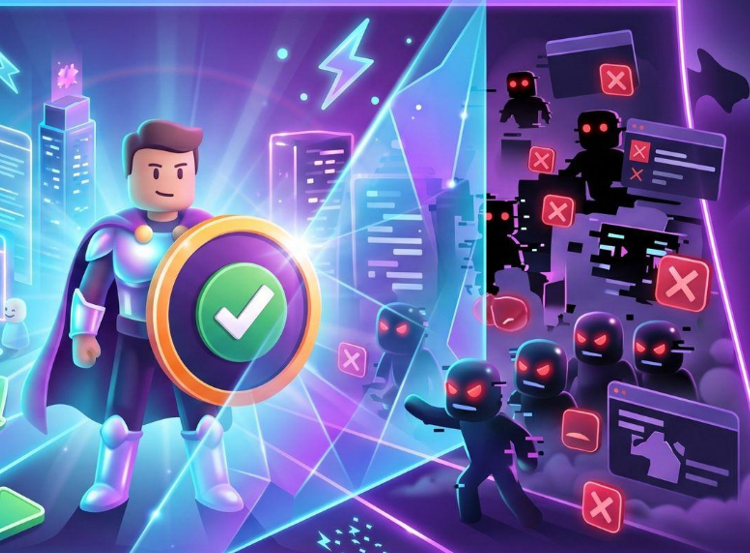
Could You Make the Right Decision? Try Being the Moderator
These dilemmas are easier to discuss in theory than to navigate in practice.
That is why I developed an interactive simulation called You Are the Moderator for my university course on peer support and community mental health.
The simulation places participants in charge of a fictional online support community.
They encounter ten challenging situations and must decide how to respond.
Some involve personal attacks. Others concern questionable medical advice, potentially distressing disclosures, privacy concerns, community governance, or moderators experiencing burnout.
Each decision influences three dimensions of community health: safety, trust, and autonomy.
The exercise illustrates an important principle. There is not always a perfect response. Protecting members may require intervention, but intervention can also have unintended consequences. The goal is to understand the tradeoffs and develop the judgment needed to maintain a supportive environment.
The simulation is an educational exercise, not a validated clinical assessment. Its purpose is to help participants think critically about the choices involved in governing online communities.
What Public Health and Community Organizations Can Learn
As more organizations create digital support groups, patient communities, and online engagement platforms, the research offers several practical lessons.
First, organizations should define what success actually means. If the goal is to reduce isolation, page views or comments alone won’t be enough. Evaluations should include participants’ experiences of belonging, perceived support, psychological safety, and meaningful connection.
Second, community design matters. Interventions should treat clear behavioral expectations, accessible platforms, welcoming practices, privacy protections, and consistent moderation as core components, not optional administrative tasks.
Third, organizations should recognize that participants have different needs. A community that benefits one person may create distress for another. People need appropriate choices about participation, exposure to sensitive material, and how they engage with others.
Fourth, moderators need support. Maintaining a psychologically safe community can involve difficult decisions and repeated exposure to distressing experiences. Organizations should establish clear procedures, provide training, and recognize the potential for moderator burnout.
Finally, online communities should be understood within a broader social and ecological context. Digital peer support can complement clinical services, family relationships, mutual aid networks, and community organizations.
It can fill important gaps, but technology alone cannot eliminate the structural conditions that contribute to isolation, discrimination, or unequal access to care.
The Future of Online Peer Support Is About Community, Not Technology
It is tempting to judge digital communities by their technological sophistication.
We might focus on the platform, the number of members, the recommendation algorithm, or the newest artificial intelligence tools.
But the most important questions are fundamentally social.
Do people feel welcome?
Can they share difficult experiences without being humiliated?
Do they receive meaningful responses?
Can they contribute to the community rather than simply consume its content?
And are the conditions in place for supportive relationships to develop over time?
Online communities are real communities. The relationships formed within them can be meaningful, and for some people, they provide connections that would otherwise be difficult to access.
But a digital platform’s existence does not guarantee those benefits.
More than two decades of research suggest that online peer support has genuine potential, particularly for improving experiences of belonging, connection, and personal recovery. Evidence for direct clinical improvements remains more mixed.
The question, then, is not whether online communities are real or whether they can help.
The more useful question is how we intentionally create the conditions that allow people to thrive within them.
That requires more than technology.
It requires community.
Frequently Asked Questions
Does online peer support improve mental health?
Research suggests online peer support can improve perceived social support, belonging, hope, and aspects of personal recovery. Evidence for direct improvements in depression, anxiety, and other clinical outcomes is less consistent. Results depend on community characteristics and individual circumstances.
What is the difference between online peer support and online therapy?
Online peer support involves people sharing experiences and offering mutual assistance. Online therapy involves a professional therapeutic relationship guided by clinical standards. Peer support may complement therapy but should not automatically replace professional treatment.
Are Reddit mental health communities helpful?
Reddit mental health communities can offer emotional validation, shared experiences, and practical information. However, experiences vary depending on the quality of responses, community norms, and moderation. Participation alone does not establish improved mental health.
What makes an online support group safe?
Important conditions include clear community guidelines, respectful interactions, consistent moderation, privacy protections, welcoming practices, and appropriate responses to harmful behavior. Psychological safety is particularly important.
Can online friendships provide meaningful social support?
Yes. Online relationships can provide emotional, informational, and practical support, especially when offline opportunities are limited. Their value depends on the quality of the relationships and whether they meet participants’ needs.
Why is moderation important in online mental health communities?
Moderation helps maintain the conditions necessary for constructive peer interaction. Effective moderators balance safety, trust, and autonomy while addressing harassment, misinformation, privacy concerns, and other potential harms.
Build Your Public Health Issue
Tell us a little about your work, and we’ll build a personalized issue with five things worth knowing.