
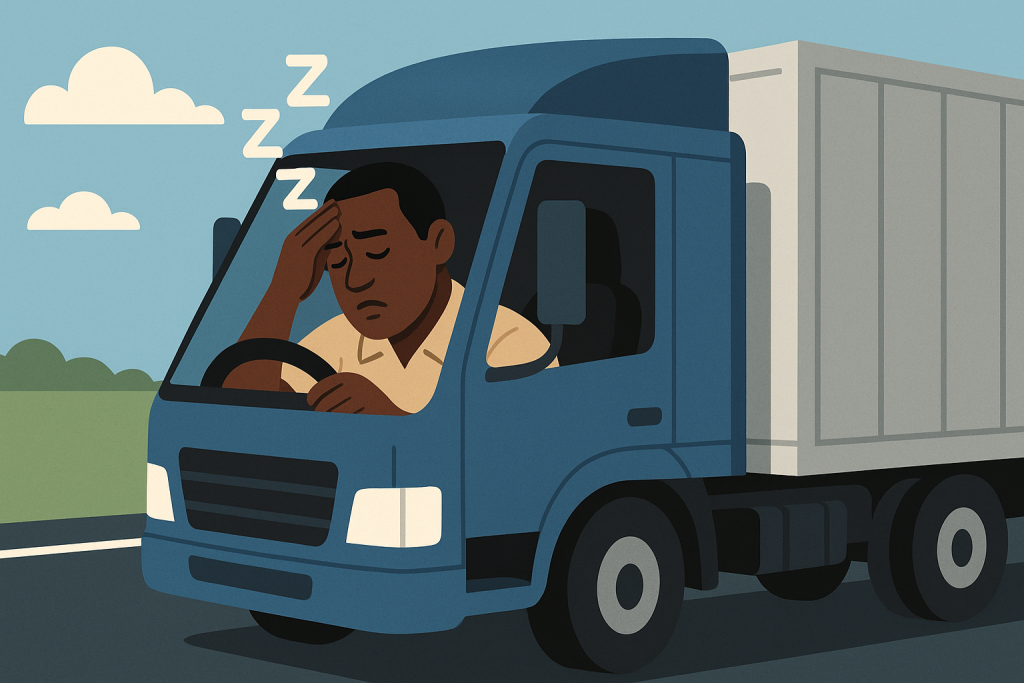
Tired on the Road: Fatigue Among East African Truck Drivers
On a scorching afternoon at the Malaba border crossing, Paul, a long-distance truck driver, felt his eyelids drooping. The line of trucks ahead barely moved as paperwork crawled. After nearly twelve hours behind the wheel, another cup of strong tea was tempting, but Paul knew it might be leading him on a chase with an elusive sleep debt.
For the thousands of truck drivers like Paul navigating the Kenya-Uganda transport corridor, fatigue is a constant, often unspoken companion. Recent research highlights how occupational and behavioral factors contribute to this pervasive issue, challenging us to rethink how we support these essential workers.
The Public Health Challenge
Driver fatigue is not just a nuisance; it’s a public health crisis, especially in East Africa’s transport corridors. Fatigue impairs reaction times, crucial for a truck’s safe voyage across unpredictable roads. The stakes are high in low- and middle-income countries, where road traffic injuries are disproportionately high.
Truck drivers here face unique challenges—long distances, unpredictable waits at border crossings, road conditions, and pressing delivery deadlines. The study by researchers Kilimo, Karimi, Makwaga, and Struckmann examines the occupational realities that shape this fatigue.
The Study in Focus
The study aimed to identify factors associated with fatigue among 207 truck drivers at key border crossings. Using multivariable logistic regression, researchers looked at occupational fatigue through both behavioral and contextual lenses.
Two key contributors emerged starkly: substance use and extended daily driving hours. These factors were further examined using LASSO logistic regression, which confirmed their significant associations even when other variables were penalized for redundancy.
The study found a startling 8.64 times higher odds of fatigue among drivers who used substances like caffeine, khat, or alcohol while on the job. These substances offer short-term alertness at the cost of long-term fatigue. Prolonged daily driving, exceeding twelve hours, posed a 23% increased risk of fatigue per additional hour. This finding highlights the demanding schedules drivers face, often exacerbated by border wait times.
Why This Matters
Understanding these associations is pivotal not only for improving individual well-being but for systemic changes. Fatigue among truck drivers isn’t merely about the choices individuals make; it’s also a reflection of structural and occupational conditions that compel such behaviors.
What This Means in Practice
- Policy Change: Enforce driving-hour regulations effectively, ensuring they’re more than a paper exercise. Monitor real-world outcomes to ensure compliance.
- Employer Practices: Employers should revisit scheduling practices in light of realistic transit times and offer health-oriented substance use interventions.
- Research Directions: To substantiate these findings, further studies with diverse, larger sample sizes, including female drivers, are needed to explore the nuances not captured here.
The Hard Part: Turning Evidence Into Action
While the study presents clear factors linked to fatigue, implementing change is fraught with hurdles, including funding limitations and policy enforcement capacity. With limited infrastructure resources and enforcement, policy efforts must be coupled with practical support for drivers—health programs, realistic scheduling, and monitoring.
Furthermore, the cross-sectional study design highlights associations, not causation. This necessitates cautious application of findings until longitudinal evidence substantiates these connections.
The strength in this study lies in its combination of traditional and penalizing statistical methods to uncover robust predictors. Yet, reliance on self-reported data and the absence of female participants limit its generalizability.
As we strive for safer roads and healthier communities, addressing these systemic occupational hazards must be a priority. Just as trucks need fuel to function, drivers need consistent rest and real health support. Fatigue strategies should focus on sustainable workforce health, ensuring that the critical role these drivers play in our economies is both supported and respected.