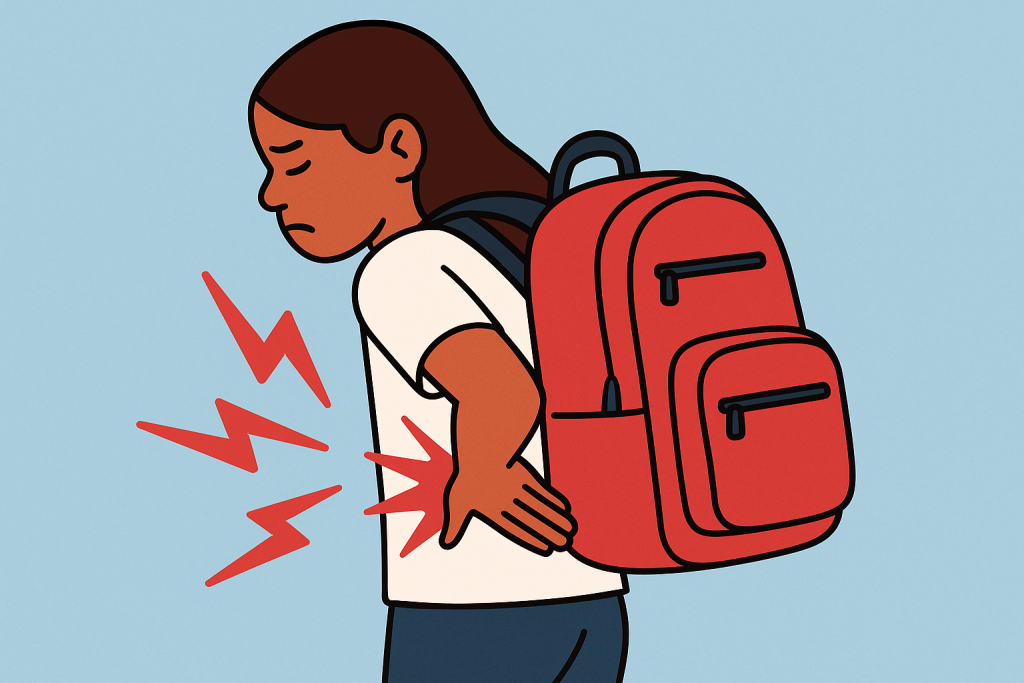
How Backpack Designs Impact Adolescent Back Pain
A bustling classroom is filled with the chatter of young students, each anticipating the day’s lessons. While excitement fills the air, buried within this everyday scene is a hidden challenge: countless youths hoist their bags onto one shoulder, a seemingly small choice that might carry hefty consequences.
Thousands of miles away, school officials deliberate on the effects of such carrying habits, wondering whether a different design might alleviate back pain that plagues a growing number of adolescents.
The Public Health Problem: Adolescent Back Pain
Back pain isn’t just an adult problem as it affects about 30 to 40% of teens, interrupting play and academic life, influencing quality of life, and sometimes predicting chronic pain in adulthood. In China, this issue is particularly pressing, as millions of adolescents struggle with musculoskeletal discomfort daily. The concern for public health leaders isn’t just about immediate discomfort but also about its ripple effects on society, influencing everything from school attendance to future workforce participation.
Unpacking the Study’s Questions and Methods
Researchers aimed to untangle how children’s backpack-carrying methods—specifically single-shoulder versus double-shoulder backpacks—relate to improper sitting posture and back pain among adolescents. Through a comprehensive, multisite study across China, the study engaged over 4,000 participants over several years. The methodology went beyond mere observations, employing logistic regression and sophisticated models to examine connections and causal pathways.
What Did They Find?
The results showed significant associations: wearing a single-shoulder backpack was associated with an increased likelihood of back pain, both cross-sectionally and longitudinally. Improper sitting posture didn’t just predict back pain—it mediated the relationship, capturing nearly 37% of the pain linkage in immediate analyses and over 11% over the years.
Transforming Understanding: Why This Matters
The implications of this study stretch beyond academic curiosity. It underscores the systemic challenge of ensuring healthy behaviors among youth. As school systems and policymakers grapple with burgeoning health concerns, straightforward changes—such as switching backpack types and promoting proper posture—offer promising preventive strategies. Yet, this doesn’t simply boil down to altering individual behaviors; it calls for a community- and policy-driven overhaul of ergonomic practices in schools.
What This Means in Practice
Immediate Implications for Public Health:
- Rethink Ergonomics: Schools should reinvest in ergonomically sound equipment and institute guidelines on proper backpack use.
- Education Programs: Public health officials and educators can collaborate to develop posture-awareness programs integrated into the school curriculum.
- Facilitate Access: Local health departments could offer workshops for students and parents, educating them on the benefits of balanced backpack use.
The Hard Part: Turning Evidence Into Action
Barriers to implementing these findings include resource limitations and the inertia of existing school systems. Some schools may lack the funding or infrastructure to enforce ergonomic changes or provide resources to facilitate these lifestyle adaptations.
Yet, meeting the challenge with evidence-backed interventions offers great promise. Data gaps remain, especially regarding students’ socioeconomic backgrounds and their impact on posture and pain, making future, more inclusive studies essential.
In Conclusion
As we close this chapter, the earlier school room scenario resurfaces. The weighty concern about how youths carry themselves—and their load—is more than a grim reality; it’s a solvable public health puzzle. Through rigorous research and forward-thinking interventions, communities can empower adolescents, reduce their pain, and ultimately support healthier futures.
Discussion Questions
- How does our community currently address adolescent back pain, and what scope for improvement exists?
- If changes were implemented based on these findings, who might still be at risk of back pain?
- What resources would schools need to successfully reform policy regarding adolescent ergonomics?