
How Forests Can Quiet the Roar of Traffic: The Role of Trees in Reducing Noise Pollution
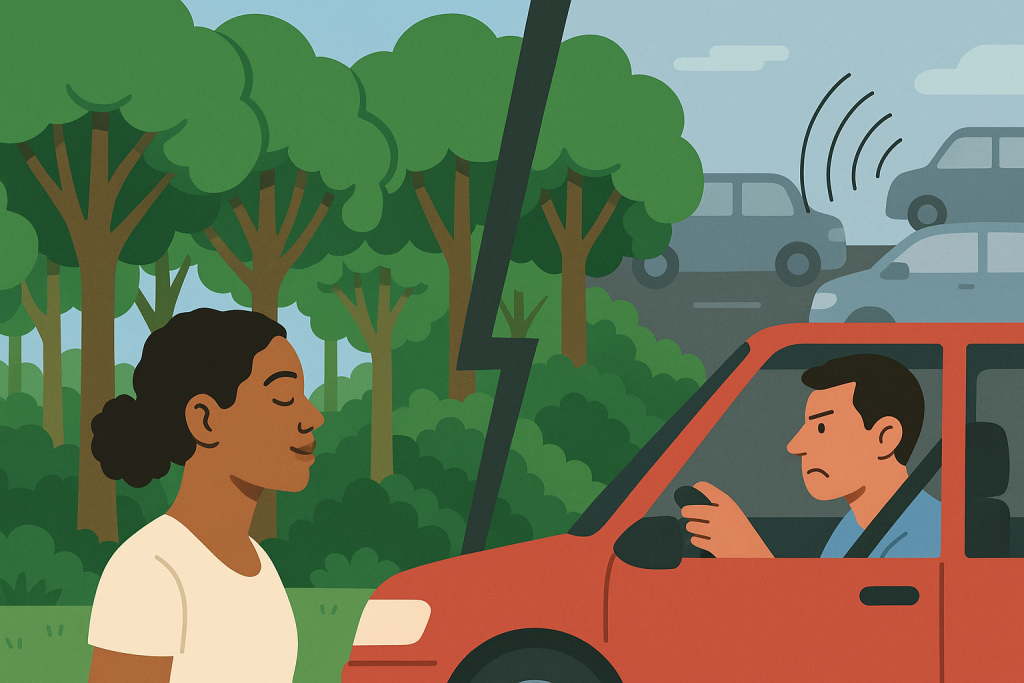
Imagine Sarah, a community health worker in a bustling city surrounded by constant traffic noise. Her neighborhood, nestled against a busy stretch of highway, suffers from relentless road noise, which impacts the mental well-being of those she serves. Residents often seek refuge in the nearby forest, desperate for moments of quietude, but even there, the tranquility is tainted by the distant hum of cars. In this landscape where urbanization meets the natural world, understanding how forests can mitigate noise pollution is more relevant than ever.
From City Noise to Forest Calm: Understanding the Problem
Road traffic noise is a persistent environmental issue in urban areas, with significant impacts on public health, ranging from stress and sleep disturbances to cardiovascular problems. While technology and traditional noise barriers offer some solutions, they can be costly and disruptive. Forests offer a more sustainable alternative, serving as natural sound barriers that integrate seamlessly with the environment.
This study explores how different types of forests – specifically coniferous vs. deciduous, younger vs. older – affect traffic noise attenuation. The goal is not only to understand which forest types are most effective but also to inform urban planning and public health strategies focused on reducing noise pollution.
The Study Approach: Measuring Noise Across Forest Types
The researchers set out to investigate the noise reduction capacity of forests by measuring sound levels across various plots in south-eastern Poland. These plots included both coniferous and deciduous forests, categorized by age, as well as an open area for comparison. Sound measurements were taken at different distances from a major road, ensuring consistent traffic and environmental conditions during the study period.
Data was collected using a Laserliner SoundTest-Master meter, which recorded maximum noise levels – a more reliable measure under forest conditions, given the background noise from natural sources like wind and wildlife. The analysis revealed how factors such as forest type and age influenced noise attenuation, using statistical models to determine which conditions led to the most effective sound reduction.
Key Findings: Pine Forests Leading the Charge
The study found that pine forests, regardless of age, were more effective at damping noise than beech forests (so a positive for our friends in South Carolina). This difference was attributed to the dense structure and unique bark characteristics of coniferous trees, which scatter and absorb sound more efficiently.
The results showed that the maximum noise levels decreased significantly within the first 25 meters (about 80 feet in Freedom Units). from the road, particularly in older pine stands. This underscores the importance of forest age in enhancing noise reduction, suggesting older forests with mature structures can be most beneficial. Open areas, surprisingly, showed attenuation similar to that of beech stands, highlighting how terrain and forest structure can affect sound propagation.
Why This Matters: Implications for Public Health and Urban Planning
These findings emphasize that the strategic use of specific forest types, particularly pine, can be a natural, effective solution to mitigate traffic noise. As cities continue to expand, integrating green infrastructure, such as forested green belts, not only helps combat noise pollution but also contributes to urban biodiversity and community well-being.
What This Means in Practice
- Urban Planners: Consider using pine forests as natural noise barriers in city planning, especially in new urban developments.
- Public Health Officials: Advocate for multi-benefit solutions that integrate noise reduction with health benefits provided by green spaces.
- Community Organizations: Engage in planting and maintaining forests that are specifically designed for noise attenuation.
The Hard Part: Turning Evidence Into Action
While the potential for forests to act as noise barriers is apparent, several challenges remain. Implementing these findings requires overcoming constraints such as limited urban space, funding, and ensuring community engagement. Additionally, more research is needed to explore how different tree species and densities further influence noise reduction.
Moreover, the study’s limitations include its focus on a particular region and forest type. Expanding this research to include a broader range of ecosystems and traffic conditions will be critical in refining these findings and applying them in diverse urban settings.
A Green Solution to Urban Noise
So let’s return to our community health worker, Sarah, and the idea that cities can become quieter, more peaceful spaces through thoughtfully designed green infrastructure. By embracing forested noise barriers, we create healthier, more livable urban environments. As we advance, these insights remind us that with thoughtful design and community collaboration, it is indeed possible to reduce the urban din and reclaim tranquility.
Engage with your teams and community partners using these questions:
- How could these findings influence urban forest policy in your area?
- What barriers might exist in implementing forest-based noise solutions in your community?
- Who are the stakeholders that should be involved in planning these green interventions?