Healthy Products in Supermarkets: A Way Forward
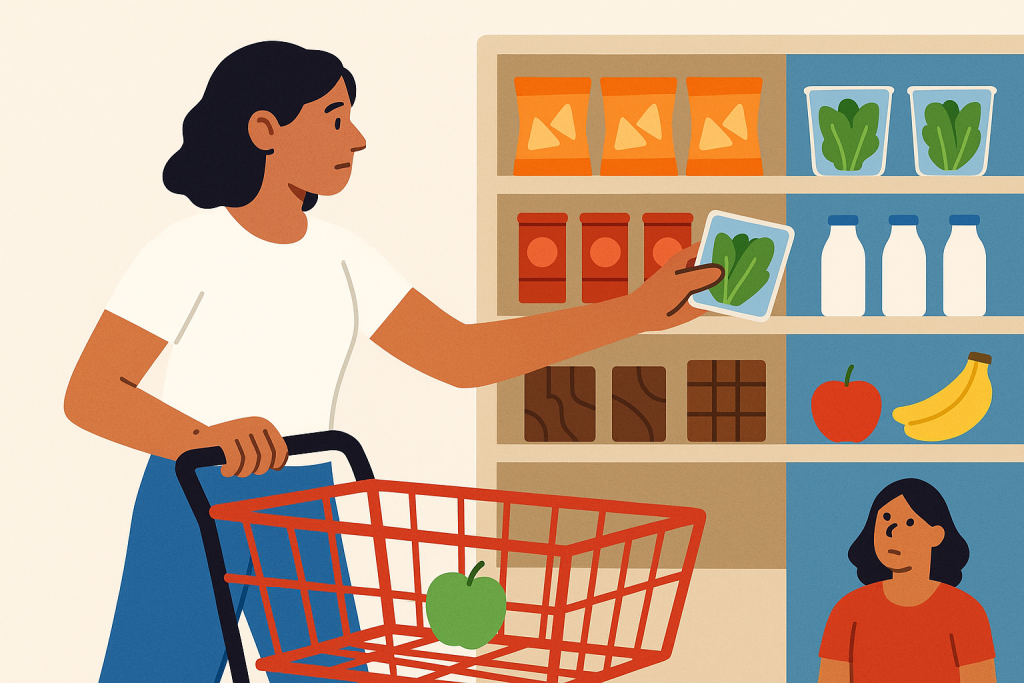
As Jane wandered down the simulated supermarket aisle, her eyes flitted between the kale and the crisps. She was on a mission: feed her family healthily without breaking the bank. Yet, as she approached the checkout, sugary treats filled the shelves, tempting her at every turn. This tug-of-war between intent and impulse epitomizes a broader public health challenge: how supermarket layouts influence our food choices.
The Public Health Dilemma
The obesity epidemic has plagued global health systems with unhealthy diets as a central factor. Despite public awareness, making healthy food choices remains daunting for many. Supermarkets, selling over 90% of groceries in the UK, often promote high-fat, sugar, and salt (HFSS) foods in prominent locations, enticing shoppers to make unhealthy impulse purchases. This aligns with national data showing dietary disparities between communities, compounded by social determinants such as education and income levels.
The Study’s Approach
A recent study stepped outside traditional supermarket research boundaries by using a two-dimensional (2D) simulated supermarket to explore women’s attention to different product placements. By replicating store layouts, the research aimed to unravel whether women in a controlled environment would focus more on healthy, unhealthy, or non-food items.
Methods and Insights
The study engaged women from the Wessex area in the UK, who participated in online surveys and eye-tracking experiments. These methods helped capture their visual attention and purchase intentions regarding healthy versus less healthy foods. Notably, the study incorporated a qualitative angle with interviews to delve deeper into participants’ shopping behaviors.
In the simulated environment, participants viewed different sections typical of a grocery journey—store entrance, aisle ends, and checkouts. Women used eye-tracking technology as one part of the experiment to see where their gaze lingered and what items they intended to purchase.
Key Findings
Women consistently demonstrated an intention to buy more healthy foods than unhealthy or non-food items when initially exposed to each in prominent locations. Interestingly, while intention was clear, actual attention to these products varied across experimental conditions.
The eye-tracking results complicated the narrative. Although women’s intention to purchase healthy foods was high, their attention did not differ significantly among healthy, unhealthy, and non-food products when passively viewed. However, when comparing the two product types side by side, healthy options received more engagement.
Why It Matters
By uncovering these nuances, this study offers hope for designing more health-oriented supermarket environments. If healthy foods are strategically placed at prime locations, this could improve public health outcomes by aligning consumer intentions with healthier purchases. However, it also means that a change in supermarket strategy may not interrupt profit margins as retailer fears might suggest.
What This Means in Practice
To enhance consumer health, policymakers and public health advocates might consider the following:
- Design store layouts: Encourage retailers to promote healthy items at eye level and checkout lanes.
- Community involvement: Work with neighborhoods to ensure grocery stores meet local health needs and incorporate consumer feedback into store design.
- Budget-friendly healthy options: Pair strategic product placement with price promotions on healthy foods.
The Hard Part: Turning Evidence Into Action
While the findings are promising, challenges remain: High costs of healthy goods and competing interests between health and business continue to be barriers. Moreover, the focus on a single demographic highlights the need to study diverse communities to ensure inclusivity and generalizability.
Concluding Thoughts
The simulated supermarket study indicates that placing healthy foods prominently could help narrow the gap between intent and action, fostering healthier purchasing habits. However, for real-world success, collaboration among policymakers, public health professionals, and grocery retailers is needed to design inclusive, health-promoting shopping environments. As Jane finishes her simulated shopping trip, she—and countless others like her—might soon find supermarkets more aligned with their healthier aspirations.
Discussion Questions
- How might changes in supermarket layout impact consumer health behaviors?
- What strategies could local health departments employ to support supermarkets in implementing these findings?
- How might socioeconomic barriers be addressed to ensure equitable access to healthier products?