Bridging Health and Environment: One Health’s Path to Equity
On the Ground: When Public Health and Planetary Health Collide
Imagine a bustling health clinic nestled at the edge of a vibrant but struggling urban community. The clinic is one of the few in the area, promising comprehensive care but overwhelmed by the needs of its people. Their challenges go beyond medical conditions—housing, access to clean air, and trust in institutions. This scene is not unique but highlights a pressing question: how do we knit health equity into the fabric of our communities while recognizing our planet’s ecology?
Re-examining Health: The One Health Perspective
The concept of One Health emerged from the understanding that human health is closely tied to the health of animals and the environment. A recent review published in Frontiers in Public Health sheds light on how this approach could revolutionize health equity efforts. The study found that, unfortunately, health equity and One Health are often siloed in their applications. Although both aim for holistic well-being, their integration remains largely unexplored.
The Study: Connecting Dots for Equity
Undertaken by a transdisciplinary team, this review of reviews consolidates evidence on actions aimed at bridging the gap between health equity and One Health. Out of 295 action-focused papers, 62 reviews painted a promising yet fragmented tapestry of efforts—most originating from high-income countries and focusing on service delivery, governance, and policy.
Key Insights: What the Researchers Discovered
Some significant findings emerged from reviewing interventions:
- Service Delivery: Access and outcomes are predominantly shaped by social determinants rather than direct medical interventions. Refugees, immigrants, and racial and ethnic minorities are frequently left out of effective health interventions.
- Governance and Policy: While governance structures are essential, few studies have investigated how these frameworks directly impact equity. There’s a crying need for capacity-building to assess equity impacts more effectively.
- Technology and Data: Digital health holds promise but risks exacerbating inequalities due to digital illiteracy and access issues. Meanwhile, disaggregated data across social determinants is critical for identifying health disparities.
Why This Matters Now
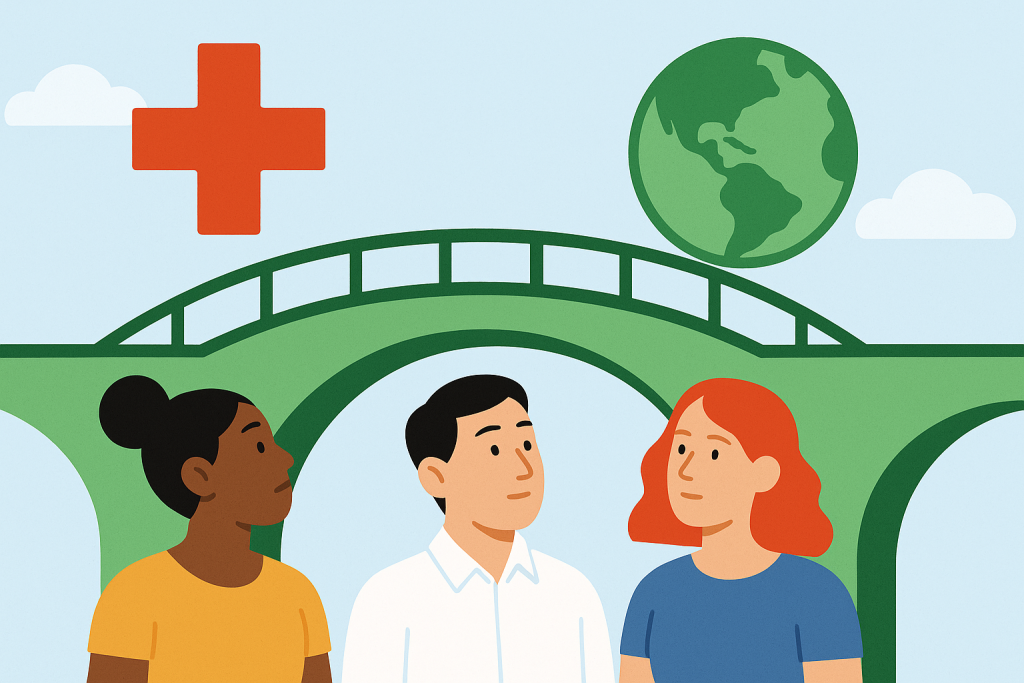
As climatic disarray intensifies and health inequities widen, this review calls for an integrated lens that encompasses everyone and everything—the rich web of life that includes humans, animals, and ecosystems. When implemented with an equity focus, the One Health approach could unravel these complexities, showcasing that environmental sustainability and health equity should go hand in hand.
What This Means in Practice
For Health Departments:
- Focus on systems beyond reach, such as sustainable cities and air quality initiatives, and incorporate them into health equity plans.
- Strengthen cross-sector collaborations that embed equity in health policies.
For Community-Based Organizations:
- Expand mentorship and training programs to bridge digital literacy gaps in vulnerable populations.
- Engage directly with community voices to design culturally competent interventions.
For Policymakers:
- Resource allocation should prioritize underestimated, underserved groups, addressing social determinants alongside traditional health metrics.
The Hard Part: Turning Evidence Into Action
Evidence without action is a half-written story. Implementing these recommendations faces challenges like limited funding, data gaps, political hurdles, and workforce shortages. Yet, equitable change demands resilience—transforming plans into practiced principles.
Suggested Visual
Suggested visual: A pathway diagram illustrating the interconnections between human, animal, and ecosystem health, emphasizing community trust and policy intervention.
Concluding Thoughts
The call to action is clear: unite One Health and health equity initiatives. This study is not just a repository of findings; it’s a clarion call for a comprehensive framework that respects deep interconnections, that unites rather than divides. As public health practitioners, let’s leverage this pathway toward hope and equity—not just for some species or communities but for all.
Discussion Questions
- How would this integrated approach redefine outreach strategies in your community?
- What stakeholders would you engage to get this initiative off the ground?
- What metrics would you use to evaluate the success of such cross-sector collaborations?