How to Use AI Like a Public Health Pro: A Practical Guide to Prompting Trawly
Artificial intelligence is quickly becoming part of everyday public health work. But here’s the truth that most people miss:
The value you get from AI depends almost entirely on how you ask the question.
At PubTrawlr, we built Trawly to help public health professionals cut through noise, synthesize evidence, and make faster decisions. But like any powerful tool, it only works well when used correctly.
In this guide, we will walk through how to use Trawly effectively using real-world prompt engineering strategies grounded in public health practice. These approaches are informed by emerging guidance on “deep research” tools, which are designed to handle complex, multi-step analytical tasks rather than simple questions .
Why Prompting Matters More Than the Tool
Most people start with vague questions like:
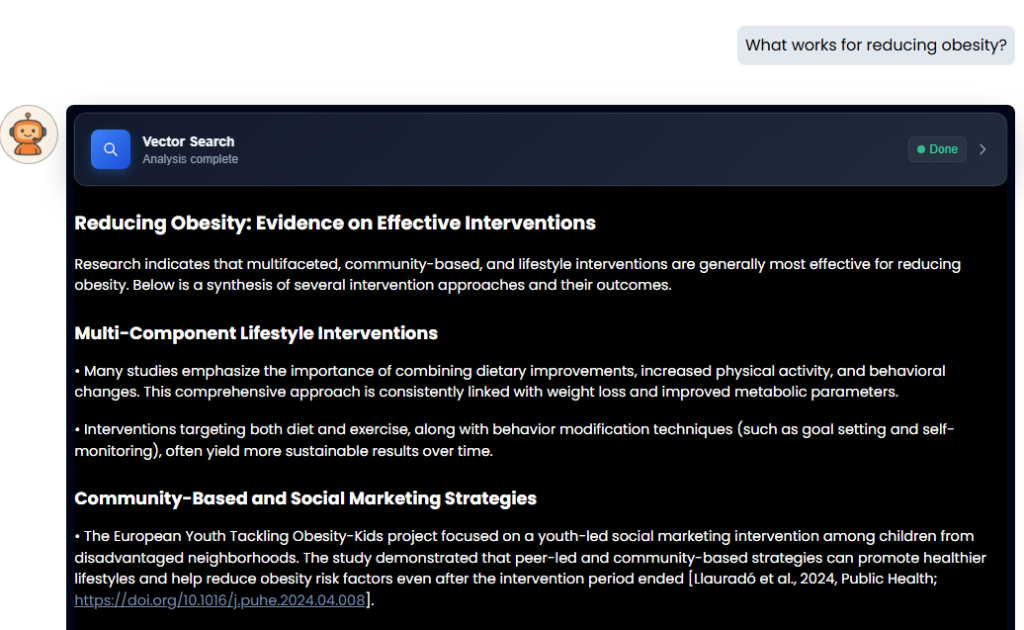
“What works for reducing obesity?”
Trawly will try to help, but the output will likely be broad, generic, and hard to act on.
Now compare that to a well-structured prompt:
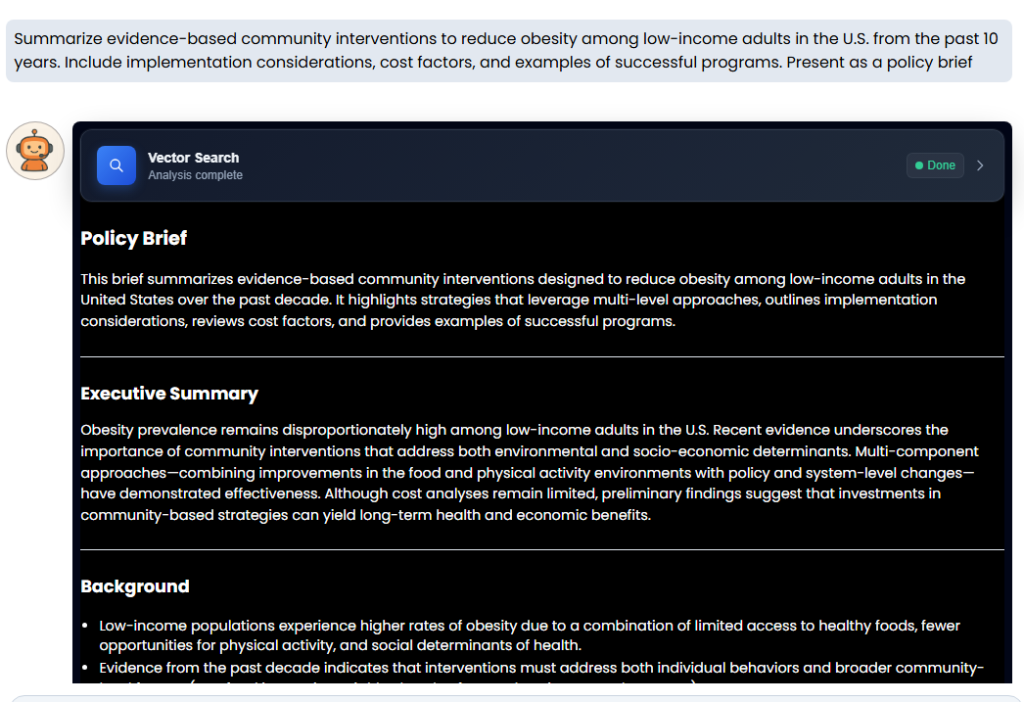
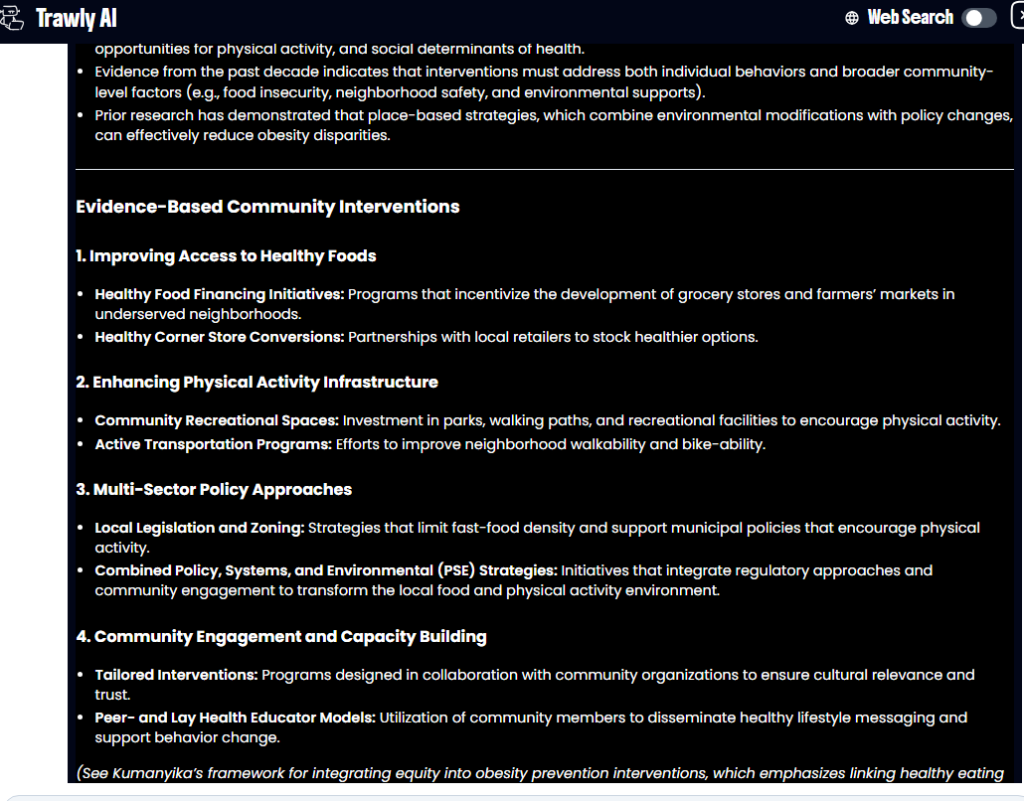
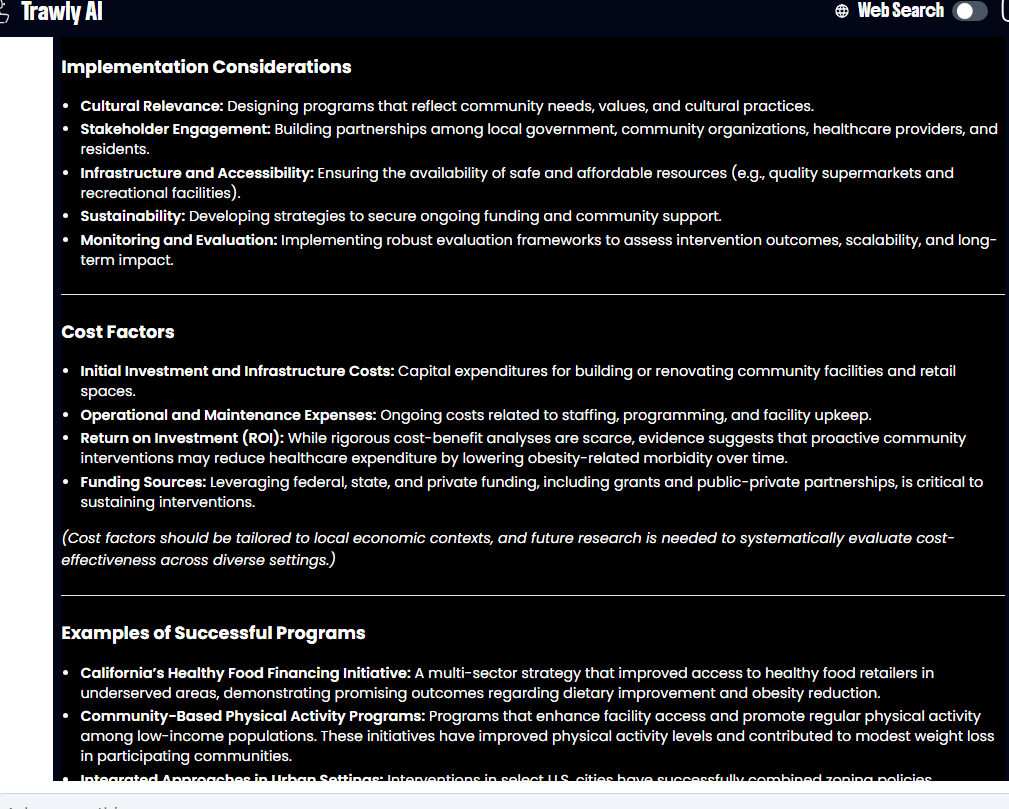
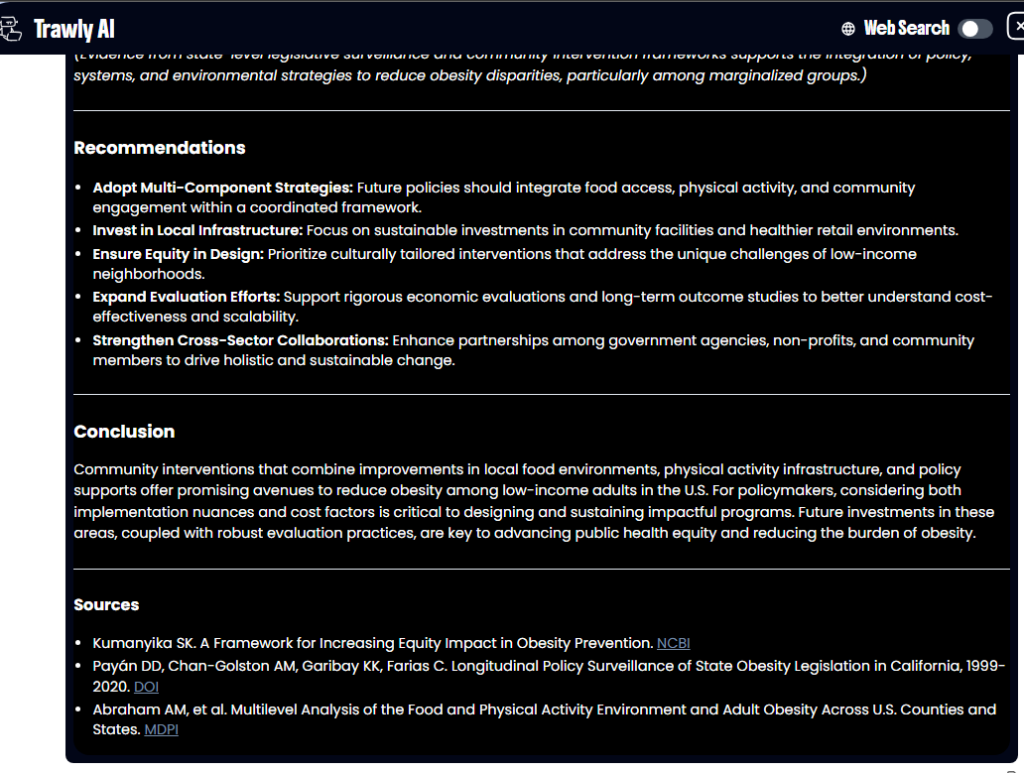
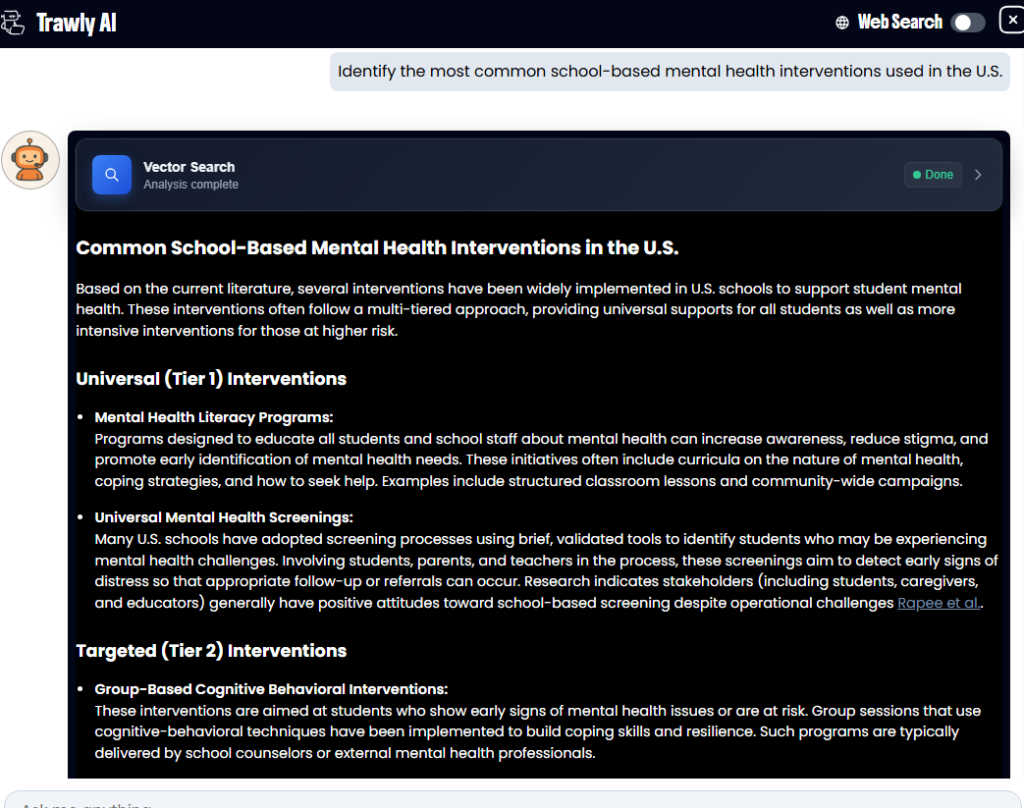
“Summarize evidence-based community interventions to reduce obesity among low-income adults in the U.S. from the past 10 years. Include implementation considerations, cost factors, and examples of successful programs. Present as a policy brief.”
1 of 42 of 43 of 44 of 4
Same tool. Completely different outcome.
The difference is not AI capability. It is prompt quality.
The Core Principles of High-Quality Prompts
Across public health use cases, strong prompts tend to share a few key features.
1. Define the Scope Clearly
Public health questions are rarely one-size-fits-all. You need to specify:
Population
Geography
Timeframe
Topic
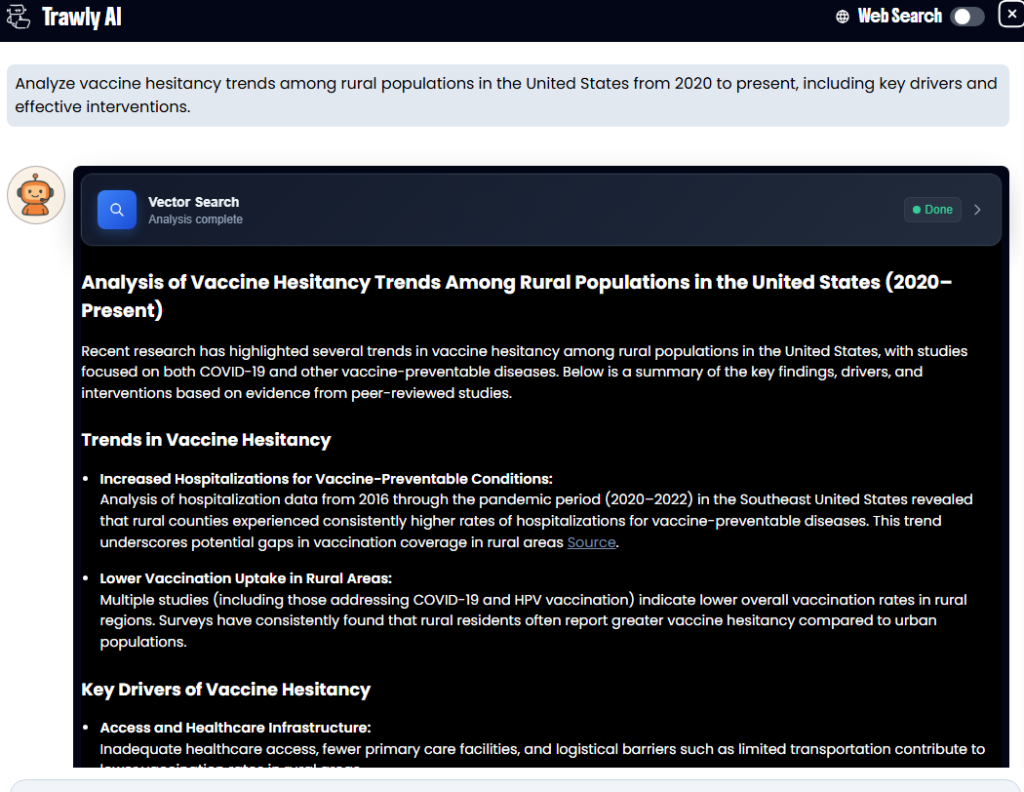
For example, instead of: “Tell me about vaccine hesitancy”
Try: “Analyze vaccine hesitancy trends among rural populations in the United States from 2020 to present, including key drivers and effective interventions.”
This aligns with a core insight from public health AI guidance: well-scoped prompts improve accuracy, reproducibility, and usefulness .
2. Specify the Output Format
Trawly is not just answering questions. It is generating deliverables. If you do not tell it what format you want, you leave quality up to chance. Try adding instructions like:
“Write as a policy brief”
“Provide a comparison table”
“Summarize in plain language for community partners”
“Include headings and actionable recommendations”
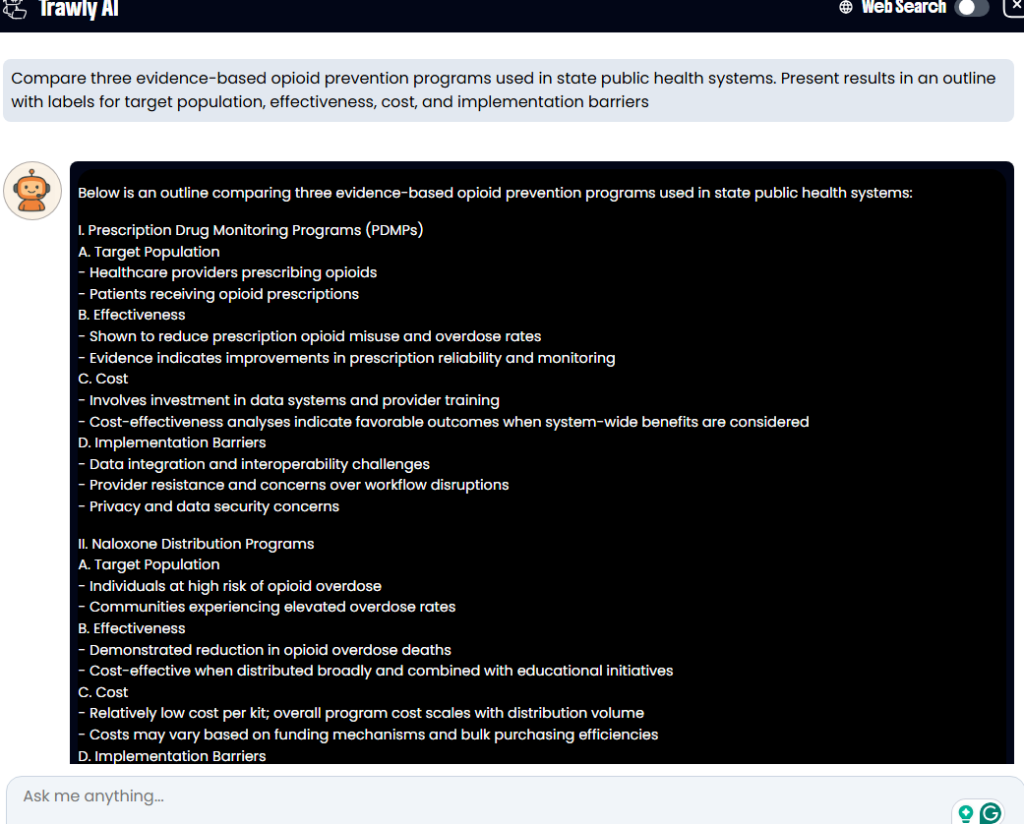
Example: “Compare three evidence-based opioid prevention programs used in state public health systems. Present results in an outline with labels for target population, effectiveness, cost, and implementation barriers.”
Now you are not just getting information. You are getting something you can use.
3. Break Complex Questions into Steps
One of the biggest mistakes people make is asking Trawly to do everything at once. Public health problems are layered. Your prompts should be too. Instead of:
“Evaluate school-based mental health programs and recommend the best one”
Try a sequence:
“Identify the most common school-based mental health interventions used in the U.S.”
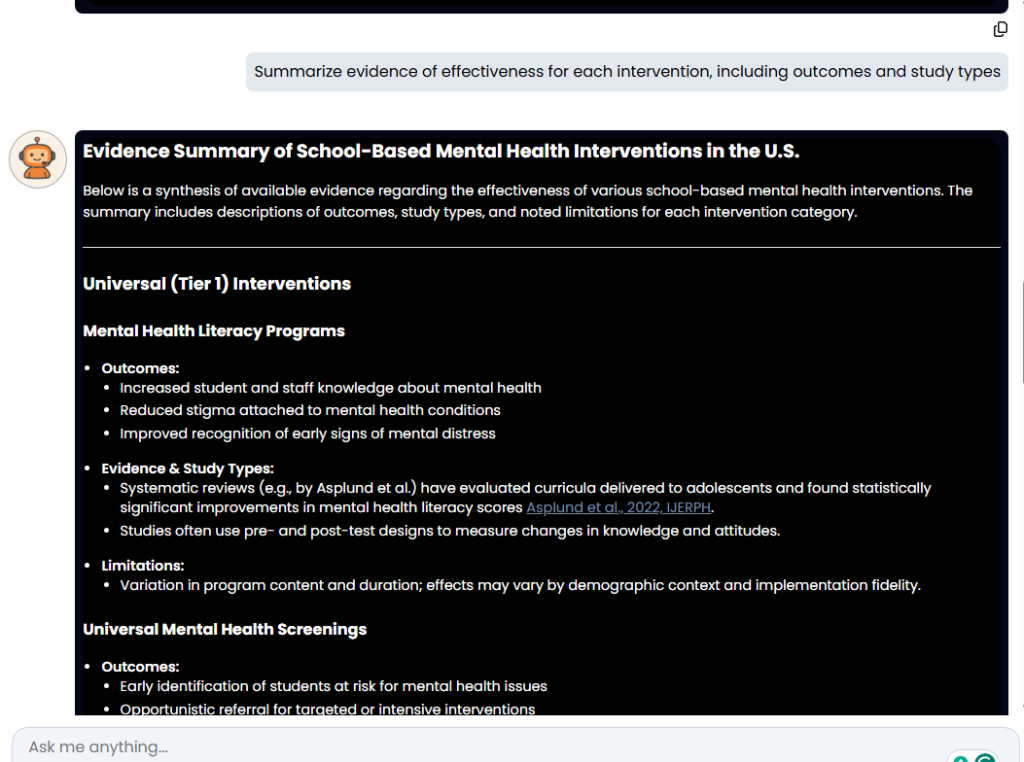
“Summarize evidence of effectiveness for each intervention, including outcomes and study types”
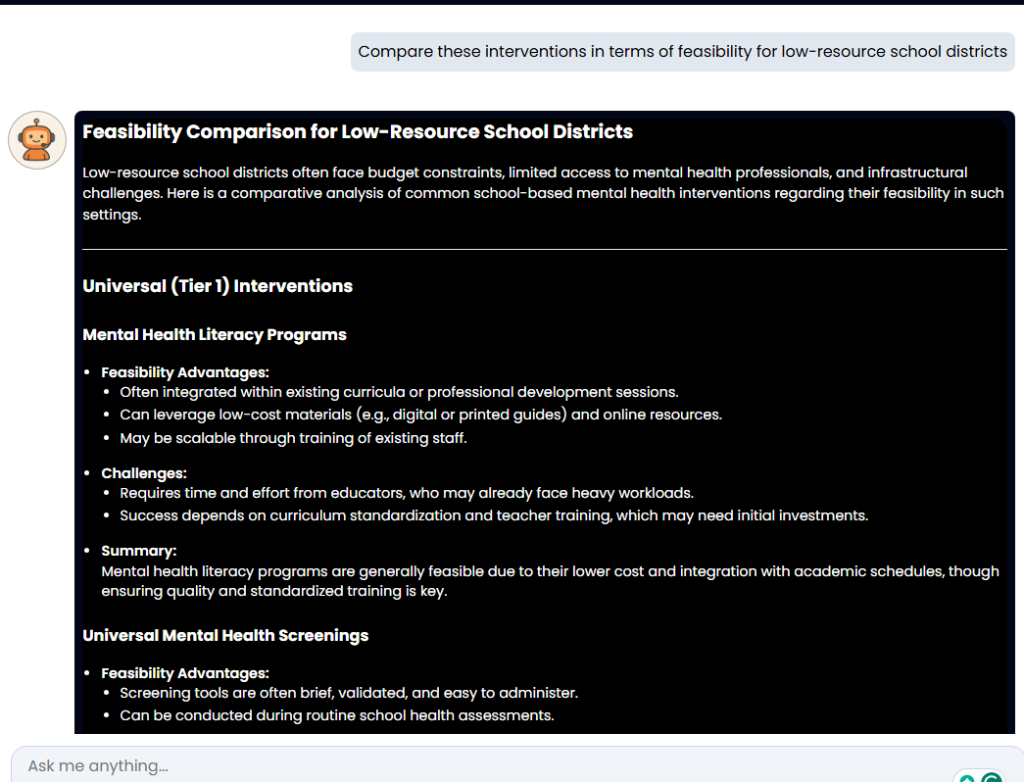
“Compare these interventions in terms of feasibility for low-resource school districts”
1 of 32 of 33 of 3
This mirrors how deep research tools are designed to work: multi-step reasoning and synthesis across sources .
4. Provide Context Like a Real Project
Trawly performs best when it understands your actual goal. Think like you are briefing a colleague. Instead of:
“Write about asthma programs”
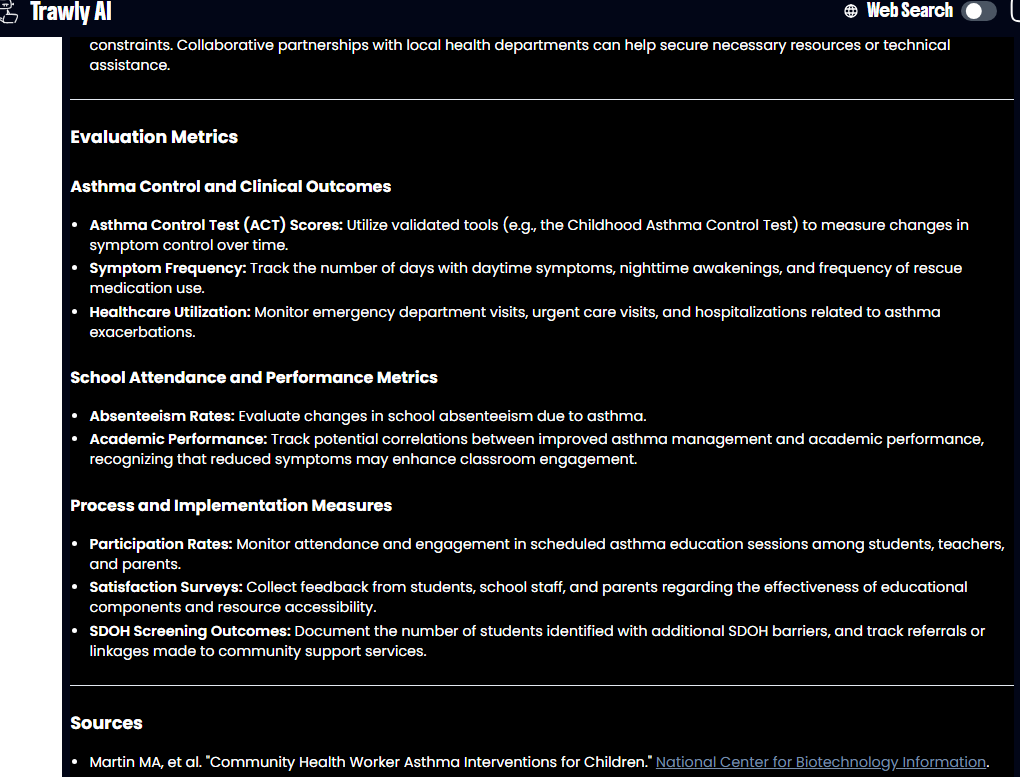
Try: “I am evaluating a school-based asthma program in a 10-county region with high rural populations. Summarize evidence-based strategies for improving asthma management among children, with attention to implementation in low-resource school settings. Include metrics we could use for evaluation.”
Now Trawly is aligned with your real-world use case.
5. Use Trawly as a Thinking Partner, Not Just a Search Tool
One of the most powerful features of tools like Trawly is their ability to refine and iterate. You do not need a perfect prompt on the first try. Start with something solid, then follow up:
“Can you expand on the implementation barriers?”
“Can you tailor this for policymakers?”
“Can you simplify this for a 9th grade reading level?”
This iterative process is not a weakness. It is the workflow.
Real-World Example: Turning a Blog Idea into Actionable Insight
Let’s say you are writing a post about cannabis-related hospitalizations. A weak prompt might be:
“Explain cannabinoid hyperemesis syndrome”
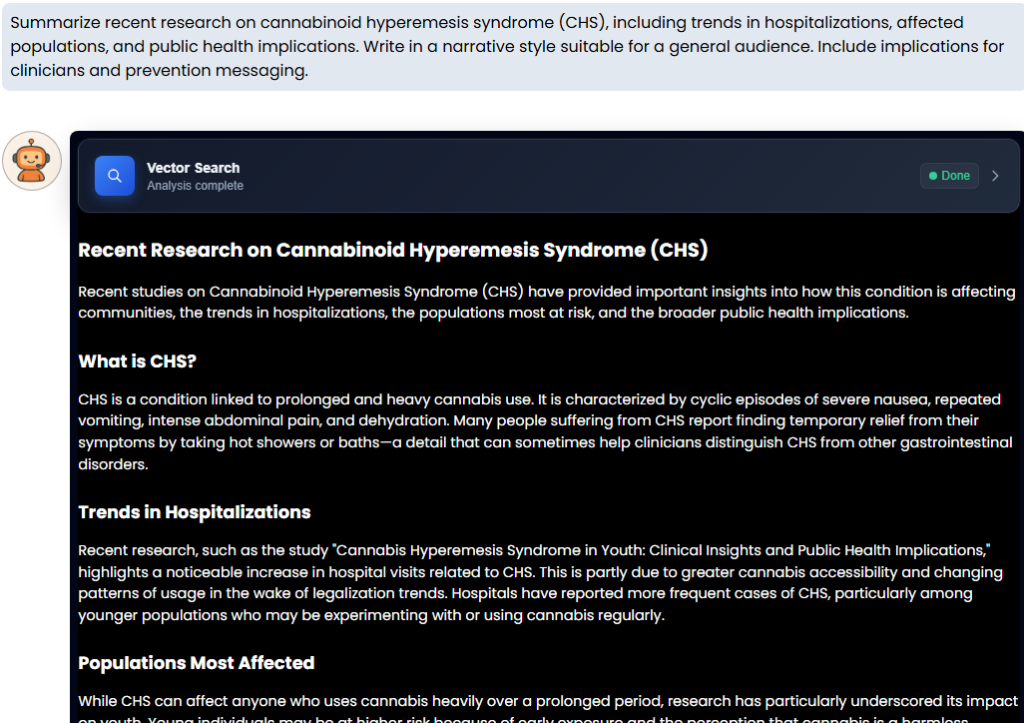
A stronger, Trawly-optimized prompt would be: “Summarize recent research on cannabinoid hyperemesis syndrome (CHS), including trends in hospitalizations, affected populations, and public health implications. Write in a narrative style suitable for a general audience. Include implications for clinicians and prevention messaging.”
Now you are getting epidemiology, tends, practice implications, and communication guidance all in one structured output.
When You Should (and Should Not) Use Trawly
Trawly shines when you need:
Literature synthesis
Policy comparisons
Program evaluation insights
Communication drafts
Strategic planning support
These are exactly the types of tasks where AI can accelerate early-stage thinking and evidence gathering. But it is not a replacement for:
Statistical modeling
Final decision-making
Subject matter expertise
Always treat outputs as a starting point, not the final answer.
The Most Important Rule: Always Add Human Judgment
The most important rule is to always add human judgment. Even the best prompt will not replace expertise. Before using Trawly outputs, it is critical to verify key findings, check sources, apply local context, and review for bias or gaps. Public health decisions carry real consequences, so AI should be used to support decision-making, not replace it.
A Simple Prompt Template You Can Start Using Today
If you take one thing from this guide, use this structure:
“I am working on [project context]. Analyze [specific topic] for [population + geography + timeframe]. Include [key elements like effectiveness, implementation, cost]. Present as [format: brief, table, narrative]. Tailor for [audience].”
This single structure will dramatically improve your results.
Final Thought: Better Prompts, Better Public Health
The final thought is simple: better prompts lead to better public health. AI is not just about speed, it is about clarity. When you learn to ask better questions, you get better answers, and in public health, better answers lead to better decisions, stronger programs, and improved outcomes. Trawly is not here to replace your expertise, but to amplify it. The key is learning how to use it effectively by asking the right questions.
Ready to try it yourself? Click the icon in the lower right corner and ask your question. Trawly is here to help you turn complex public health challenges into clear, actionable insights in seconds.