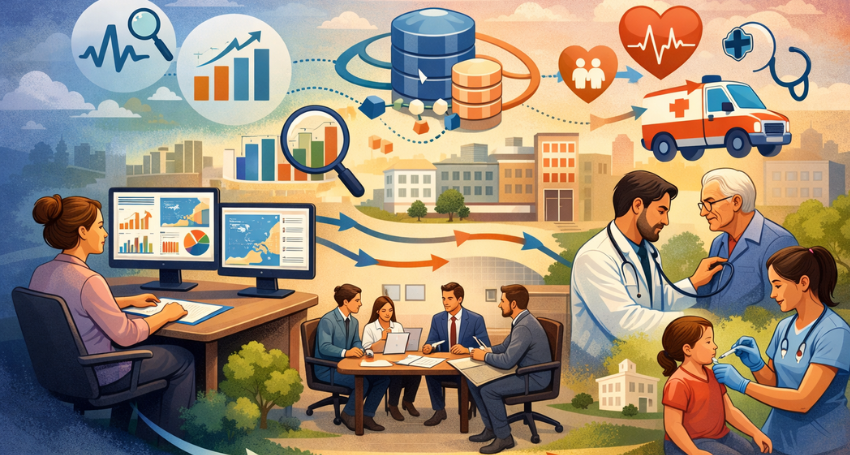
Turning Insights into Impact: The Future of Smarter Health Systems
Healthcare systems around the world face growing pressure. Rising costs, uneven access, and shifting disease patterns demand smarter solutions. That’s where a critical question emerges: how can data-driven policy making improve health systems in a meaningful and lasting way?
The answer lies in how effectively policymakers use data to guide decisions, allocate resources, and design interventions. Instead of relying on assumptions or outdated models, data-driven approaches empower leaders to act with precision and confidence.
Let’s explore in this blog how this transformation is reshaping public health and why it matters now more than ever.
What Is Data-Driven Policy Making?
Data-driven policy making uses real-time and historical data to inform decisions at every level of the health system. Governments, healthcare organizations, and public health professionals analyze trends, outcomes, and risks to design policies that are both targeted and effective.
Rather than taking a one-size-fits-all approach, this method prioritizes evidence-based strategies. It allows decision-makers to identify what works, what doesn’t, and where improvements are needed.
How Can Data-Driven Policy Making Improve Health Systems?
1. Enhancing Decision Accuracy
When policymakers rely on accurate data, they reduce guesswork. For example, analyzing disease prevalence helps governments prioritize funding for high-risk areas. This ensures resources reach communities that need them most.
Moreover, data minimizes bias. Decisions become grounded in measurable evidence instead of political or subjective influences.
2. Improving Resource Allocation
Healthcare resources are often limited. Data helps allocate them efficiently. By tracking patient demand, hospital capacity, and workforce distribution, policymakers can balance supply and demand more effectively.
As a result, hospitals avoid overcrowding, and underserved areas receive better support.
3. Strengthening Preventive Care
Prevention plays a key role in modern public health. Data-driven insights identify risk factors early, allowing for proactive interventions.
For instance, tracking vaccination rates or chronic disease trends enables authorities to launch targeted awareness campaigns. This reduces long-term healthcare costs and improves population health outcomes.
Real-World Applications in Public Health
Using Predictive Analytics
Predictive analytics allows health systems to forecast outbreaks and prepare accordingly. During global health crises, this approach helps governments act faster and more strategically.
Instead of reacting to emergencies, systems become proactive—saving lives and reducing strain on healthcare infrastructure.
Monitoring Health Inequalities
Data also reveals disparities in access and outcomes. Policymakers can identify gaps across regions, income levels, or demographics.
By addressing these inequalities, health systems become more inclusive and equitable.
Evaluating Policy Effectiveness
Another advantage lies in continuous improvement. Data allows policymakers to measure the impact of implemented strategies.
If a program fails to deliver expected results, leaders can adjust quickly. This adaptability leads to stronger, more responsive health systems.
The Role of Technology in Data-Driven Health Policy
Modern technology plays a vital role in enabling data-driven approaches. Electronic health records (EHRs), wearable devices, and AI-powered tools generate vast amounts of actionable data.
These technologies improve data collection, integration, and analysis. Consequently, policymakers gain a clearer picture of population health trends.
Cloud-based systems also enhance collaboration between institutions. Data sharing becomes faster and more secure, leading to coordinated efforts across sectors.
Challenges to Overcome
While the benefits are clear, implementing data-driven policy-making comes with challenges.
Data Privacy and Security
Protecting patient information remains a top priority. Policymakers must ensure strict regulations to maintain trust and confidentiality.
Data Quality and Standardization
Incomplete or inconsistent data can lead to flawed decisions. Health systems must invest in accurate data collection and standardized reporting methods.
Skill Gaps
Not all organizations have the expertise to analyze complex datasets. Training and capacity-building are essential for maximizing the value of data.
Despite these challenges, the long-term advantages far outweigh the obstacles.
Why This Matters for the Future of Public Health
Understanding how can data-driven policy making improve health systems is crucial for building resilient healthcare infrastructures.
As global health challenges evolve, traditional approaches no longer suffice. Data-driven strategies enable faster responses, smarter investments, and better outcomes for entire populations.
In addition, they support transparency and accountability. Citizens gain confidence when policies are backed by clear evidence.
Practical Steps for Implementation
Health leaders can take several steps to embrace data-driven policy making:
- Invest in digital health infrastructure
- Promote data sharing across institutions
- Train professionals in data analysis
- Establish clear governance and privacy frameworks
By taking these actions, health systems can unlock the full potential of data.
A Smarter Path Forward
The shift toward data-driven decision-making marks a turning point in healthcare. It transforms how policies are created, implemented, and evaluated.
When used effectively, data becomes more than just information it becomes a powerful tool for change.
Conclusion
At This Week in Public Health, we believe informed decisions lead to healthier communities. If you want to stay ahead of emerging trends and understand how innovations like data-driven policy are shaping the future, explore more insights on our platform. Join the conversation, stay informed, and be part of building smarter, more effective health systems worldwide.
By embracing the question of how data-driven policy making can improve health systems, we move closer to a future where healthcare is not only reactive but predictive, equitable, and truly impactful. Contact us for more updates