

Public Health Pulse: Defending Data, Nourishing Communities, and Tech That Cares
This week’s public health news reminds us that robust systems—from policy to technology to nutrition—are essential for safeguarding the well-being of our communities. Whether it’s a political battle over federal agency funding, urgent calls to protect vital health programs, or innovations in health IT, these stories reveal how multiple forces converge to either bolster or challenge public health in the United States. Let’s dive into three key arenas where public health is either under siege or rising to meet modern demands.
The CDC on the Frontlines: Funding Fights and the Defense of Public Health
U.S. Senator Jon Ossoff emerged as a pivotal figure defending the Centers for Disease Control and Prevention (CDC) against a proposed 50% funding cut under the previous administration. Such a drastic cut—nearly $4 billion—would have gravely undermined the CDC’s essential work tracking and fighting diseases that threaten millions. Ossoff’s bipartisan efforts preserved the agency’s resources, a critical win for public health that few notice until a crisis hits. Yet, this victory is only part of the story.
Congressional debates reveal a polarized landscape where some voices question the value of large infrastructure bills or the effectiveness of public spending, while others emphasize the real impacts of policies—like insulin pricing caps or infrastructure improvements that maintain roads, bridges, and public health reporting systems.
Beyond dollars and policy, the uproar over voter ID laws, immigration, and federal management illustrates how public health issues are intertwined with broader societal and political debates. Defending public health means navigating these complex, often contentious intersections.
Hunger and Health: The Ongoing Farm Bill Struggle and SNAP’s Survival
From Washington to local communities, nutrition remains a cornerstone of public health. The Farm, Food, and National Security Act of 2026, currently inching through House committee markups, sheds light on the fragile status of the Supplemental Nutrition Assistance Program (SNAP). This program, relied on by 42 million Americans, faces deep cuts estimated at $186 billion over the next decade. Such reductions threaten food security for the most vulnerable populations.
The consequences are clear: when funding for nutrition programs falters, chronic disease risks rise, and community health deteriorates.
Advocates warn that short-term legislative extensions and failure to restore SNAP funding inject uncertainty and hardship across the nation. It also highlights systemic inequities—how policy decisions disproportionately harm marginalized groups dependent on social safety nets. Defenders of public health call for a bipartisan path to reverse these cuts, recognizing that nourishment is not just about food—it’s about equity, dignity, and chances for longevity free from preventable diseases.
Health IT: The Backbone of Modern Care and Data Equity
On the technology front, health information systems are quietly transforming healthcare delivery. The federal Office of the National Coordinator for Health Information Technology (ONC) ensures that electronic health records and health IT products meet rigorous standards for security, functionality, and interoperability. This means patients and providers have secure, streamlined access to health data that supports everything from prevention to recovery.
Importantly, these technologies enable coordinated care across settings and improve public health outcomes by fostering accurate data sharing and tracking—but only if designed and implemented equitably. The ONC’s efforts to reduce clinician burden, promote patient engagement, and prevent information blocking underscore how health IT must be more than just digital tools—it must be accessible, transparent, and geared toward reducing disparities.
As health data becomes central to fighting diseases, managing care, and informing policy, safeguarding data integrity and privacy is a public health imperative.
Moving Forward with Purpose and Evidence
Public health today is a battleground for equity, science, and systems thinking. Defending the CDC’s funding and mission directly protects the American people from unchecked disease risks. Fighting to sustain nutrition programs like SNAP addresses hunger and chronic disease disparities. And advancing health IT standards lays the infrastructure for a 21st-century health system that is inclusive and effective.
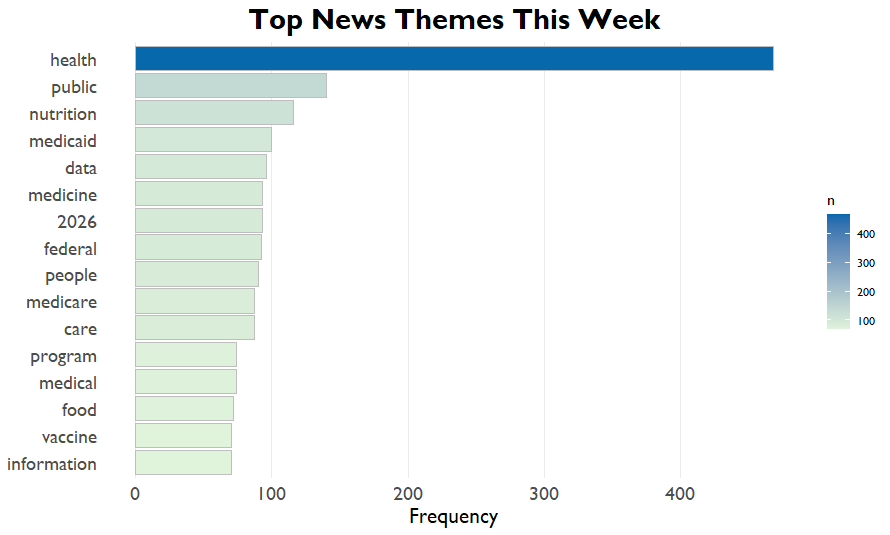
The stories from the week remind us that health is never neutral—it is political, social, and deeply intertwined with how we value community well-being. To navigate these challenges, public health must continue building coalitions that emphasize evidence, equity, and systems-level change. Stay informed, stay engaged. Subscribe or follow us for weekly, evidence-based updates that help you understand the forces shaping our nation’s health and what we can do together to promote a healthier future—for every person, in every community