How Artificial Light at Night May Fuel Obesity
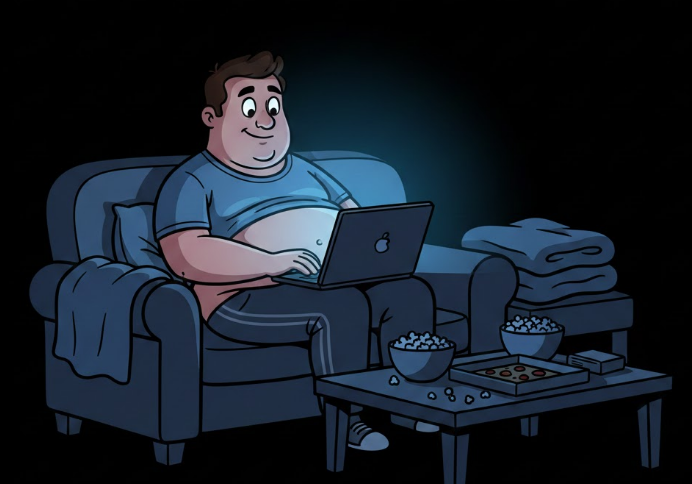
It’s 10:30 p.m. A neighborhood streetlight floods a bedroom with a bluish glow. A teen scrolls on a phone. A night-shift nurse heads home under LED-lit streets that make the city look like midday. None of this feels unusual anymore. But a growing body of evidence suggests that this constant brightness—what researchers call artificial light at night (LAN)—may be quietly shaping our metabolic health.
A new systematic review and meta-analysis in BMC Public Health pulls together the strongest evidence to date on this question. The conclusion is simple, and unsettling: people exposed to higher levels of artificial light at night face a higher risk of obesity and overweight.
Why Public Health Is Paying Attention to Light
Obesity is often framed as a problem of diet, exercise, and individual choice. Those factors matter—but they’re not the whole story. Public health has increasingly recognized environmental drivers of metabolic disease: food systems, housing, transportation, and now, light.
Globally, about 83% of people live under light-polluted skies. Urbanization, LED streetlights, 24/7 commerce, and near-constant screen use mean our bodies are exposed to brightness at times when biology expects darkness. This matters because human metabolism is tightly linked to circadian rhythms—the internal clocks that regulate sleep, hormones, and energy use.
What the Study Did
The research team reviewed 13 high-quality observational studies published between 2013 and 2025, covering 867,647 people across Asia, North America, and Europe. Key features of the evidence:
- Most studies used objective satellite data or wearable light sensors to measure nighttime light exposure.
- Outcomes were defined using standard BMI cutoffs for obesity and overweight.
- Analyses adjusted for common confounders like age, sex, income, smoking, and physical activity.
- The authors pooled results using meta-analysis and tested whether findings differed by region, age, or sex.
This isn’t a single study—it’s a synthesis of the best available evidence.
The Core Findings: Small Percentages, Big Implications
Compared to people with the lowest nighttime light exposure:
- Those with the highest exposure had a 14% higher risk of obesity.
- They also had a 7% higher risk of being overweight.
At first glance, these numbers may seem modest. But applied across entire populations—where nearly everyone is exposed to some level of LAN—they represent a meaningful population-level risk.
Notably:
- The association was strongest in North America (about a 21% higher obesity risk).
- It was also significant in Asian populations.
- Evidence from Europe was limited (only one study), so conclusions there remain uncertain.
- Adults and adolescents both showed increased risk.
- No consistent differences were found between men and women.
Key Insight: Light at night isn’t just a sleep issue—it appears to be a metabolic risk factor.
How Could Light Affect Body Weight?
The biological story is increasingly clear. Artificial light at night disrupts circadian rhythms by suppressing melatonin, a hormone that helps regulate sleep and metabolism. When melatonin drops:
- Fat breakdown slows.
- Insulin sensitivity worsens.
- Appetite hormones shift—ghrelin goes up, leptin goes down.
- People crave more high-calorie foods.
Importantly, several studies found that obesity risk persisted even after accounting for sleep duration, suggesting that sleep quality and circadian alignment—not just hours slept—matter.
What This Means in Practice
This research reframes obesity prevention as more than a nutrition or physical activity problem. It points to light environments as a modifiable public health infrastructure.
For Local Health Departments
- Integrate light exposure into obesity prevention messaging.
- Partner with planning and public works departments on health-sensitive lighting policies.
- Include LAN considerations in community health assessments.
For Cities and Planners
- Favor warmer-spectrum, lower-intensity street lighting, especially near homes.
- Reduce unnecessary overnight lighting in commercial districts.
- Pilot “dark sky” or light-curfew initiatives in residential areas.
For Schools and Youth Programs
- Encourage screen curfews, especially for adolescents.
- Align digital wellness policies with sleep and mental health initiatives.
For Employers & Workforce Health
- Optimize lighting for night-shift workers using dynamic, circadian-friendly designs.
- Treat light exposure as an occupational health issue, not just comfort.
Barriers and Real-World Constraints
Of course, changing light environments isn’t easy.
- Safety concerns: Communities worry that darker streets mean more crime.
- Economic pressure: Bright lighting is often equated with progress and commerce.
- Equity issues: Lower-income neighborhoods may have less control over lighting infrastructure.
- Evidence gaps: Most data are observational, and dose-response thresholds are still unclear.
The authors themselves rate the overall certainty of evidence as low, reflecting the limits of non-experimental studies That doesn’t mean the findings should be ignored—it means policies should be adaptive, monitored, and equity-centered.
What’s Next for Research and Policy?
This study opens several important pathways:
- Natural experiments: What happens to obesity trends when cities change lighting?
- Dose-response research: How bright is “too bright,” and for how long?
- Equity analyses: Who bears the highest light exposure—and who benefits from mitigation?
- Cross-sector policy: Health, transportation, energy, and housing working together.
Light has long been treated as an engineering problem. The evidence suggests it’s also a public health variable.
Questions to Spark Conversation
- How much control does your community have over its nighttime light environment?
- Could lighting policy be a low-cost complement to existing obesity prevention efforts?
- What assumptions about safety, productivity, or progress might this research challenge?
Artificial light at night may be one of the most invisible environmental exposures shaping health today. Turning down the lights—even slightly—could be a small change with population-level impact.