How Armed Conflict Reshapes Public Health in Ethiopia
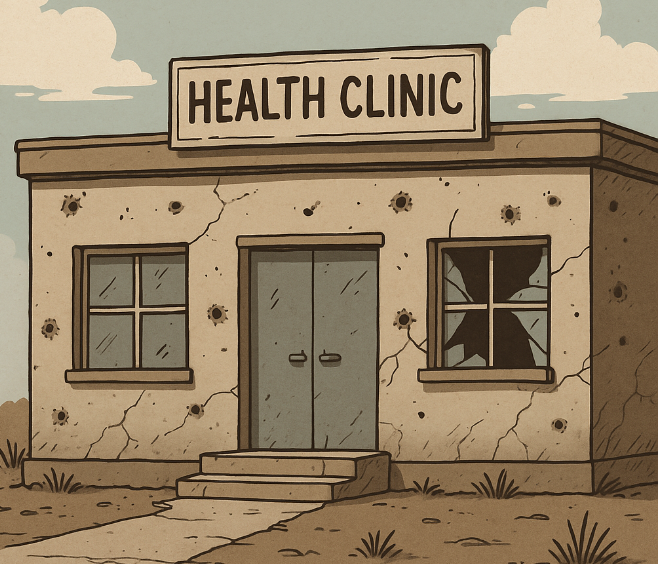
A health worker in northern Ethiopia stands inside what used to be a busy maternity ward. The delivery bed is overturned. Windows are shattered. The medicine cabinet is empty. For months, she hasn’t received supplies—yet families continue arriving, desperate for care. She shakes her head and says quietly, “Before the conflict, this room saved lives. Now, I can’t even give a mother basic care.”
Scenes like this are not isolated. A new scoping review synthesizing research from 2018–2023 reveals the staggering and interconnected toll of armed conflict on public health in Ethiopia—a crisis that continues to affect millions. The findings illuminate the profound ripple effects that armed conflict has on health systems, maternal care, mental health, nutrition, chronic disease management, and infectious disease control. Armed conflict doesn’t just strain public health—it reshapes it entirely.
A National Health System Under Siege
One of the clearest messages from the review is that armed conflict collapses the very systems meant to protect population health. In multiple regions, more than half of the health facilities were damaged or destroyed. Essential supplies vanished. Ambulatory services were halted. Health workers fled for safety or became displaced themselves.
In Tigray, for example, every health post—over 700—became non-functional within months, and maternal and child health services that were once stable “halted in the first 90 days” of conflict.
The consequences were immediate and devastating:
- Over 10,000 chronic disease patients lost access to treatment
- Pregnant and lactating women—more than 70,000—lost follow-up care
- Sexual and gender-based violence surged
- Health system losses reached $27 million in Amhara alone.
When a health system collapses, every other health challenge becomes exponentially harder to manage.
Maternal and Reproductive Health: A Quiet Emergency
Maternal health often serves as a bellwether of health system stability—and in conflict, it quickly unravels. Only 48% of women in conflict zones were able to deliver in a health facility, as displacement, insecurity, and road blockages made travel nearly impossible.
Even more alarming: sexual and gender-based violence (SGBV) became pervasive. In one Tigray-based study, nearly 40% of women experienced at least one form of SGBV, with most survivors receiving no medical or psychological care. Shame, stigma, and fear kept cases hidden.
Reproductive health barriers—lack of contraception, interrupted antenatal care, unsafe deliveries—stack on top of trauma, malnutrition, and poverty. The result is a generation of mothers and infants born into higher-risk circumstances with long-term consequences for health equity.
Mental Health: The Unseen Wound
Conflict doesn’t just break infrastructure—it breaks people. The scoping review found widespread post-traumatic stress disorder (PTSD), depression, and anxiety, particularly among children and women. In Amhara, more than 70% of children experienced trauma, and one-third developed PTSD. Among displaced adults, two-thirds screened positive for PTSD, often compounded by repeated displacement, unemployment, and loss of family members.
Mental health services were nearly nonexistent during the periods studied. The review highlights the need for integrated mental health and psychosocial support (MHPSS) as a core component of humanitarian and public health response—not an optional add-on.
Nutrition: Conflict-Driven Hunger and Undernutrition
Conflict disrupts food systems at every level—from crop production to market access to household consumption. The review found:
- Over half of internally displaced lactating mothers were undernourished
- Acute malnutrition among young children reached 27% in some areas
- Household food insecurity exceeded 75% in several conflict-affected communities
Malnutrition doesn’t occur in isolation. It worsens infectious disease risk, weakens maternal health, and increases susceptibility to chronic disease complications. It is both a driver and a consequence of broader health system collapse.
Chronic Diseases: The Hidden Casualties
Chronic disease management is often overlooked in humanitarian response, despite being a major cause of preventable death. During the conflict, only 21% of patients with chronic conditions continued treatment, and type 1 diabetes saw an 80% interruption rate in care.
For people with hypertension, diabetes, epilepsy, or HIV, even short disruptions can be life-threatening. The review makes clear: chronic disease services must be incorporated into emergency preparedness and response—especially as Ethiopia’s chronic disease burden continues to rise.
Malaria: A Silent Outbreak Within the Crisis
Only one study examined malaria, but the findings were alarming: 13,136 confirmed cases, a 26.5 per 1,000 attack rate, and a 43% slide positivity rate in a conflict-affected zone
Displacement created new mosquito breeding sites; families slept outdoors; health posts were closed; preventive measures—like nets and spraying—came to a halt.
This underscores a key insight: conflict creates ideal conditions for infectious disease outbreaks, yet surveillance systems are often too weak to detect them early.
What This Means in Practice
For public health leaders, humanitarian organizations, and policymakers, the review highlights crucial action steps:
1. Rebuild and Protect the Health System
- Restore primary care, maternal health, and supply chains
- Protect health workers and facilities in accordance with international humanitarian law
- Deploy mobile clinics where infrastructure remains damaged
2. Prioritize Maternal and Reproductive Health
- Ensure access to antenatal, delivery, and postnatal care
- Strengthen SGBV prevention, reporting, and survivor-centered support
- Expand contraceptive access and counseling
3. Integrate Mental Health Into Routine Care
- Train primary health workers in basic MHPSS
- Establish safe spaces for women and children
- Provide long-term trauma-informed services
4. Address Nutrition Holistically
- Prioritize food support for IDPs, pregnant women, and children
- Link nutrition programs with maternal health and chronic disease services
5. Restore Chronic Disease Continuity of Care
- Reopen treatment centers rapidly
- Provide multi-month drug refills during instability
- Use community health workers to track vulnerable patients
6. Strengthen Disease Surveillance and Outbreak Response
- Rebuild malaria and infectious disease monitoring
- Expand early-warning systems in displacement settings
What’s Next? Barriers and Opportunities
Even the best-designed interventions face real-world barriers:
- Insecurity restricts movement
- Damaged infrastructure slows recovery
- Limited funding prioritizes short-term emergencies
- Trauma and mistrust hinder community engagement
Yet the review also points to opportunities—especially for multisectoral collaboration. Rebuilding public health in conflict-affected areas requires partnerships among government, NGOs, local communities, and global agencies working toward long-term stability.
Questions to Spark Action and Reflection
- How might your organization strengthen continuity of care during conflict or crises?
- What would it take to integrate mental health fully into emergency and primary care services?
- Do these findings challenge your assumptions about the long-term health effects of conflict?
Armed conflict and public health are inseparable—and this evidence makes clear: rebuilding health systems is not just a humanitarian priority. It is a foundation for recovery, equity, and future resilience.