A Quiet Crisis in Grandparent Caregiving and Depression
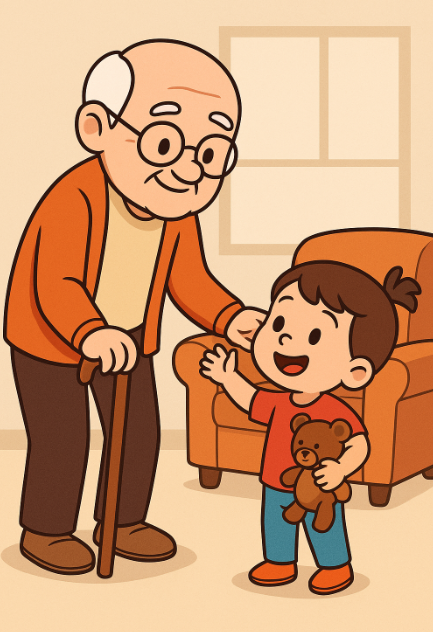
At 6:30 a.m., before most of her neighbors are awake, Mrs. Lin is packing lunches, checking homework folders, and nudging her 8-year-old grandson to tie his shoes. She is 67, living with arthritis, and often exhausted, but she is the only consistent caregiver he has. By the time he finally boards the school bus, she sinks into her chair, the house suddenly quiet. The weight of the morning settles in.
This scene is increasingly common. Around the world, more grandparents are stepping into caregiving roles, sometimes by choice and sometimes by necessity. A newly published scoping review in Frontiers in Public Health pulls together research from 30 studies to understand what this means for grandparents’ mental health. What emerges is a complex picture: grandchild caregiving is neither wholly protective nor wholly harmful. Instead, its effects on depression shift depending on culture, family structure, caregiving intensity, and the emotional texture of daily life.
Why This Matters Right Now
Grandparents are filling an expanding caregiving gap created by rising maternal employment, migration, economic instability, and limited childcare systems. In China, more than 38% of older adults provide regular childcare; in the U.S., nearly 2.7 million grandparents are primary caregivers.
This is not a small or temporary demographic quirk—it is a fundamental shift in how families function. Understanding how caregiving affects depression is vital for the wellbeing of older adults and the stability of entire intergenerational households.
So… Does Grandchild Caregiving Increase Depression?
The review’s most striking finding is that there is no simple answer. Some grandparents experience improved mood and wellbeing through caregiving. Others see rising stress and depressive symptoms. Many fall somewhere in between.
In some contexts, caregiving actually protects against depression. This happens most often when caregiving is moderate rather than intensive, when grandparents feel appreciated or socially connected, and when caregiving reinforces cultural norms about family responsibility. In rural China, for example, caring for grandchildren often reduces loneliness and strengthens a sense of purpose. Younger grandparents or those who remain socially active tend to report similar benefits. These patterns align with social engagement theory, which suggests that meaningful roles and daily interaction can promote mental wellbeing.
But the review also documents many situations where caregiving increases depression, especially when caregiving becomes intensive, custodial, or emotionally fraught. Grandparents who care for a child full-time without the support of the child’s parents often face significant stress. Financial strain, health limitations, and conflicts with adult children over parenting styles can also heighten emotional burden. This reflects role strain theory: when caregiving demands exceed personal resources, psychological distress grows.
Some studies found no overall effect, but even these nuanced findings often revealed subgroup differences: caregiving that is neutral on average may still be deeply stressful (or deeply meaningful) for particular types of families. One of the most intriguing discoveries from the scoping review is that caregiving transitions matter as much as caregiving itself. Grandparents who stop providing care frequently become more depressed, suggesting that caregiving can become a stabilizing identity. Losing that role may feel like losing a sense of purpose.
Why the Evidence Is So Mixed
Much of the variation stems from how studies define and measure caregiving and depression. Some studies treat caregiving as a simple yes/no variable, while others measure hours per week, caregiving transitions, or subjective burden. Similarly, depression is measured mostly through the CES-D scale, but using different versions. These methodological inconsistencies make comparisons tricky.
Differences in grandparents’ age, gender, socioeconomic position, and health further complicate the picture. A 50-year-old urban grandmother in good health may thrive in a caregiving role that would overwhelm an 80-year-old grandfather with limited mobility. Household structure also matters: skipped-generation families, where grandparents raise children without the parents present—tend to face higher stress than multigenerational homes where support is shared. Cultural context also plays a powerful role. In collectivist societies, grandchild caregiving is often viewed as an honored duty, which can cushion emotional strain. In more individualistic societies, caregiving may feel more like an imposition.
All of this reinforces a central message of the review: grandchild caregiving is not inherently good or bad for mental health. Its effects depend on context, expectations, and support.
What This Means for Programs and Policy
For public health agencies, this review signals the importance of recognizing grandparents as a critical but often invisible part of the childcare system. Many grandparents shoulder responsibilities comparable to those of professional caregivers, yet without training, compensation, or mental health support. Public health departments and community-based organizations can play a central role by expanding screening programs for older adult depression, strengthening caregiver support groups (including culturally specific ones), offering respite services, and developing programs that foster intergenerational connection without overburdening any single family member. Policies that provide financial support or childcare subsidies could ease pressure on custodial grandparents, while community programs can help reduce isolation for those providing daily care.
Families themselves can also benefit from more intentional communication. Many tensions emerge not from the caregiving itself but from mismatched expectations or unclear roles. Acknowledging caregiving as “real work” and ensuring that responsibilities are shared fairly can help protect the mental health of older relatives.
What We Still Don’t Know
Despite substantial research, major gaps remain. The review highlights that most existing studies come from East Asia, the United States, and parts of Europe. Entire regions—including Africa, South America, South Asia, and Oceania—are nearly absent from the evidence base. Qualitative research is also surprisingly rare, leaving us with limited insight into the lived emotional experience of caregiving. No studies distinguish between maternal and paternal grandparents, even though their roles and expectations often differ.
And grandchildren themselves are missing from the data: information about their age, health, and behavior—which surely shape caregiving stress—appears only sporadically.
Future studies will need to explore not just how much care grandparents provide, but why they provide it, how they feel about it, and how cultural values, social support, and digital technology shape their mental health.
Questions for Readers and Practitioners
This research invites reflection: How could local agencies adapt their programs to support grandparents who are caregivers? Which caregiving situations in your community may carry heightened depression risk? And perhaps most importantly: does this evidence challenge our assumptions about what caregiving means for older adults?