Public Green Space: A Critical Health Resource
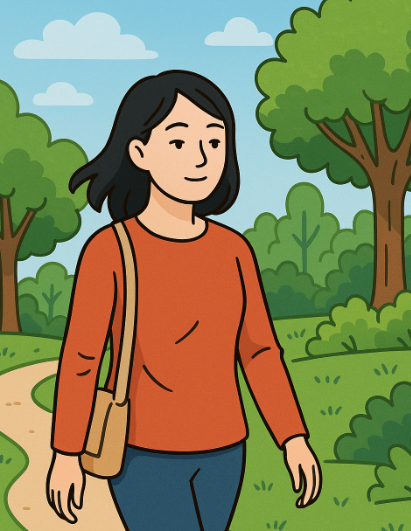
On a hot afternoon in Shanghai, Ms. Liu walks her grandson to the nearest public park. It is small, just a strip of green between two large housing blocks, but it is always full of life. Retirees practice tai chi, teenagers skate, and neighbors gather in clusters of shade. For Ms. Liu, this sliver of green provides daily movement, relief from stress, and a sense of community. Moments like hers unfold daily across cities. Yet planners and public health agencies continue to ask a central question: how much public green space does a city truly need to improve health in measurable ways? A nationwide study from China offers the clearest answers to date and shows that accessibility matters far more than greenery alone
Why Public Green Space Matters More Than Just “Greenness”
Urban greenery has long been treated as a general solution to urban health challenges. However, research findings have often been inconsistent. This study addressed that inconsistency by separating three types of greening: green cover (vegetation visible from above), general green space (all green areas, including private or restricted spaces), and public green space (parks and recreational areas accessible to the general public). The results demonstrated that only public green space consistently predicted better physical and mental health outcomes. Vegetation and general greenery did not show meaningful effects. These findings shift the conversation. Cities cannot simply plant more trees or expand green acreage and expect health benefits. What matters most is whether people can actually enter, use, and enjoy the green space in their communities.
What the Study Did
The researchers combined data from 12,854 urban residents in the China Family Panel Studies with county-level greening measures from national statistical reports. They examined how each type of greening related to self-rated physical and mental health. To capture nuanced relationships, the team used advanced analytics, including XGBoost machine learning and SHAP, a method that reveals which variables influence health outcomes and at what levels. This approach allowed the study to detect nonlinear patterns that traditional statistical models often overlook.
Key Findings: The Health Benefits Are Not Linear
Green cover and general green space do not improve health
The study found no significant relationship between either green cover or general green space and physical health. Their associations with mental health were inconsistent and weak.
Public green space improves health in reliable ways
A one percent increase in public green space within the built environment increased the odds of reporting good physical health by about 2.5 percent and produced small but meaningful gains in mental health.
Thresholds determine when green space becomes effective
The effects were not gradual. Instead, health benefits became apparent only after specific thresholds were met. For public green space, minimal benefits were observed in around 12 percent of the built-up area. Strong benefits appeared around 18 percent. For the proportion of all green space that is truly public, minimal benefits emerged around 36 percent, and strong effects began around 45 percent.
Behavioral pathways drive the impact
The study supports what many public health professionals see in community practice. People benefit from having green spaces that invite movement, connection, and psychological restoration. The results are clearer than those of previous research. It is not simply the presence of greenery, but the opportunities for behavior and wellbeing that it provides.
What This Means in Practice
For Local Health Departments
Local health departments should prioritize expansion of public green space over general greening initiatives. They can use the 12 to 18 percent threshold as a benchmark for healthy communities and apply equity-focused mapping to identify neighborhoods with the least access.
For Urban Planners and Parks Departments
Planners should ensure that parks are walkable, safe, and welcoming. This includes attention to lighting, shade, comfortable seating, play areas, and culturally meaningful design features. The public green space ratio should be monitored as a measure of accessibility and equity. A city with high vegetation but low access has a distribution problem, not a greening problem.
For Community-Based Organizations
Community organizations can advocate for designs that reflect what local residents value most. This includes features that support active living, social connection, and mental restoration. Engagement with groups such as older adults, adolescents, and caregivers is especially important to ensure spaces meet diverse needs.
Visuals That Strengthen This Story
Visuals can make this research more engaging and immediately actionable. Potential additions include a simple infographic illustrating the threshold effect, a comparison chart of green cover versus public green spaces, or a map that contrasts green but inaccessible areas with green and publicly accessible areas.
Barriers and What Is Still Missing
Several challenges may make it difficult to reach the recommended thresholds. Dense cities often lack available land. Maintenance budgets may be limited. Inequities in existing park distribution can be hard to resolve. Urban development priorities may compete with the creation of green space. Research gaps remain as well. Examples include how specific park qualities affect different age groups, how cultural perceptions shape park use, and whether similar thresholds apply outside China or in rural settings. Cities will need to integrate green space planning with larger systems, including housing, transportation, and climate resilience.
What’s Next for Cities and Public Health Agencies
The findings suggest that public green space should be treated as essential urban health infrastructure. Cities can incorporate these thresholds into zoning decisions, land-use plans, redevelopment strategies, and health impact assessments. Small interventions such as pocket parks, green schoolyards, or accessible walking paths can help communities move closer to the ideal benchmarks. The evidence provides a clear path forward for any city hoping to improve well-being through urban greening.
Questions to Spark Discussion
- Does your community have enough public green space, or mainly private or inaccessible greenery?
- Which neighborhoods lack accessible parks, and who is most affected
- What small green interventions could help your area reach the 12 to 18 percent threshold