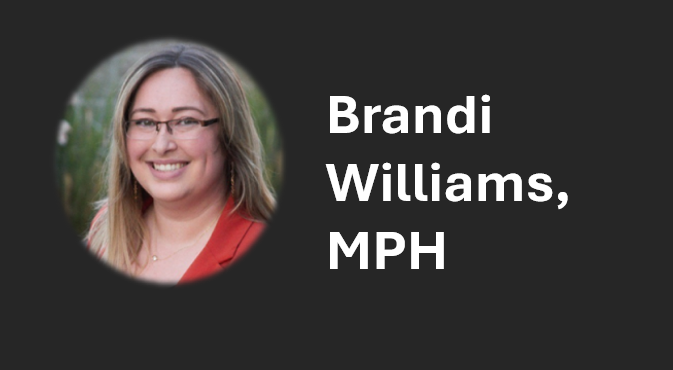
A Conversation with Brandi Williams
Public health emergencies rarely unfold as protocols imagine, especially in rural and agricultural communities. Few people understand that better than Brandi Williams, an epidemiologist who has spent the past several years responding to crises ranging from avian influenza to opioid overdoses to COVID-19.
In this conversation, Brandi walks through the complex, often overlooked challenges that shaped her work, from language barriers and worker exploitation to strained rural health systems and the nuances of building trust in communities that have long felt unseen. Her stories reveal not only how public health responses play out on the ground, but also what rural communities truly need to prepare for future crises.
You worked on avian influenza (H5N1), examining not only confirmed cases but also the social and economic barriers affecting agricultural workers. During that response, what ended up surprising you the most? And based on that experience, what should other health districts understand or prepare for before facing a similar outbreak?
I’d say what surprised me most was all the things you don’t think about going in, which I know sounds redundant, but it’s true. Avian flu is still a relatively new area in public health. There haven’t been many human cases, so we really felt like we were starting from scratch. We couldn’t look to other agencies for examples or established systems, so we had to figure things out as we went. Some lessons positive, some not so positive.
What really caught me off guard was the social side of the response. I’m used to thinking about social factors during case investigations, but this was a population I had never worked with before. I didn’t speak their language. I grew up in rural Montana, so I had very little familiarity with Hispanic cultures. Trying to understand how to best support workers when I couldn’t even conduct an interview without a translator, knowing that using one would dramatically slow down the process, was a real challenge.
We ended up learning quickly that everyone on the team had to help in different ways: case data management, resource coordination, testing support, whatever kept things moving. It was an eye-opening reminder that if you don’t fit neatly into one “box,” there are still many ways to contribute.
The biggest surprise, honestly, was just how complex communication with the workers became. We had no idea how nuanced it would be, and that complexity shaped so much of the response.
You mentioned that many workers were hesitant to engage due to mistrust of the government and immigration concerns. What strategies did you find were useful in helping to build that rapport, or, you know, what mistakes should responders try to avoid in the future?
What really helped us was the fact that our region has a large Hispanic population because of the agricultural industry. That also means our health district has a lot of bilingual staff. And honestly, that turned out to be our most valuable resource. We had people from HIV case management, our public healht educators and basically every Spanish-speaking employee we had step up to help with case interviews. When you’re going into a situation where trust is already low, having someone who speaks the workers’ language makes a huge difference in building even a small sense of comfort.
There were challenges, especially with the indigenous dialect spoken by many of the contracted workers, a lot of whom were Cuban. There were some real differences between that Spanish and the Spanish our employees spoke. But even then, just having someone who could communicate at all was incredibly helpful.
Our clinic team also played a big role. They were proactive, onsite often, testing, vaccinating, getting face-to-face with workers very early on. They immediately recognized the level of distrust. They started handing out red cards, Know Your Rights information about immigration, to workers who were willing to talk with them. That was a way of saying, “We’re not here to take anything from you. We’re not checking immigration status. We have nothing to do with that. We see your fear, and we want to protect you, not just your health but your safety.”
I think that mattered a lot.
And really, it was our Spanish-speaking employees who were able to get the most meaningful information from cases. Workers felt comfortable enough with them to disclose things like withheld pay, overcrowded living conditions in motel rooms, and fear of supervisors. Those are things I never would’ve been able to get, because I don’t speak Spanish. When you rely on a translator, you lose tone, nuance, trust, all the things that make someone open up.
So yes, that bilingual capacity was absolutely the most valuable asset we had.
You mentioned issues like overcrowded housing, worker exploitation, and language barriers. In your view, what would a more proactive and equitable preparedness system look like? What elements should be built in systemically to help health districts respond more effectively in the future?
Systemically? Honestly, one of the biggest challenges was just getting all the systems to work together. We had so many different agencies involved, like Labor and Industries, Department of Ecology for disposal and composting of the birds, CDC, the State Department of Health, the State Department of Agriculture. I mean, there were so many people in the mix. And that created a lot of pressure on the facility and, in turn, on the workers.
So we really tried to cut down on redundancies. Instead of CDC talking to someone, and then DOH, and then the Agriculture Department, and so on, we asked, “How can we get the most out of a single contact attempt?” That was important. And we also had to keep the facility willing to work with us. We didn’t want to scare them off. We didn’t want to come in with an iron fist—that’s not even our jurisdiction. But there is this delicate push-and-pull where you have to hold your ground without making them shut down or refuse to engage.
That dynamic was even more complicated with the contracted workers. You’ve got the contractor supervisor involved, who isn’t part of the facility at all. Their permanent workers were brought in through a completely separate corporate process because of the amount of cleanup they had to do. So systemically, success really depended on all of these agencies working together and starting from the same place.
The good news is that, by the end of all this, the State Department of Health and our local health jurisdiction were able to get on the same page to the point where they actually created a guidebook and toolkit for responding to avian influenza mostly on the agriculture side, but with public health components, too. A lot of our lessons learned went into that.
So, systemically, I think the most important thing is getting everyone at the table early and on the same page from the start. Otherwise, it becomes incredibly complicated, incredibly fast.
Earlier in your career, you worked in harm reduction, including some of the Narcan-related work you mentioned. When you think about that work alongside your response to this outbreak, what do you see as the through-lines? What connects these different parts of your job? And what does that tell us about what communities actually need from public health?
Being realistic is really important to me. I loved my MPH program, and I appreciate the structure agencies like CDC provide with their protocols. I respect the foundations of all of that. But too often, those systems assume a kind of perfect-world scenario. In a perfect world, we could interview every employee, get exact exposures, know precisely when they were around birds, track every symptom everything neat and tidy. But that’s just not how real life works.
People care more about putting food on the table than talking to the health department about their crusty conjunctivitis from bird flu. So recognizing that the public’s priorities are very different from public health’s priorities and meeting people where they actually are, that’s essential.
COVID really changed things. Before COVID, when public health was working well, people didn’t even know it existed. Suddenly there was this huge spotlight, and now people are much more critical. For a lot of folks, COVID was their first time even knowing what public health does and it wasn’t necessarily a positive introduction. So you’re dealing with personality, trust, misinformation, and lived experience, all layered on top of the technical work.
One moment that’s stuck with me was during my COVID case management work in Montana. I was talking to a man from a community that’s similar to the Amish, agriculture-based, close-knit, with its own culture. He had tested positive, was feeling okay, and he said, “I want to stay away from my wife so I don’t get her sick, but harvest is next week. We don’t have enough people for me to skip it.”
That’s where the harm-reduction mindset kicks in. It’s not about forcing someone into the ideal scenario; it’s about finding the overlap between what I want for their health and what they’re realistically able or willing to do. So in his case, it was, “Yes, participate in harvest if you feel well enough, but here’s what you can do to minimize risk.”
It’s the same with Narcan distribution. It’s easy to sit back and say, “Just abstain from drugs,” or “Use Narcan in the perfect situation.” But that’s not reality. You have to address misconceptions, you have to explain things in a way that makes sense to the person in front of you, and you have to be honest about what’s actually doable.
At the end of the day, you just have to meet people where they’re willing to meet you. That’s the through-line in all of this.
You’ve touched on what feels like a bigger theme, especially when we think about how strained rural hospitals and rural systems already are, and how much more strain they may face with upcoming funding changes. What changes do you think would make the biggest difference for rural communities in addressing public health challenges? Is it more funding, more training, better policies? What would actually help rural communities the most?
The health department I worked at had a staff of seven people, and the one in a neighboring county had only three. So in terms of staffing and capacity, resources were extremely limited. The county I worked for didn’t pay particularly well, and that made it hard to recruit public health workers or nurses. There was a real hesitation for people to join county health because the salaries were low.
I remember being at a board of health meeting where a county commissioner suggested partnering with the local college’s nursing program to bring new graduates straight into the health department. The idea was to get them before they went somewhere else. And I said, that is a terrible idea because it felt like exploitation. These students wouldn’t know any better. They know nursing pays well, but they wouldn’t understand how much lower the public health pay is until they were already in the door. And the county’s response was basically, we can’t pay any higher. But people need a living wage.
In rural settings, public health is such a low priority. At my department, we had one LPN who did all the case investigations and STI work. The truth is she couldn’t possibly do every interview. She had so many other responsibilities. So most of the time, cases were simply being recorded without the ability to gather full epidemiological information. Staffing limitations meant people were doing everything they could with very little.
So yes, funding is a huge issue. Getting rural county governments to prioritize public health is incredibly difficult. In places like Montana, county commissioners are required to sit on the board of health, along with only two non-elected members. Those are recent policies. Even where I live now, these policies are pretty new. Policies that encourage experienced and knowledgeable people to participate at the policy level are really important. Without that, you end up with elected officials who have no background in health and no understanding of why they should invest in something that does not produce a financial return.
Advocacy becomes essential. And getting involved at the school level is something rural communities should really lean into. Kids learn biology and science, but strengthening basic public health understanding in the general population would help everything down the line. A rising tide lifts all boats.
Ultimately, it comes down to influencing county-level policy and what leaders are willing to invest in their health department. Grants are hard for small departments to secure. Statewide healthcare foundations are often very helpful, as are regional public health training centers. Supporting those organizations ends up supporting the small rural departments because they can extend resources that the local agencies simply do not have.