New Betacoronaviruses in South American Bats
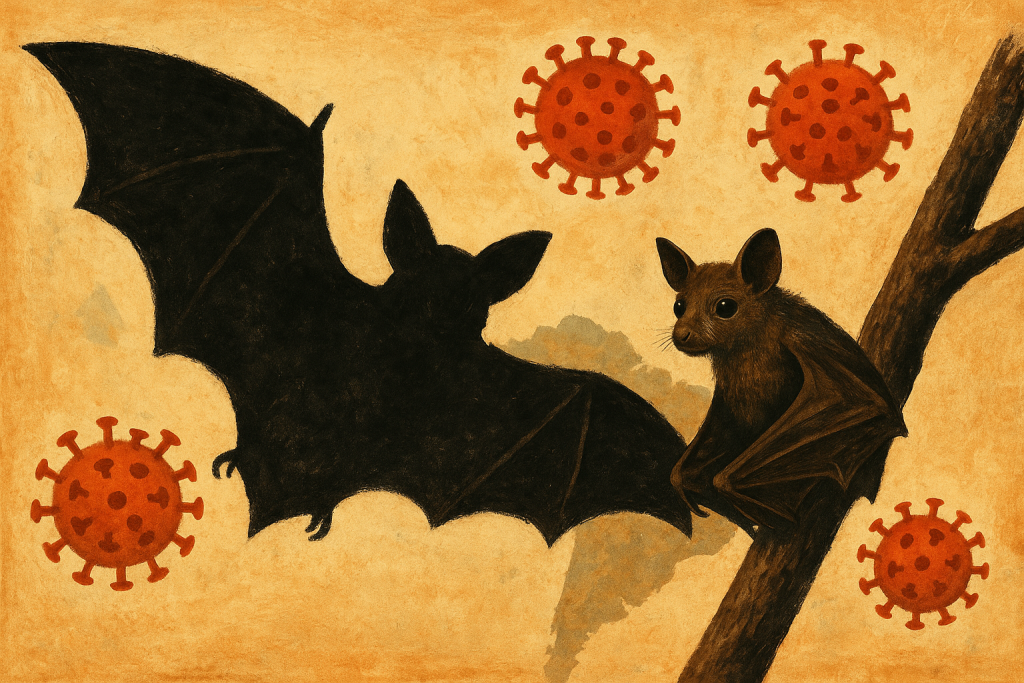
The discovery of a new, distinct lineage of betacoronavirus in South American bats offers fresh insights into the viral diversity and evolutionary potential of this mammalian group. Identified in Pteronotus parnellii bats in Brazil, this virus represents a novel betacoronavirus subgenus, previously unrecognized in this region. While betacoronaviruses such as SARS-CoV-2 and MERS-CoV have been extensively studied in other parts of the world, this finding highlights a critical gap in our understanding of viral diversity in the Americas.
Build Your Public Health Issue
Tell us a little about your work, and we’ll build a personalized issue with five things worth knowing.
Diving into the Unknown
Historically, our understanding of betacoronaviruses largely stems from samples collected in Asia, Africa, and Europe. In contrast, South America—the site of this discovery—has been relatively under-sampled despite its status as a biodiversity hotspot. Researchers detected the virus, termed BRZ batCoV, using metagenomic sequencing of intestinal samples from bats captured in Maranhão and São Paulo states of Brazil. This detection expands the region’s virological map.
Noteworthy Viral Features
A key feature of BRZ batCoV is a functional furin cleavage site (FCS) on the spike protein, an element that can enhance viral infectivity and pathogenicity. Remarkably, this cleavage site’s sequence motif differs from SARS-CoV-2’s by only one amino acid. The FCS is crucial because it can influence a virus’s ability to jump between species, making it a focal point for understanding zoonotic transmission.
What Sets BRZ batCoV Apart?
Genetic analysis showed that BRZ batCoV differs sufficiently from other known betacoronaviruses to warrant classification as a new subgenus. The genetic distance observed in several viral proteins supports its uniqueness. Phylogenetic analyses indicate that BRZ batCoV shares a common ancestor with members of the Merbecovirus subgenus but forms a distinct evolutionary branch from its counterparts studied globally.
Implications for Public Health
While the presence of FCS in BRZ batCoV is notable, it is not yet clear how this relates to the virus’s capacity to infect humans or other species. Nonetheless, this discovery highlights potential zoonotic threats originating from less-explored regions. Understanding these mechanisms can help guide public health interventions proactively.
What This Means in Practice
For public health practitioners and policymakers, the discovery of BRZ batCoV underscores the importance of global viral surveillance:
- Health Departments: Expand surveillance in unexplored regions, focusing on bat populations to gain early insights into potential zoonotic viruses.
- Researchers: Investigate the mechanisms of FCS acquisition in coronaviruses to better understand how these viruses adapt and evolve in different hosts.
- Policymakers: Develop pandemic preparedness strategies that account for emerging viral threats from diverse, less-studied biomes.
Limitations and Future Directions
This study was constrained by the geographical range and the scope of virus sampling, which impacts the generalizability of the findings. Furthermore, without specific data on receptor-binding properties and infectivity, the zoonotic potential of BRZ batCoV remains speculative. Future research should establish how FCS influences infectivity and pathogenicity using both wet-lab experiments and in silico models.
Concluding Thoughts
The identification of BRZ batCoV enriches our understanding of the diverse and dynamic world of bat-associated coronaviruses. As the global community continues to grapple with the implications of coronaviruses, this study provides a valuable piece of the puzzle, emphasizing the complex interplay of geography, evolution, and zoonotic potential. As we move forward, expanding surveillance and research efforts can illuminate paths to mitigate future outbreaks.