A New Framework for Climate-Conscious Prescribing: The MAMS Model
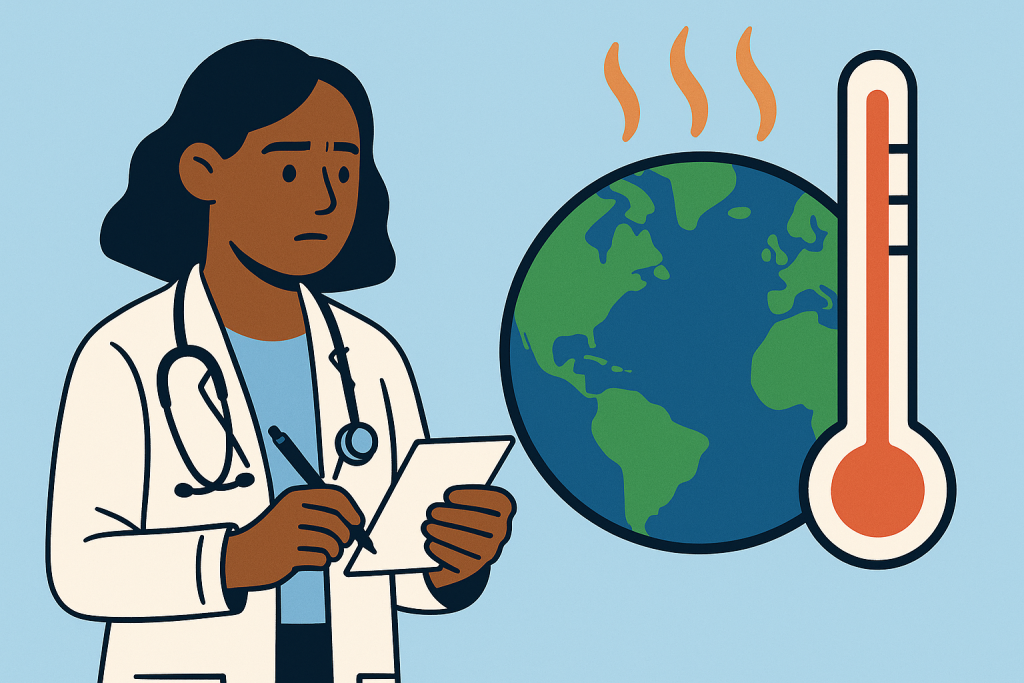
Imagine a healthcare professional stepping into a bustling clinic, trying to balance patient care with the growing need for environmental sustainability. She wonders how her decisions might impact not just her patients, but the planet as a whole. Because prescribed medicines and healthcare practices contribute significantly to climate change, this dilemma is becoming increasingly pressing.
The new study on climate-conscious prescribing offers a fresh perspective on this issue, highlighting a critical intersection between pharmaceuticals, climate change, and prescribing patterns. Recognizing that disconnected education and practice can miss opportunities to reduce healthcare’s environmental footprint, the study proposes an integrative model called the MAMS model—standing for Climate change, Pharmaceuticals, and Prescribing patterns.
Build Your Public Health Issue
Tell us a little about your work, and we’ll build a personalized issue with five things worth knowing.
The Public Health Problem at Hand
Healthcare is a major contributor to greenhouse gas emissions, and pharmaceuticals account for a significant share through manufacturing, distribution, prescribing, and disposal. Some medicines, such as certain inhalers, have a high carbon footprint. Yet the intersection of climate change, pharmaceuticals, and prescribing practices often remains isolated in discussions.
This fragmented understanding limits the integration of sustainability into health professions education (HPE) and clinical practice, a necessary step to foster environmentally responsible medical decisions that align with planetary health goals.
What the Study Asked
The researchers embarked on a comprehensive scoping review to understand the intersection of climate change, pharmaceuticals, and prescribing patterns in healthcare education and practice. Their goal was to map existing evidence to a new conceptual model—the MAMS model—and clarify how these interconnected domains are addressed within health professions education.
Unpacking the Study
The study conducted a systematic review of literature from six databases, comprising studies between 1988 to 2025 that discussed climate change in relation to pharmaceutical practices. Out of 4,247 citations, 28 studies met the inclusion criteria. Most were conducted in countries such as the United States, the United Kingdom, Australia, and Canada, focusing primarily on anesthesia and peri-operative care, pharmacy, and primary care.
Although each dyad component—Climate ↔ Pharmaceuticals, Pharmaceuticals ↔ Prescribing Patterns, and Climate ↔ Prescribing Patterns—was examined, no study integrated all three domains in a fully bidirectional manner, as proposed by the MAMS model.
Why This Matters
This study highlights an urgent need for an integrated educational framework within the healthcare sector. The MAMS model offers a structured approach to integrating climate education into healthcare curricula, ensuring future clinicians can make decisions that consider environmental sustainability alongside patient care.
What This Means in Practice
Practically, this means rethinking how healthcare education is structured and delivered:
- Frameworks and curricula need to explicitly include climate-conscious prescribing and pharmaceutical impacts.
- Institutions should develop longitudinally integrated, competency-based education that goes beyond traditional didactic methods.
- Healthcare policymakers and educators should prioritize systemic interventions that reinforce sustainable practice across healthcare settings.
The Hard Part: Turning Evidence Into Action
Achieving this integration faces barriers such as curriculum overload, limited faculty expertise, and entrenched practices. Moreover, the broad scope of the MAMS model may require adaptation to fit various educational and clinical contexts, necessitating ongoing evaluation to ensure efficacy and sustainability.
Beyond educational reform, achieving climate-conscious healthcare requires aligning institutional policies and incentives, creating standardized competencies, and engaging with global healthcare systems to foster widespread change.
Conclusion
As our healthcare systems face the dual challenge of maintaining high-quality patient care while reducing environmental impacts, the insights from the MAMS model could help bridge this gap. The challenge now lies in effectively implementing these concepts within educational structures and healthcare practices to foster a generation of climate-conscious clinicians.
Conversation-Starting Questions
- How might integrating the MAMS model into your institution’s curriculum change how future clinicians approach prescribing?
- What systemic changes are necessary to support climate-conscious practice beyond educational reforms?
- Who needs to be involved in developing and implementing integrated, climate-focused medical education?