
Bridging Data Science Gaps in Public Health Training
Picture a bustling public health department, where a dedicated team of professionals is navigating the myriad challenges of improving community health. Within this environment, traditional approaches to public health are being fundamentally transformed by the power of data science. But there’s a catch: these professionals are experts in epidemiology and community health but often lack comprehensive training in the data science skills necessary to leverage vast digital datasets effectively. This is where the Public Health Data Science Life Cycle framework comes into play.
Why Building Data Science Capacity is Urgent
As public health encounters the digital age, the field increasingly relies on data science to make sense of complex health information and drive decision-making. From identifying emergent health threats to designing effective interventions, data science stands at the core of modern public health practice. However, systemic barriers, including uneven training opportunities and workforce shortages, have hindered full integration of data science competencies into public health training.
A significant study aims to address this issue by developing a competency framework that maps the stages of public health data science activities. This study identifies gaps and proposes a training agenda to equip the public health workforce with vital data science skills, enhancing their ability to make informed decisions that benefit entire populations.
The Study: A Comprehensive Look
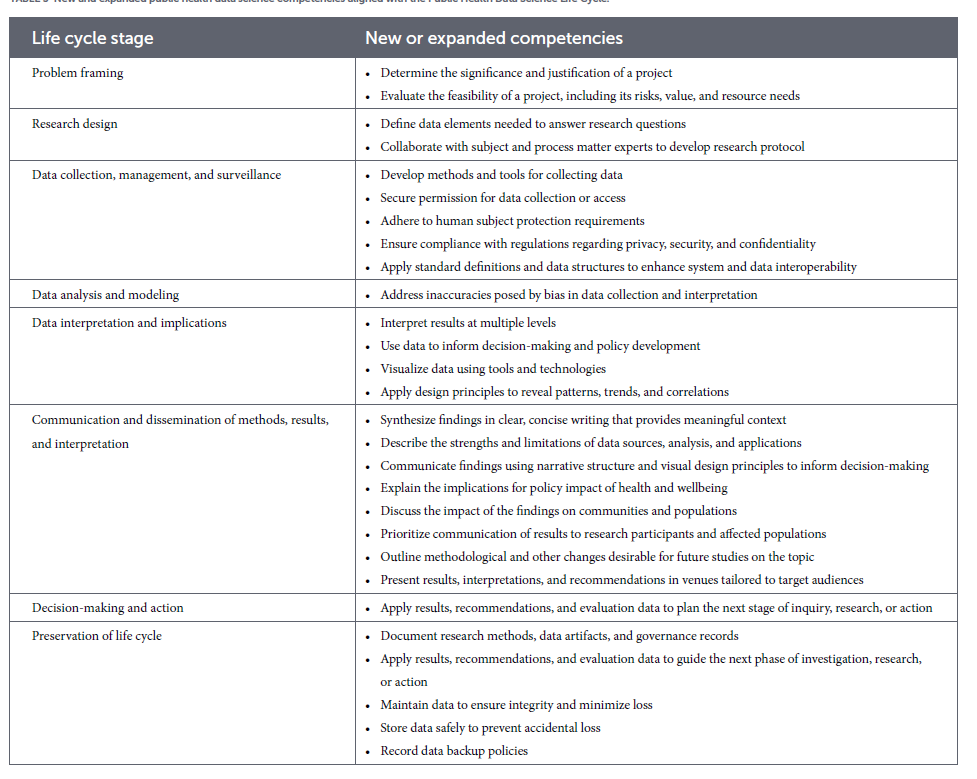
Led by a team of public health leaders and researchers, the study leveraged existing competency frameworks, governmental standards, and expert analysis to establish a cohesive Public Health Data Science Life Cycle. The project encompassed stages from identifying public health issues all the way to data preservation and communication of findings. Through mapping and gap analysis, the study unearthed critical areas, like data ethics and communication, where competencies are sorely lacking.
What They Discovered
Current competency frameworks tend to focus on technical aspects like data collection, analysis, and management, leaving gaps in problem framing and communication. Notably, the study found profound deficiencies in data ethics, governance, and the ability to translate findings into actionable policy. These underdeveloped areas suggest that today’s public health training may inadvertently overlook crucial skills needed for real-world applications.
Implications for Practice
To address these competency gaps, the study proposes a training framework aligned with the Public Health Data Science Life Cycle. Here’s what this means in practice:
- Local Health Departments: Should incorporate modules on ethical data governance and interoperability into ongoing training programs.
- Community Organizations: Can strengthen partnerships with data science experts to design community-centered interventions.
- Funders: Might prioritize funding initiatives focusing on cross-disciplinary training that marries public health and data science.
- Policy Makers: Need to recognize and advocate for continuous investment in data science education tailored for public health sectors.
The Hard Part: Turning Evidence into Action
Despite the positive strides proposed by the study, translating this evidence into actionable practice is not without challenges. Funding constraints, political barriers, and workforce limitations are substantial hurdles. Moreover, integrating these competencies involves reconsidering existing curricula, aligning policies with workforce needs, and overcoming communication barriers at both local and national levels.
Further research is needed to evaluate the framework’s implementation and its efficacy in developing data science capabilities within the public health workforce. On the ground level, health organizations will need to experiment with localized models to determine the best path for integrating these competencies into practice.
Looking Towards a Data-Informed Future
In a world increasingly driven by data, equipping our public health workforce with robust data science competencies is not just an option—it’s a necessity. Our communities’ health outcomes depend on leaders who can translate complex data into policies and programs that address real challenges. By adopting the proposed competency framework, public health agencies and stakeholders can move confidently towards a future where data science is seamlessly integrated into public health practice, ultimately leading to better health and equity for all.
Questions for Reflection
- How would implementing data science competencies shift current public health strategies within your organization?
- Who might benefit most from these training programs, and how can we ensure they are accessible to all relevant practitioners?
- What resources would be essential to overcome the barriers faced in integrating data science into public health practice?