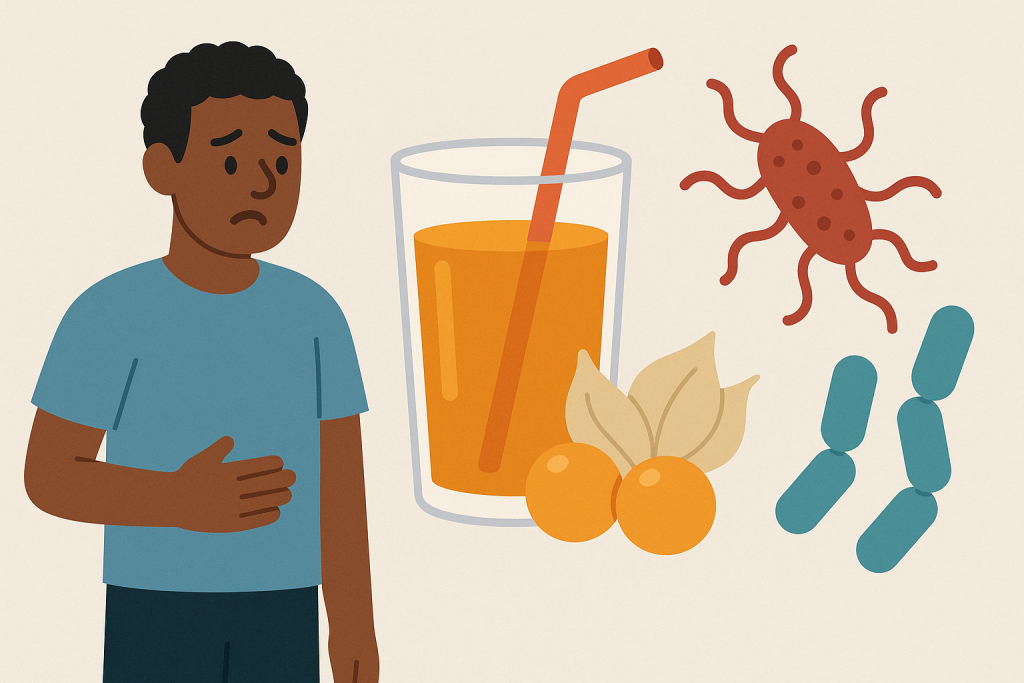
Harnessing Goldenberry Juice to Tackle Foodborne Pathogens and Boost Probiotics
In the bustling kitchen of a local dairy farm, the manager faced a challenge: ensuring milk safety while maintaining its natural quality. Recent outbreaks of Listeria monocytogenes and Escherichia coli had heightened worries about foodborne pathogens. Yet traditional methods like synthetic preservatives seemed at odds with the farm’s organic ethos.
Enter goldenberry juice—a natural solution with promising antimicrobial properties.
The Rise of Natural Antimicrobials
Infectious diseases, often caused by bacteria, remain a leading global health concern, underscoring the need for effective, natural antimicrobial agents. The agricultural and food sectors face escalating challenges due to antibiotic-resistant bacteria and a growing demand for natural and organic products. Drawing from nature’s pharmacy, goldenberries (Physalis peruviana L.) emerge as a notable contender, offering both safety and nutritional benefits.
Exploring Goldenberry’s Dual Potential
The recent study explored whether goldenberry juice could simultaneously inhibit harmful pathogens and support beneficial probiotic bacteria. This dual action, if effective, could position goldenberry juice as a game-changer in food safety and nutritional sciences.
The researchers tested goldenberry juice against common pathogens such as E. coli, Staphylococcus aureus, and Listeria monocytogenes, while also measuring its effects on probiotics, including Lactobacillus plantarum and Bifidobacterium lactis. These microorganisms play crucial roles in the food industry and human health.
Methodical Investigation for Real-World Impact
Goldenberry juice was added to both laboratory media and dairy products to observe its effects over 72 hours. The results were enlightening. Pathogens were significantly suppressed, showing reduced growth while probiotics thrived, indicating an increase in their population. These findings illustrate the potential of goldenberry juice not only as a natural preservative but also as a probiotic booster, even in complex food matrices like milk.
Why This Matters for Public Health
Beyond its antimicrobial prowess, goldenberry juice represents a stride toward marrying food safety and nutritional enhancement without compromising on health or sustainability. By reducing dependency on synthetic chemicals, the juice aligns with the growing consumer demand for ‘clean label’ products. It also opens avenues to address health disparities by making safe foods more accessible and better aligned with cultural practices.
What This Means in Practice
- Local Health Departments: Consider incorporating natural antimicrobials, such as goldenberry juice, into regional food safety protocols.
- Health Systems and Policymakers: Promote research and funding for natural food preservation methods that also support gut health.
- Community Organizations: Educate communities on the benefits of using natural ingredients that enhance food safety and nutrition.
The Hard Part: Turning Evidence Into Action
Translating scientific advancements into practical solutions is fraught with challenges, including regulatory barriers, cost considerations, and cultural acceptance. Research must continue to ascertain the long-term effects and scalability of using goldenberry juice on a commercial level. Additionally, policymakers need to address regulatory hurdles to allow innovations to take root in everyday practices.
Despite these challenges, the evidence underscores a promising path for integrating goldenberry juice as a functional ingredient in food systems. Efforts must be coordinated across sectors to ensure these natural solutions are accessible and effectively utilized.
Charting the Future with Natural Ingredients
In a world increasingly wary of synthetic additives and antibiotic resistance, the goldenberry may offer a natural and effective way to enhance food safety and promote health. As public health communities reflect on these findings, they must ask: how can we support a transition to such natural preservatives to ensure sustainable health for all?
Discussion Questions
- How would this finding change the way your agency designs outreach?
- Who might still be missed if this recommendation were implemented locally?
- What would need to change in funding, staffing, or policy to make this practical?