Why Global Warming Can Bring More Heat And More Cold: Explaining Climate Extremes
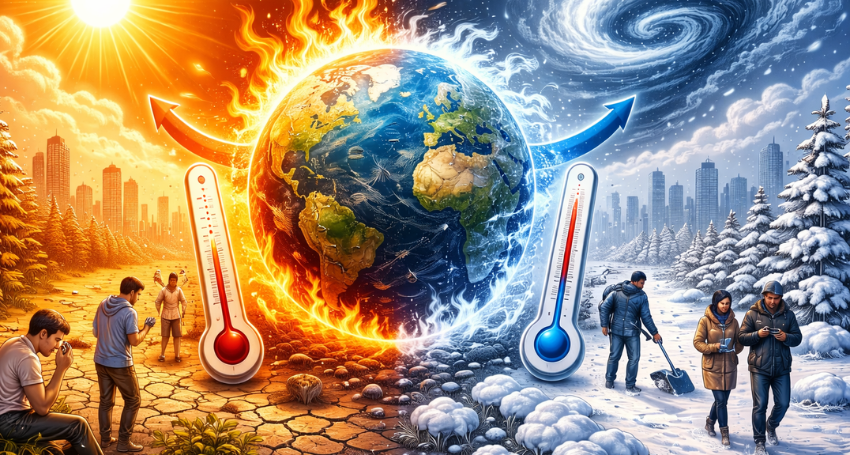
When most people hear the term “global warming,” they naturally imagine a world that is becoming hotter every year. While rising temperatures are a major concern, the reality is more complex. Understanding why global warming can bring more heat and more cold helps explain the growing number of extreme weather events experienced across the globe.
Rather than warming the planet evenly, climate change disrupts natural systems that regulate temperature and weather patterns. Explore our article. These disruptions result in longer heatwaves, unexpected cold spells, and greater climate uncertainty. Over time, these changes affect ecosystems, economies, and, most importantly, human health.
Why Global Warming Can Bring More Heat And More Cold Through Climate Disruption
Global warming is driven by increased greenhouse gas emissions from activities such as burning fossil fuels, industrial production, and deforestation. These gases trap heat in the atmosphere and raise the Earth’s average temperature.
However, this warming does not occur uniformly. Instead, it interferes with major climate regulators, including ocean currents, wind patterns, and polar ice coverage. When these systems lose stability, weather becomes more unpredictable.
For instance, melting Arctic ice weakens the jet stream. As a result, cold air masses travel farther south, while warm air becomes trapped in certain regions. This imbalance explains why some areas experience severe winters while others face record-breaking heat.
How Global Warming Intensifies Heatwaves
Why Global Warming Can Bring More Heat And More Cold Through Rising Baseline Temperatures
One of the clearest signs of climate change is the increasing frequency of heatwaves. As global temperatures rise, extreme heat events begin from higher baseline levels, making them more intense and dangerous.
Cities are particularly vulnerable because buildings, roads, and pavements absorb heat during the day and release it slowly at night. This phenomenon, known as the urban heat island effect, prevents proper cooling and increases health risks.
Prolonged exposure to high temperatures contributes to dehydration, heatstroke, respiratory distress, and cardiovascular complications. Consequently, heat-related illnesses have become a major public health challenge worldwide.
Why Cold Spells Still Occur in a Warming Climate
Why Global Warming Can Bring More Heat And More Cold by Weakening the Polar Vortex
Despite overall warming trends, extreme cold events remain common. This occurs because global warming alters the structure of the polar vortex, a band of cold air surrounding the Earth’s poles.
As Arctic ice melts, temperature differences between polar and equatorial regions decrease. This weakens the jet stream and allows frigid air to move southward. When this happens, regions that are typically mild may experience unusually harsh winters.
These sudden cold spells strain energy systems, disrupt transportation, and increase cases of flu, pneumonia, and hypothermia. Communities unprepared for such conditions often suffer the greatest consequences.
Public Health Challenges Linked to Temperature Extremes
Why Global Warming Can Bring More Heat And More Cold and Increase Health Risks
Temperature extremes place growing pressure on healthcare systems. During heatwaves, hospitals report higher admissions for heart disease, kidney failure, and asthma-related complications. Meanwhile, cold weather worsens respiratory illnesses and weakens immune responses.
Extreme weather events also interrupt access to healthcare services, clean water, and nutritious food. In addition, climate-related stress contributes to rising levels of anxiety, depression, and post-traumatic stress disorder.
From a public health perspective, climate instability represents one of the most significant challenges of the modern era.
Environmental and Economic Effects of Climate Extremes
Why global warming can bring more heat and more cold extends beyond health concerns. Ecosystems suffer as plant and animal species struggle to adapt to sudden temperature shifts. Coral reefs, forests, and freshwater systems are especially vulnerable.
Agricultural production is also affected. Heat stress reduces crop yields, while unexpected frost damages sensitive plants. Livestock health declines under prolonged temperature exposure.
Economically, governments face rising costs related to disaster response, infrastructure repairs, and healthcare services. These expenses often place a disproportionate burden on lower-income communities.
Adapting to a Changing Climate
Communities can reduce climate-related risks through proactive adaptation strategies. Investing in green infrastructure, improving building insulation, and expanding urban tree coverage help regulate local temperatures.
Public health agencies can implement early warning systems and emergency response plans for extreme heat and cold. At the individual level, adopting energy-efficient practices and reducing carbon footprints also contributes to long-term resilience.
Education and awareness remain key drivers of sustainable change.
Taking Action for a Healthier Future
As research continues to highlight climate risks, it becomes increasingly clear that why global warming can bring more heat and more cold is not simply an environmental issue, it is a public health priority.
At This Week in Public Health, we aim to provide accurate, evidence-based information that empowers readers to make informed decisions. By staying engaged, supporting responsible policies, and embracing sustainable lifestyles, we can collectively protect our communities.
Explore our latest articles and expert insights to stay informed and take meaningful action toward a healthier, more climate-resilient future.
Conclusion
Why global warming can bring more heat and more cold lies in its ability to disrupt Earth’s natural climate balance. Instead of creating steady warmth, it amplifies temperature extremes that affect ecosystems, economies, and human well-being.
Through awareness, innovation, and collaboration, societies can better prepare for these challenges. Understanding climate science today will help safeguard public health tomorrow. Contact US