
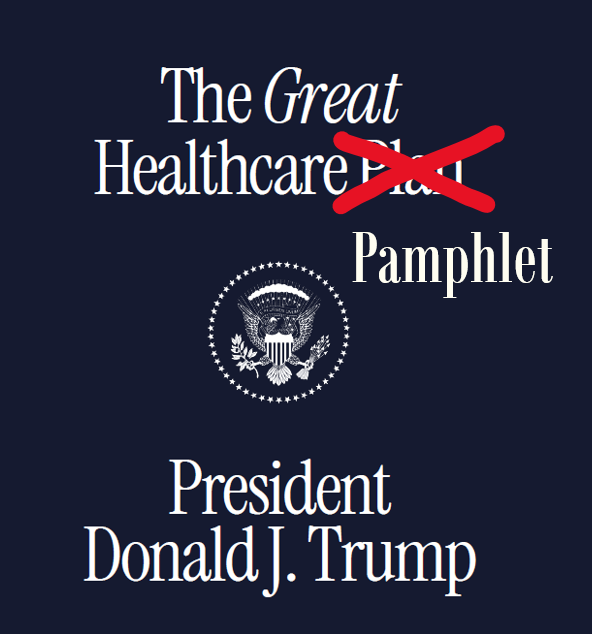
“The Great Healthcare Plan” Sounds Simple. Healthcare Isn’t.
If you’ve ever tried to compare health insurance plans, argue with a pharmacy benefit manager (PBM), or figure out why your prescription costs more than your rent, you know the U.S. healthcare system has a special talent for making basic things feel impossible. That’s why a short, punchy policy document like The Great Healthcare Plan can feel refreshing. It promises lower drug prices, lower premiums, and more transparency, with a “plain English” approach meant to signal common sense over bureaucracy.
But public health has learned this lesson the hard way: a plan can sound great and still fail on the details. The question is not whether these ideas are popular. Many of them are. The real question is whether they are specific enough to implement, strong enough to change market behavior, and equitable enough to avoid widening access gaps.
Below is a read of what this plan gets right, what it glosses over, and what public health professionals should watch closely.
What the plan gets right (and why it resonates)
1) It targets drug prices directly
The plan leads with “Slash Prescription Drug Prices,” proposing to codify “Most-Favored-Nation” pricing so Americans pay prices closer to those in other countries.
That’s politically powerful for a reason: drug costs are one of the most visible, emotionally charged pain points in healthcare. The document also points to insulin affordability efforts and recent negotiations as proof of concept. T
From a public health perspective, lower drug prices are not just a household finance issue. They affect adherence, preventable complications, and downstream hospitalizations. If a pricing reform actually lowers costs at the pharmacy counter, it can improve outcomes fast.
2) It acknowledges the “middlemen” problem
The plan takes aim at PBM kickbacks, arguing they “deceptively raise the cost of health insurance.” That critique isn’t fringe. PBMs have enormous influence over formularies, rebates, and what patients pay out of pocket. Calling out kickbacks and brokerage middlemen signals a willingness to confront the parts of the system that profit from complexity.
3) It tries to make insurance legible to normal humans
The proposal includes a “Plain-English Insurance” standard, along with requirements to publish overhead vs. claims spending, claim denial rates, and average wait times for routine care.
This is the most consumer-friendly part of the document, and arguably the most “public health” idea in the entire plan. Better information can reduce harm, especially when people are forced to make high-stakes decisions under time pressure.
In theory, denial rates and wait times are quality signals, not just administrative trivia. They also align with a broader accountability push: health coverage should be judged by whether it actually works when you need it.
Where the plan becomes fuzzy (and why that matters)
1) “Send the money directly” could mean many things
One of the biggest proposals is to stop sending insurers “extra taxpayer-funded subsidy payments” and instead send money “directly to eligible Americans” so they can buy insurance “of their choice.”
That sounds empowering. It could also be destabilizing.
The plan does not explain:
- Who qualifies as “eligible.”
- How much money would people receive?
- Whether the payment adjusts for age, disability, income, or local premium costs
- Whether plans must meet minimum coverage standards
- What happens to people with high medical needs
This matters because direct subsidies can either expand access or quietly shift risk onto individuals. If payments are too small, people end up underinsured. If plans can be skimpier, people may discover the holes only after they get sick.
Choice is not the same thing as protection.
2) Price transparency is not price control
The plan repeatedly leans on transparency: plain-English comparisons, posted fees, published denial rates, and even a “Post Prices on the Wall” requirement for any provider or insurer accepting Medicare or Medicaid.
Transparency is good. But transparency alone rarely lowers healthcare prices.
Why? Because healthcare markets don’t behave like normal consumer markets. Patients often can’t shop (in emergencies), can’t predict what they’ll need (diagnostic uncertainty), and don’t have bargaining power (take-it-or-leave-it pricing). Providers can post prices and still charge a lot, especially in consolidated hospital markets where there is no real competition.
There’s also a practical issue: posting “pricing and fees” isn’t the same as posting actual out-of-pocket costs. Patients need to know what they will pay after insurance, not the sticker price.
3) Over-the-counter expansion could help, but it has risks
The plan proposes making more “verified safe” drugs available over the counter to reduce costs and reduce “time-consuming doctor’s visits.” This could genuinely improve access for straightforward needs, especially for people facing barriers like:
- Long wait times for appointments
- Transportation challenges
- High copays for visits
- Provider shortages in rural areas
But OTC expansion also raises questions the plan doesn’t address:
- What safety criteria define “verified safe”?
- Will people lose insurance coverage for medications that become OTC?
- Will pharmacists be supported as a front-line safety net?
- Could this worsen inequities for people who need clinical monitoring?
Public health should be especially alert to unintended consequences: shifting care “out of the clinic” can be helpful, but it can also turn medical guidance into a luxury product.
The cost-sharing reduction section is promising but underexplained
The plan calls to “Fund Cost-Sharing Reduction Program” and claims it would save taxpayers at least $36 billion and reduce common Obamacare plan premiums by over 10%.
That’s a strong claim, but the document doesn’t show how it gets there. No assumptions. No timeline. No mechanism.
This is a recurring weakness: big numbers without the math to back them up. For policymakers, that’s a credibility problem. For public health leaders, it makes planning impossible.
What’s missing from the plan (and why it’s not a small omission)
The document is only two pages, so it can’t cover everything. Still, the gaps are telling. There is no mention of:
- Medicaid expansion or eligibility protections
- Maternal health
- Behavioral health coverage and parity
- Workforce shortages (primary care, nursing, rural hospitals)
- Public health infrastructure (surveillance, prevention, preparedness)
- Health equity safeguards (race, disability, language access)
- Chronic disease prevention (the biggest cost driver long-term)
In other words, the plan focuses heavily on the payment and purchasing side of healthcare, but not the delivery and population health side.
That might be/ probably is a deliberate strategy. But if you’re reading this as a serious health reform blueprint, it’s incomplete.
Bottom line: good instincts, thin details, real equity risks
The Great Healthcare Plan has a few ideas that public health professionals should take seriously: drug pricing reform, PBM accountability, and meaningful transparency requirements. These are areas where the status quo harms people every day.
But the document reads more like a campaign-style framework than an implementable healthcare strategy. The biggest promises rely on undefined mechanisms, and the “choice” framing could easily shift risk onto individuals without guaranteeing comprehensive coverage.
If this plan moves forward in any form, the public health question is simple: Will it reduce costs and improve access for the people who struggle the most to get care?
Because in healthcare, the fine print is not a footnote. It’s the policy.