The Youth Vaping Shift Few Policies Were Ready For
On a school afternoon in 2023, a group of 13-year-olds gather outside a corner shop. One teen pulls a slim, brightly colored device from their pocket. It smells like candy. It doesn’t look dangerous. And, to many young people, it doesn’t feel like “smoking.”
That moment—now increasingly common—is exactly what new research in Frontiers in Public Health helps explain.
Using nationally representative surveys of more than 4,000 UK adolescents aged 11–16, researchers tracked changes in smoking, vaping, and perceptions of products between 2020 and 2023. What they found should give public health practitioners pause: youth vaping rose sharply, driven largely by disposable vapes that young people consistently rated as more appealing, cooler, and less harmful than other nicotine products.

The Problem: Smoking Down, Vaping Up—and Not Just Among Smokers
At first glance, the trend looks familiar. Youth cigarette smoking continued its long-term decline, dropping from 12.2% in 2020 to 9.3% in 2023. But beneath that success story sits a quieter reversal.
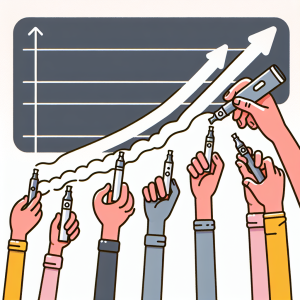
During the same period, the proportion of young people who had ever vaped jumped from 10.1% to 17.5%. Even more concerning: by 2023, most youth who had ever vaped had never smoked a cigarette. Vaping was no longer just an extension of smoking—it had become its own entry point.
Public health has often assumed that vaping experimentation mostly follows smoking. This study shows the opposite is now true.
The Evidence: Why Disposable Vapes Stand Out
What the researchers did
The team compared young people’s perceptions of three products shown side-by-side:
- A disposable vape (like Elf Bar)
- A refillable tank-style vape (older generation devices)
- A traditional cigarette
Participants rated each product on appeal, imagery, and harm, including whether it seemed cool, fun, addictive, or harmful to health and the environment.
What they found
Across 9 of 11 measures, disposable vapes were rated more favorably than tank-style devices, and far more positively than cigarettes. Some of the most striking findings:
- 53% said disposables would appeal to people their age
- 55% said they were popular among peers
- 46% believed disposables would appeal even to never-smokers
- One in five described disposables as cool or fun
- About 1 in 10 believed disposables were not harmful or not addictive
Cigarettes, by contrast, were rated negatively across every measure.
In short: disposable vapes check nearly every box that drives youth experimentation—visibility, flavor, design, social acceptability, and perceived low risk.
A Critical Association: Vaping and Smoking Susceptibility
The study stops short of claiming causality, but one pattern stands out.
Young people who had tried vaping were more than twice as likely to be susceptible to smoking compared to those who had never vaped. This association held in both survey years.
Susceptibility doesn’t guarantee future smoking, but it is a well-validated predictor of later uptake. As vaping becomes more normalized, the concern is not just vaping itself—but what it may reopen.
What This Means in Practice
For local health departments
- Treat youth vaping prevention as distinct from tobacco prevention, not a subset of it.
- Update surveillance tools to track device type, not just vaping status.
For policymakers
- Product-neutral policies matter. Banning disposables alone may simply shift youth use to near-identical rechargeable devices.
- Restrictions on flavors, packaging, and point-of-sale displays are likely more impactful than age-of-sale laws alone.
For schools and community organizations
- Prevention messaging should explicitly address misperceptions of harm and addictiveness.
- Youth-designed counter-marketing can directly challenge “cool” and “fun” imagery.
For funders
- Invest in rapid-response monitoring systems that track emerging nicotine products before uptake accelerates.
Barriers and Real-World Constraints
This isn’t an easy fix.
- Retail enforcement is uneven, especially in small shops.
- Industry adapts quickly—new rechargeable devices already mimic disposables.
- Policymakers must balance youth protection with adult smoking cessation goals.
- Public trust can erode if messaging feels exaggerated or inconsistent.
As the authors note, no single policy is a silver bullet. Tobacco control succeeded through layered, sustained strategies. Vaping will require the same.
What’s Next: Open Questions for Public Health
This study raises urgent questions:
- Will the UK disposable vape ban reduce youth uptake—or simply reshape it?
- How can prevention campaigns counter product design, not just behavior?
- Are we prepared to monitor the next wave of nicotine products before they scale?
Youth vaping didn’t surge by accident. It followed the logic of appeal, access, and ambiguity. Public health now faces a familiar challenge: act early, act comprehensively, and act with clarity.
Conversation starters
- How is your community tracking device-specific vaping trends?
- What assumptions about youth vaping does this challenge for your team?
- Which prevention tools feel most underused right now?