Beyond Survival: How Public Health Can Support Black Women Facing Intimate Partner Violence
When African American women face intimate partner violence (IPV), their odds of surviving depend on much more than calling a hotline or leaving home. It’s a public health crisis—one intertwined with racism, poverty, and the deep mistrust between Black communities and the systems meant to protect them.
Four recent studies led by Dr. Bernadine Waller and collaborators illuminate this crisis with rare clarity. Together, they present a framework for understanding why traditional domestic violence responses often fail Black women—and what public health must do to rebuild trust, equity, and safety.
The Unseen Toll: Violence and Inequality
African American women experience the highest rates of intimate partner homicide in the United States—more than twice the rate of white women. The average age of death? Just 35 years old
That means women in the prime of their lives—mothers, workers, caregivers—are dying preventable deaths not because they don’t seek help, but because help rarely comes in time.
Nearly two-thirds of murdered women had tried to seek help in the months before their deaths, according to national data. Yet many were dismissed, denied services, or retraumatized by racist or victim-blaming responses from police, courts, or shelters.
Public health must recognize IPV not as an isolated “domestic issue,” but as a systemic failure with roots in structural racism, gender inequality, and economic injustice.
A Theory of Help-Seeking: What the Research Reveals
Waller’s research draws on constructivist grounded theory, meaning it builds models directly from the lived experiences of Black women themselves. Across 30 in-depth interviews, her team identified patterns of agency, resistance, and recovery that challenge conventional ideas about “help-seeking.”
1. The Help-Seeking Journey Is Nonlinear
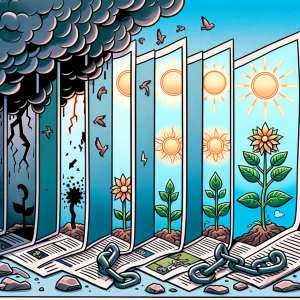
In “Sarah Waller’s Help-Seeking Model,” survivors move through nine fluid phases—from Awareness (“This kind of threw me”) to Restoration, a stage of healing and rebuilding.
Women may cycle forward or backward, depending on fear, finances, or how institutions respond. Some relapse into silence after encountering racism or disbelief. Others move ahead after receiving empathy and support.
Each step is shaped by intersectionality—the compounding pressures of being Black, female, often low-income, and frequently dismissed by those in power.
2. Help-Seeking Requires Resistance
In “I Have to Fight to Get Out,” Waller and Bent-Goodley describe the concept of constructed agency—how survivors build power within oppressive systems
Black women are often expected to be “strong” and self-reliant, to protect their partners from the criminal justice system, and to endure silently in the name of faith or family.
Yet, they still find ways to act. They resist by leaning on kin networks, persist through repeated rejection, and reject systems that harm them. Ultimately, some reach a point of resignation, losing faith that institutions will ever help.
This insight reframes agency: not as “leaving the abuser,” but as surviving in hostile environments where the system itself is dangerous.
3. Institutions Often Reinforce Harm
In “Caught in the Crossroad,” Waller, Harris, and Quinn expose how controlling stereotypes—the “Angry Black Woman,” the “Mammy,” the “Strong Black Woman”—still influence how providers see Black survivors
Shelter workers may assume a woman doesn’t need care. Police may interpret her fear as aggression. Health providers may minimize injuries or fail to screen for IPV.
These are not individual prejudices—they are the product of representational intersectionality, where media and culture shape policy and practice. The result? Survivors are silenced twice: once by abuse, and again by racism.
4. The Theory of Help-Seeking Behavior
In “I Am the One That Needs Help,” Waller’s team builds a Theory of Help-Seeking Behavior that synthesizes these findings
Help-seeking unfolds across three domains:
- Recognition – realizing the abuse is not normal;
- Decision-making – determining whether it’s safe or worthwhile to seek aid;
- Engagement – approaching a person or system for help.
For Black women, each phase is filtered through racism, cultural expectations, and fear of institutional betrayal.
This theory highlights a fundamental public health truth: help-seeking is not merely a personal act—it is a social process influenced by trust, context, and history.
Why This Matters for Public Health
1. Violence Is a Health Equity Issue
The CDC recognizes IPV as a determinant of physical and mental health. Survivors experience higher rates of chronic pain, cardiovascular disease, disability, depression, and PTSD
For African American women, these conditions are magnified by unequal access to care, lack of culturally competent providers, and repeated exposure to racial trauma. Every emergency department visit, housing displacement, or child welfare case tied to IPV reflects not only personal tragedy but policy failure—a sign that systems have ignored root causes and lived experiences.
2. Racism Is a Public Health Threat
The women in these studies repeatedly described racism as a central reason they delayed or avoided seeking help. Many believed they would be disbelieved or punished. Some said they feared police violence more than their abusers.
This mirrors broader public health data: structural racism—from redlining to medical bias—continues to shape health outcomes. IPV services that ignore racism are not trauma-informed; they are trauma-reinforcing.
3. Faith Communities Are a Lifeline—But Need Reform
Across studies, the Black church has emerged as both a refuge and a risk. Many women turned to pastors or prayer circles for comfort when formal systems failed. Yet too often, survivors were told to “pray on it” or “forgive” rather than find safety.
Public health partnerships with faith leaders must go beyond awareness campaigns. Training clergy to recognize abuse, ensure confidentiality, and connect survivors to professional care can transform churches into genuine sanctuaries.
Toward an Equity-Centered Public Health Response
What would it take for African American women to truly be safe—not just from abusers, but from the systems that fail them? Waller’s work points toward a roadmap grounded in public health principles.
1. Rebuild Trust Through Culturally Grounded Care
Providers must acknowledge historical and present-day racism in their practices. Trauma-informed care must include anti-racist praxis, cultural humility, and survivor-centered listening.
Hiring and promoting Black clinicians, advocates, and peer navigators can reduce fear and improve engagement. Representation isn’t symbolic—it’s lifesaving.
2. Integrate IPV Into Public Health Systems
Screening for IPV should be a standard practice across all public health settings, including primary care, reproductive health, behavioral health, and housing. But screening alone is not enough. Survivors need warm handoffs to trusted providers, not referral sheets. Public health agencies can coordinate “help-seeking ecosystems” that bridge shelters, hospitals, churches, and community organizations.
3. Fund Community-Based Research and Interventions
Federal and state funding streams often overlook smaller Black-led organizations that already support survivors.
Grants should prioritize community-based participatory research (CBPR) and co-designed interventions that reflect the lived experiences of the community.
For example, peer-led healing circles, culturally tailored counseling, and mobile advocacy programs have shown promise in improving outcomes and reducing revictimization.
4. Shift from Punitive to Restorative Approaches
Many survivors hesitate to call the police because of legitimate fear of criminalization or harm to their partners. Public health can help shift the response from punishment to prevention—expanding alternatives such as restorative justice, survivor-driven safety planning, and social service partnerships that don’t depend on police involvement.
5. Train the Next Generation of Public Health Professionals
Universities and health departments must teach IPV not only as a behavioral issue but as a lens on intersectional inequity. Training should include awareness of implicit bias, cross-cultural communication, and the structural determinants of safety, such as housing, income, childcare, and healthcare access.
A Call to Action: Public Health as a Partner in Liberation
Dr. Waller’s work makes one message clear: African American women are not passive victims. They are strategists, caregivers, and survivors navigating impossible systems.
Public health has the tools—and the moral obligation—to meet them halfway.
That means redefining “help” not as rescue from above, but as partnership from within. It means funding Black-led healing, reimagining safety beyond policing, and measuring success not by services delivered but by lives restored.
Because at its core, intimate partner violence is not just a crime or crisis—it is a mirror of our collective inequities. And if public health is truly about the conditions in which all people can thrive, then ensuring that Black women live free from violence isn’t charity. It’s justice.